

On August 12, 2026, Black Box, the Indian-headquartered digital infrastructure integrator, secured a $131 million order from a leading US hyperscaler for a major data center project in the United States. The win is significant for three reasons. First, it is the largest single data center order the company has won from a US hyperscaler, validating Black Box's "glocal" strategy of global reach with local execution. Second, the timing places India at the center of the AI infrastructure supply chain, with an Indian integrator winning Tier-1 hyperscaler work in the most competitive market in the world. Third, the order comes against the backdrop of the IndiaAI Mission, the Government of India's $1.25 billion AI infrastructure program, and the broader push to position India as an alternative to China in the global tech supply chain. The right read of the deal is that Indian IT services and infrastructure integrators are no longer competing on labor arbitrage; they are competing on technical capability and execution speed, and they are winning.
The Black Box win is part of a broader pattern. Indian IT services firms (TCS, Infosys, Wipro, HCLTech) and infrastructure integrators (Black Box, NTT India, Reliance Jio) have been winning more hyperscaler data center work over the past 18 months, both as build partners and as operations partners. The reason is straightforward: hyperscalers need to deploy AI infrastructure faster than their internal teams can build, and the Indian integrators can scale faster and at lower cost than the US-based integrators (Accenture, Deloitte, IBM Services). The risk for Black Box and the other Indian integrators is execution, because hyperscaler expectations for on-time delivery are unforgiving and a missed deadline on a hyperscaler data center project can disqualify the integrator from future work. The Black Box $131 million order is the right kind of pressure, the kind that builds the execution muscle.
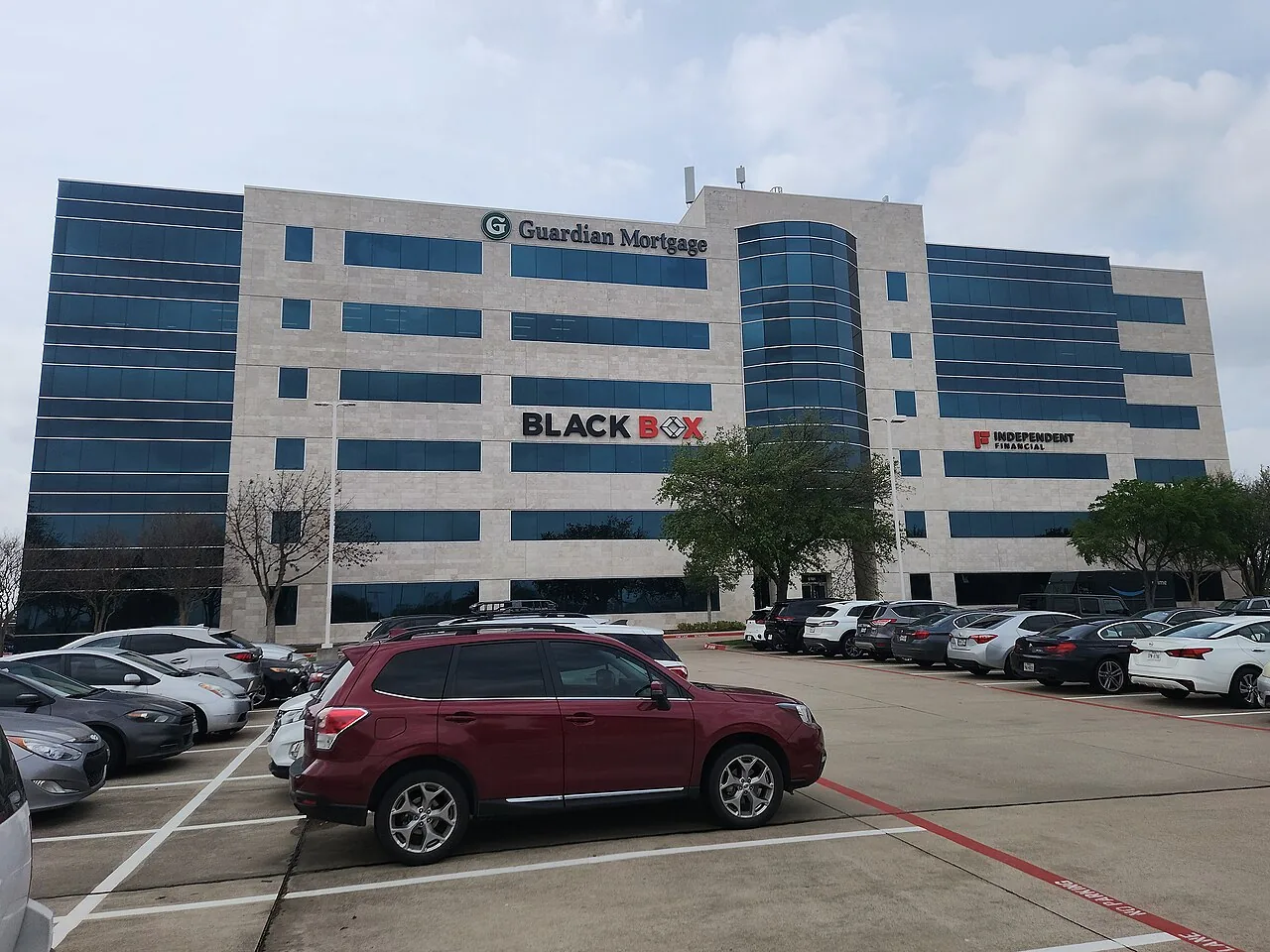
The deal at a glance
| Field | Detail |
|---|---|
| Announced | August 12, 2026 |
| Company | Black Box Limited (India) |
| Order value | $131 million |
| Customer | Leading US hyperscaler (Tier-1, name not disclosed) |
| Project type | Data center infrastructure deployment |
| Project location | United States |
| Comparable deals | Other Indian integrators winning hyperscaler data center work (TCS, Infosys, HCLTech, NTT India) |
Why Black Box won this deal
Three reasons Black Box won this specific deal against the typical Tier-1 hyperscaler RFP. First, the company has 1,500+ global customers and a presence across the United States, Europe, India, Asia Pacific, the Middle East, and Latin America, which gives it the geographic reach to staff the project with US-based project managers and India-based execution teams. Second, the "glocal" model, "Think Global, Act Local," is the right structure for hyperscaler work that requires both local presence (for permits, utility coordination, and inspection) and global execution (for cross-region standards and integration with hyperscaler tooling). Third, the company has invested in technical certifications for AI infrastructure deployment, including Nvidia's data center reference architectures, the major hyperscaler's deployment standards, and the tier-iii and tier-iv data center certifications. The combination of geographic reach, execution model, and technical certification is what separates Black Box from the Indian IT services firms that are more software-focused and from the US-based integrators that are more expensive.
The customer, a Tier-1 US hyperscaler, did not disclose its identity but the project profile (large data center in the US, Indian integrator with global delivery capability) is consistent with the hyperscalers that have major US data center buildouts: Microsoft, Google, Meta, Amazon, and Oracle. The hyperscalers have been increasing their reliance on Indian integrators for data center deployment because the pace of build is faster than the hyperscalers' internal teams can support, and because the integrators offer flexibility to scale up and down as the deployment cycles warrant.
The Indian IT services pivot to AI infrastructure
The Black Box win is part of a broader pivot by Indian IT services firms toward AI infrastructure as a service line. The traditional Indian IT services business (application development, maintenance, BPO) is mature with single-digit growth. The AI infrastructure opportunity is growing at 30-40 percent annually, and the Indian IT services firms are repositioning to capture it. The leading firms (TCS, Infosys, Wipro, HCLTech) all have AI infrastructure practices now, and the smaller specialized firms (Black Box, NTT India, Reliance Jio) are winning the data center integration work that the larger firms sometimes cannot staff at the right cost structure.
The economics of the Indian integrator business are different from the traditional IT services business. The traditional business was labor arbitrage, with Indian engineers billed to US clients at a fraction of US engineer rates. The AI infrastructure business is technical arbitrage, with Indian engineers who have data center and AI deployment certifications billed at near-US rates. The margin profile is better (20-30 percent gross margin vs 10-15 percent for traditional IT services), and the growth profile is better (30-40 percent annually vs single-digit). The pivot is good for the Indian IT services industry, and Black Box's $131 million win is the right kind of validation.
The IndiaAI Mission context
The Black Box win also benefits from the broader Indian government push to position India as an AI infrastructure hub. The IndiaAI Mission, announced in March 2024 with a $1.25 billion budget, includes funding for AI compute infrastructure, AI research labs, and AI startups. The mission is designed to reduce India's dependence on US AI infrastructure (particularly Nvidia GPUs) and to position Indian companies as suppliers and integrators in the global AI infrastructure market. The mission has catalyzed private-sector investment in Indian AI infrastructure, including hyperscaler data centers (Microsoft, Google, Amazon have all announced Indian data center investments over the past 18 months).
The right read for an operator is that India's role in the AI infrastructure supply chain is expanding from "labor arbitrage for US tech companies" to "technical arbitrage for US and global hyperscalers." The Black Box $131 million win is a single data point in this broader shift, but it is the right kind of single data point. India is no longer competing on cost; it is competing on capability, and capability is what wins hyperscaler data center work in 2026.
What an operator should conclude
The Black Box $131 million hyperscaler order is the canonical example of an Indian IT services firm winning Tier-1 US hyperscaler AI infrastructure work on capability rather than cost. The win is part of a broader pattern, with the major Indian IT services firms and specialized infrastructure integrators all increasing their share of hyperscaler data center deployment work. The economics for the Indian firms are better than the traditional IT services business, and the growth is faster.
Three concrete takeaways. First, if you are a hyperscaler evaluating AI infrastructure deployment partners, the Indian integrators are now a credible alternative to the US-based firms. The labor cost is lower, the technical capability is comparable, and the execution speed is faster. The right approach is to build a multi-vendor deployment strategy that includes both US-based and India-based integrators. Second, if you are an Indian IT services firm, the AI infrastructure opportunity is the highest-growth segment of the market. The right strategy is to invest in the technical certifications (Nvidia, AWS, Azure, Google Cloud, Meta) and the geographic reach (US, EU, APAC) needed to win hyperscaler work. Third, if you are evaluating the Indian IT services industry as an investment, the AI infrastructure pivot is a real margin expansion opportunity. The firms that win the most hyperscaler work will see their multiples expand as the market revalues the AI infrastructure business at higher multiples than the traditional IT services business.
Frequently asked questions
What is the Black Box $131 million data center deal
On August 12, 2026, Black Box, the Indian-headquartered digital infrastructure integrator, secured a $131 million order from a leading US hyperscaler for a major data center project in the United States. The customer was not named but is a Tier-1 US hyperscaler with a major US data center buildout.
Why is this deal significant
It is the largest single data center order Black Box has won from a US hyperscaler. The win validates the company's "glocal" strategy of global reach with local execution, places India at the center of the AI infrastructure supply chain, and demonstrates that Indian IT services firms can win Tier-1 hyperscaler work on capability rather than cost.
What is the IndiaAI Mission
The IndiaAI Mission is the Government of India's $1.25 billion AI infrastructure program, announced in March 2024. It includes funding for AI compute infrastructure, AI research labs, and AI startups. The mission is designed to position India as an alternative to China in the global tech supply chain and to capture more of the AI infrastructure value chain for Indian companies.
How do Indian integrators compete with US-based firms
Three ways. First, geographic reach, with staff in both the US (for project management, permits, utility coordination) and India (for execution, integration, testing). Second, the "glocal" model that combines local presence with global execution. Third, technical certifications in Nvidia data center architectures, the major hyperscalers' deployment standards, and tier-iii and tier-iv data center certifications. The combination is what separates Black Box from the Indian IT services firms that are more software-focused and from the US-based integrators that are more expensive.
What is the margin profile of AI infrastructure work vs traditional IT services
AI infrastructure work runs at 20-30 percent gross margin, vs 10-15 percent for traditional IT services. The growth profile is also better: 30-40 percent annually for AI infrastructure vs single-digit for traditional IT services. The pivot is good for the Indian IT services industry because it combines higher growth with higher margins.
Who else is winning hyperscaler data center work from India
The major Indian IT services firms (TCS, Infosys, Wipro, HCLTech) all have AI infrastructure practices now. The smaller specialized firms (Black Box, NTT India, Reliance Jio) are winning the data center integration work that the larger firms sometimes cannot staff at the right cost structure. The hyperscalers themselves (Microsoft, Google, Amazon) have all announced Indian data center investments.
Sources
- Reuters — India's Black Box secures $131 million data centre order from U.S. hyperscaler — the deal announcement
- The Silicon Review — Black Box Secures $131 M Data Centre Order — additional context on the company's strategy
- Yahoo Finance — India's Black Box secures $131 million data centre order — additional context and customer background
- Black Box — Global IT Products & Network Solutions Provider — company overview, glocal strategy, 1,500+ customer base



Loading comments…