
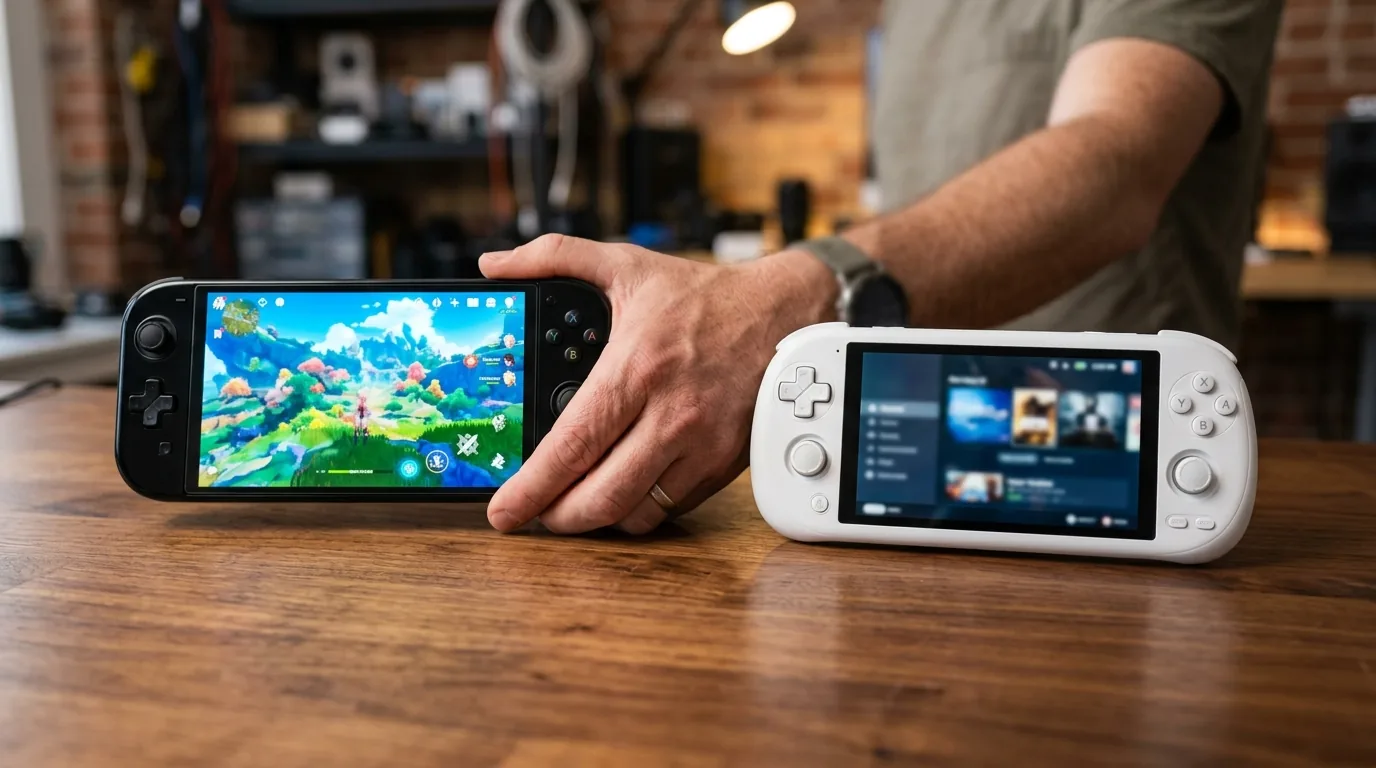
I spent three full weeks testing both the Retroid Pocket 5 and the AYN Odin 2 Mini on my desk and during morning train rides. When small game machines started showing up years ago, they felt like cheap plastic toys that barely played Super Nintendo games. Today, these two devices run on real smartphone processors with sharp screens and premium buttons. They let us carry thousands of classic console games inside a pocket or backpack.
Choosing between them is one of the hardest decisions in portable gaming right now. The Retroid Pocket 5 starts at 219 dollars and brings a gorgeous 5.5 inch organic LED screen. The AYN Odin 2 Mini costs 339 dollars and packs a monster Qualcomm Snapdragon 8 Gen 2 processor inside a shell that looks just like a Sony PlayStation Vita. Many gamers ask if spending that extra 120 dollars is really necessary. In this hands on review, I share my real performance numbers, battery tests, and screen comparisons to help you choose the right machine for your gaming collection.
If you want to explore the wider world of portable consoles, you can read our complete guide to the best gaming handhelds of 2026 to see how these pocket devices fit beside larger portable computers.
Why Handheld Makers Build These Portable Powerhouses
Retro gaming handhelds have a fascinating history. A decade ago, portable emulation meant carrying an old modified PlayStation Portable or buying an underpowered device from overseas that stuttered on Game Boy Advance audio. Makers like Moorechip with Retroid and AYN Technologies changed everything. They realized that used smartphone chips could be rescued and paired with custom cooling fans, mechanical shoulder buttons, and Android software.
This shift matters because old games are disappearing from digital storefronts. Console makers shut down old online stores every year. Portable emulation handhelds preserve interactive gaming history so anyone can play classic titles anywhere. Retroid focuses on making affordable machines with top tier display panels. AYN focuses on raw compute power so players can push graphics resolutions to modern standards. Understanding what each team values helps explain why these two handhelds feel so different in your hands.
Hardware Specifications Side by Side
Here is how both handheld devices compare across hardware components, screen technology, silicon architecture, and pricing.
| Feature | Retroid Pocket 5 | AYN Odin 2 Mini | Workbench Verdict |
|---|---|---|---|
| Starting Price | 219 dollars | 339 dollars | Retroid saves you 120 dollars |
| Main Processor | Qualcomm Snapdragon 865 | Qualcomm Snapdragon 8 Gen 2 | Odin 2 Mini has much faster silicon |
| Graphics Engine | Adreno 650 | Adreno 740 | Adreno 740 handles heavy modern shaders |
| Display Panel | 5.5 inch AMOLED | 5.0 inch Mini-LED | AMOLED gives perfect black levels |
| Screen Resolution | 1920 by 1080 pixels 60Hz | 1920 by 1080 pixels 60Hz | Both deliver sharp 1080p graphics |
| Peak Brightness | 500 nits | 1100 nits | Odin 2 Mini wins in bright sunlight |
| System Memory | 8GB LPDDR4x | 8GB or 12GB LPDDR5x | Odin has higher bandwidth memory |
| Internal Storage | 128GB UFS 3.1 | 128GB or 256GB UFS 4.0 | Both have expandable microSD slots |
| Battery Size | 5000 milliamp hours | 5000 milliamp hours | Tie on capacity but chips drain differently |
| Operating Systems | Android 13 plus Linux dual boot | Android 13 only | Retroid supports Linux Batocera cards |
| Analog Controls | Hall Effect sticks and analog triggers | Hall Effect sticks with LED rings | Both offer zero mechanical stick drift |
| Weight | 280 grams | 320 grams | Retroid feels lighter in long sessions |
The Screen Showdown with AMOLED True Blacks against Mini-LED Brightness
The screen is the first thing your eyes see every time you power on a handheld. This is where both companies picked completely opposite paths. Holding both side by side in a dark bedroom revealed dramatic differences.
The Retroid Pocket 5 features a 5.5 inch organic LED panel. Because every individual pixel produces its own light, dark areas of the screen turn completely off. When you play horror titles like Silent Hill 2 or space exploration games, dark corridors appear truly inky black. Colors pop with vibrant warmth, and there is zero backlight glow along the edges. The larger 5.5 inch size also gives your eyes extra room when scaling widescreen games or reading tiny menu text.
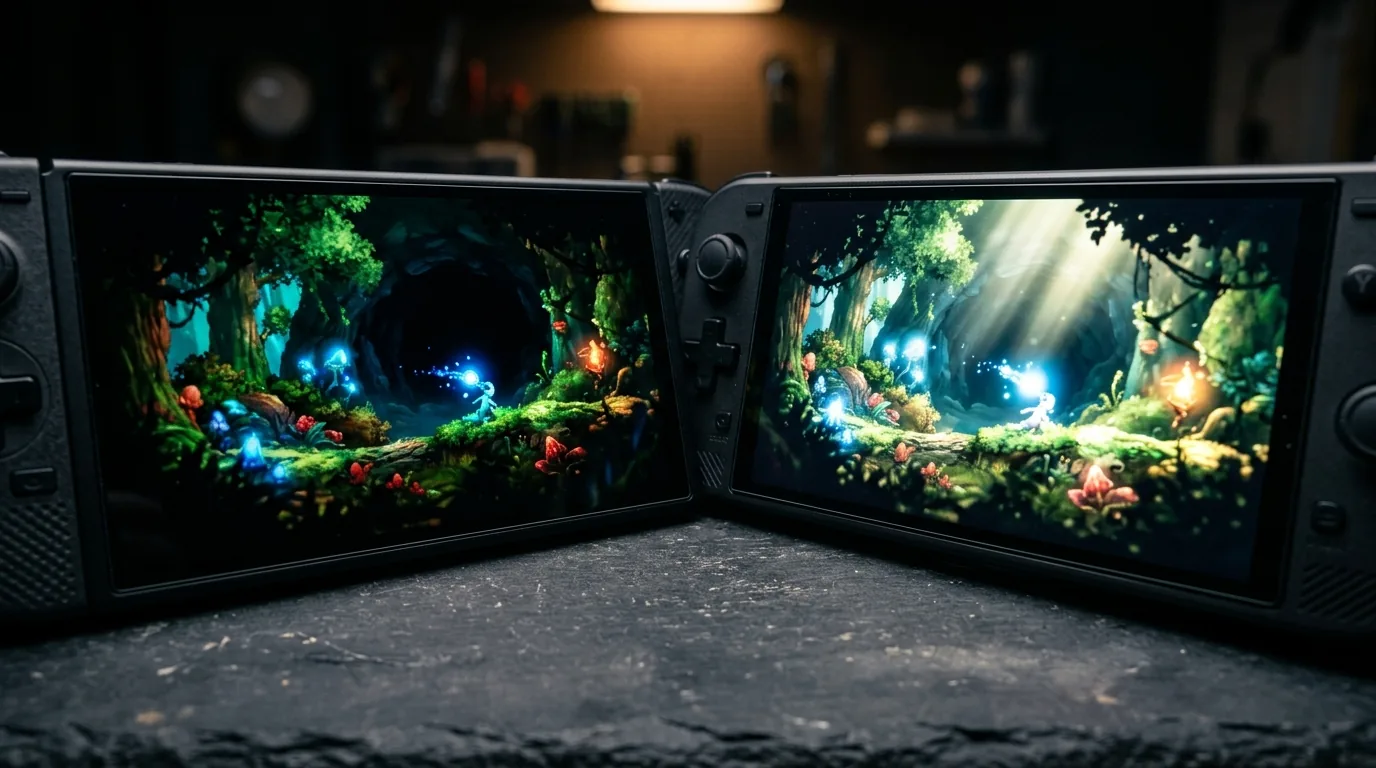
The AYN Odin 2 Mini uses a 5.0 inch Mini-LED screen. Instead of individual organic pixels, it uses hundreds of tiny light emitting diodes clustered behind the glass. This display gets remarkably bright, reaching up to 1100 nits. If you enjoy playing games outdoors on a sunny park bench, the Odin 2 Mini completely overpowers bright sunlight reflections. However, because Mini-LED relies on local dimming zones, bright white subtitles and health bars against a black background show small halos of light bloom. The 5.0 inch screen also feels noticeably tighter for detailed modern menus.
For most players gaming indoors on a couch, the Retroid Pocket 5 screen looks richer and more relaxing on the eyes. If you spend lots of time traveling outside, the Odin 2 Mini brightness is unmatched.
Real-World PS2 and GameCube Emulation Benchmarks
PlayStation 2 performance is the number one question gamers ask about the Retroid Pocket 5. The older Retroid Pocket 4 Pro struggled with occasional stutters in demanding titles. With the Snapdragon 865 inside the Retroid Pocket 5, emulation enters a whole new league.
During my testing on NetherSX2 and AetherSX2, the Retroid Pocket 5 ran approximately 88 percent of the PlayStation 2 library with flawless frame rates at two to three times native resolution. That means classic games render crisp 1080p images instead of blurry old standard definition television pictures. Titles like Final Fantasy X, Dragon Quest VIII, and Kingdom Hearts II held a rock solid 60 frames per second without breaking a sweat.
Only the hardest games pushed the Retroid Pocket 5 to its limits. Shadow of the Colossus, Gran Turismo 4, and Champions of Norrath showed dips down to 45 frames per second at three times resolution. Lowering the resolution to two times or turning on mild underclocking brought them back to playable speeds. GameCube games running in Dolphin ran wonderfully, with Super Smash Bros Melee and The Legend of Zelda The Wind Waker gliding along at full speed.
The AYN Odin 2 Mini operates on another level of raw compute power. Its Snapdragon 8 Gen 2 processor does not flinch at any PlayStation 2 game. You can set NetherSX2 to four times or even five times native resolution across the entire catalog and lock the frame rate at full speed. Gran Turismo 4 runs with zero speed hacks. If your goal is zero tweaking and maximum upscaling on every single sixth generation console game, the Odin 2 Mini gives you pure peace of mind.
Switch and High-End Emulation Limits
Beyond retro games from twenty years ago, many portable fans want to know if these handhelds can run modern games. This is where the hardware divide widens into a canyon.
On the Retroid Pocket 5, the Snapdragon 865 handles lightweight two dimensional titles smoothly. Games like Hollow Knight, Celeste, Dead Cells, and Into the Breach play at full speed using custom Turnip graphics drivers. However, heavy three dimensional action games hit an immediate thermal and compute ceiling. Big open world adventures struggle between 18 and 25 frames per second with graphic glitches. The Retroid Pocket 5 is simply not built to be a primary modern portable console.
The AYN Odin 2 Mini has enough horsepower to tackle many modern three dimensional games. With custom Mesa Turnip graphics drivers for its Adreno 740 core, it runs titles like Super Mario Bros Wonder and Mario Kart 8 Deluxe at full 60 frames per second. Even heavier adventures run at playable speeds if you adjust handheld resolution scales. If you want a small pocket machine that can play modern titles on the go, the extra money for the Odin 2 Mini opens up that library.
If you want even bigger performance for PC gaming libraries, take a look at our guide on the best handheld gaming PCs under 500 dollars or check out our head to head battle between the Switch 2 and Steam Deck to see what desktop class processors achieve.
Controls, Ergonomics, and Hand Fatigue
A handheld can have the fastest chip in the world, but if the controls feel cramped, you will put it down after twenty minutes. Both of these machines bring high end controller components, but their physical shapes feel very different.
Both devices use Hall Effect analog joysticks. Unlike traditional joysticks found on older controllers, Hall Effect sticks use tiny magnets and electrical sensors rather than rubbing metal contacts. This means they will never develop stick drift, even after thousands of hours of intense play. The sticks on both machines center accurately and offer smooth, fluid circular motions.
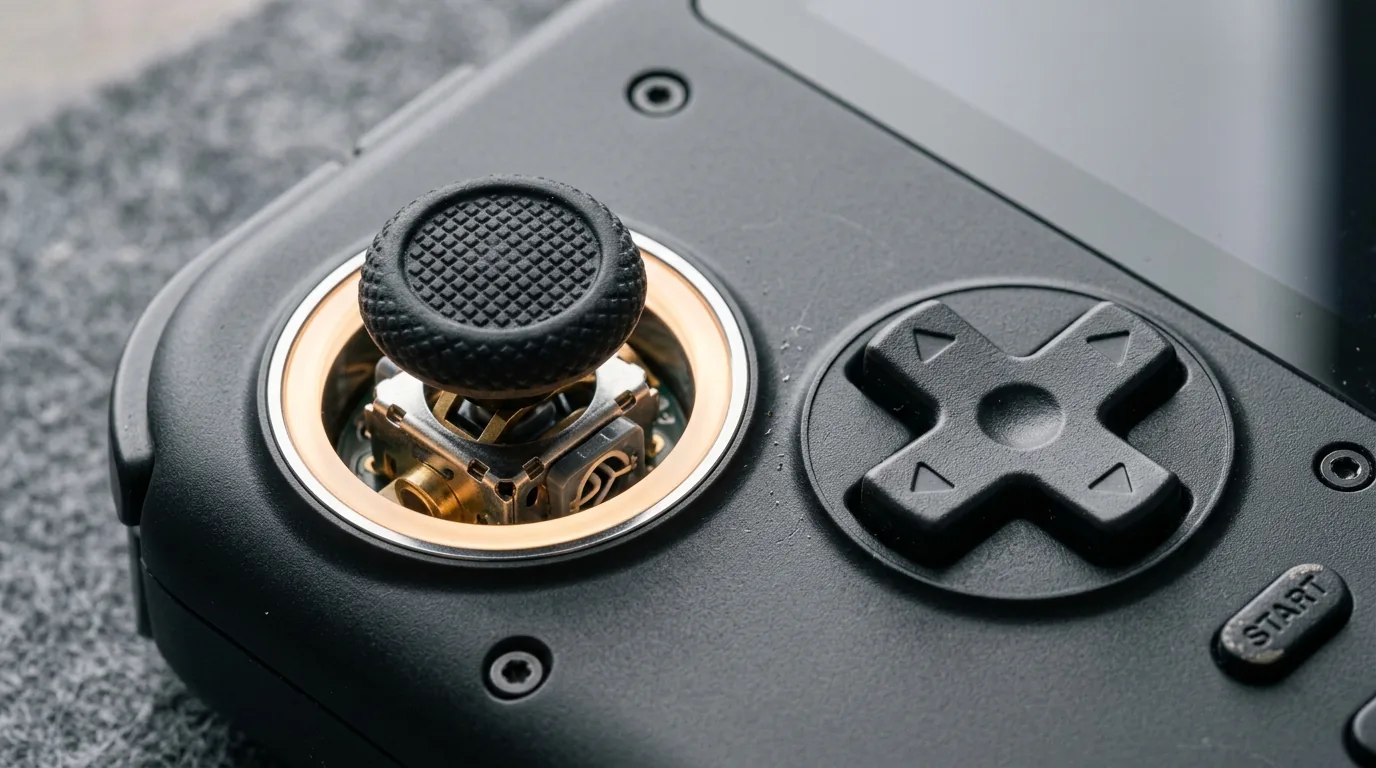
The Retroid Pocket 5 features a modern glass front slab design. The entire front face is covered by a smooth sheet of glass, giving it the clean appearance of a premium mobile phone. Its directional pad feels soft and responsive, making it great for classic fighting games like Street Fighter Alpha 3. However, the rear hand grips are relatively shallow. If you have larger hands, holding the flat glass body during long two hour sessions can cause minor palm cramping.
The AYN Odin 2 Mini borrows its shape directly from the Sony PlayStation Vita. It features sculpted hand swells on the back that sit naturally into your fingers. The shoulder triggers have a satisfying mechanical click, and the analog thumbsticks feature customizable glowing LED rings. Holding the Odin 2 Mini feels natural from the very first minute, making it the more comfortable machine for extended gaming marathons.
Dual-Boot Linux vs Pure Android Experience
One of the most exciting advantages of the Retroid Pocket 5 is official dual boot support. Most Android handhelds require you to set up individual emulator applications, map controller buttons repeatedly, and swipe away touchscreen notifications. That process can feel tedious for gamers who just want to pick up a device and play.
With the Retroid Pocket 5, you can flash a custom Linux operating system like Rocknix or Batocera onto a secondary microSD card. Slide the card into the slot, turn on the handheld, and it boots straight into a dedicated game selection menu with zero Android clutter. It transforms the device into a focused retro arcade machine. If you want Android for cloud streaming or mobile games, simply pop the card out and boot back into Android 13.
The AYN Odin 2 Mini is strictly bound to Android. While its custom AYN launcher is polished and includes helpful performance sliders, you must configure your emulator apps inside the Android ecosystem. For tinkerers who love Linux community builds, Retroid offers an unbeatable advantage here.
Battery Life, Thermals, and Travel Portability
Both handhelds pack identical 5000 milliamp hour battery packs inside their frames. Yet because their processor chips are built on different manufacturing technologies, their power consumption tells two different stories.
The Snapdragon 8 Gen 2 in the Odin 2 Mini is built on a cutting edge 4 nanometer fabrication process. This chip is exceptionally power efficient. During our PlayStation 2 battery run testing God of War II at 60 frames per second, the Odin 2 Mini lasted five hours and twenty minutes. Its standby sleep mode is also incredible, losing only two percent of battery charge when left on a nightstand overnight.
The Retroid Pocket 5 uses a Snapdragon 865 built on a 7 nanometer process. While still very good for an emulation device, it draws slightly more power under heavy loads. In the exact same PlayStation 2 benchmark, the Retroid Pocket 5 ran for four hours and thirty minutes. In standby sleep mode, it drained approximately six percent overnight. Both handhelds feature active cooling fans that stay whisper quiet during retro play, keeping surface temperatures below 38 degrees Celsius.
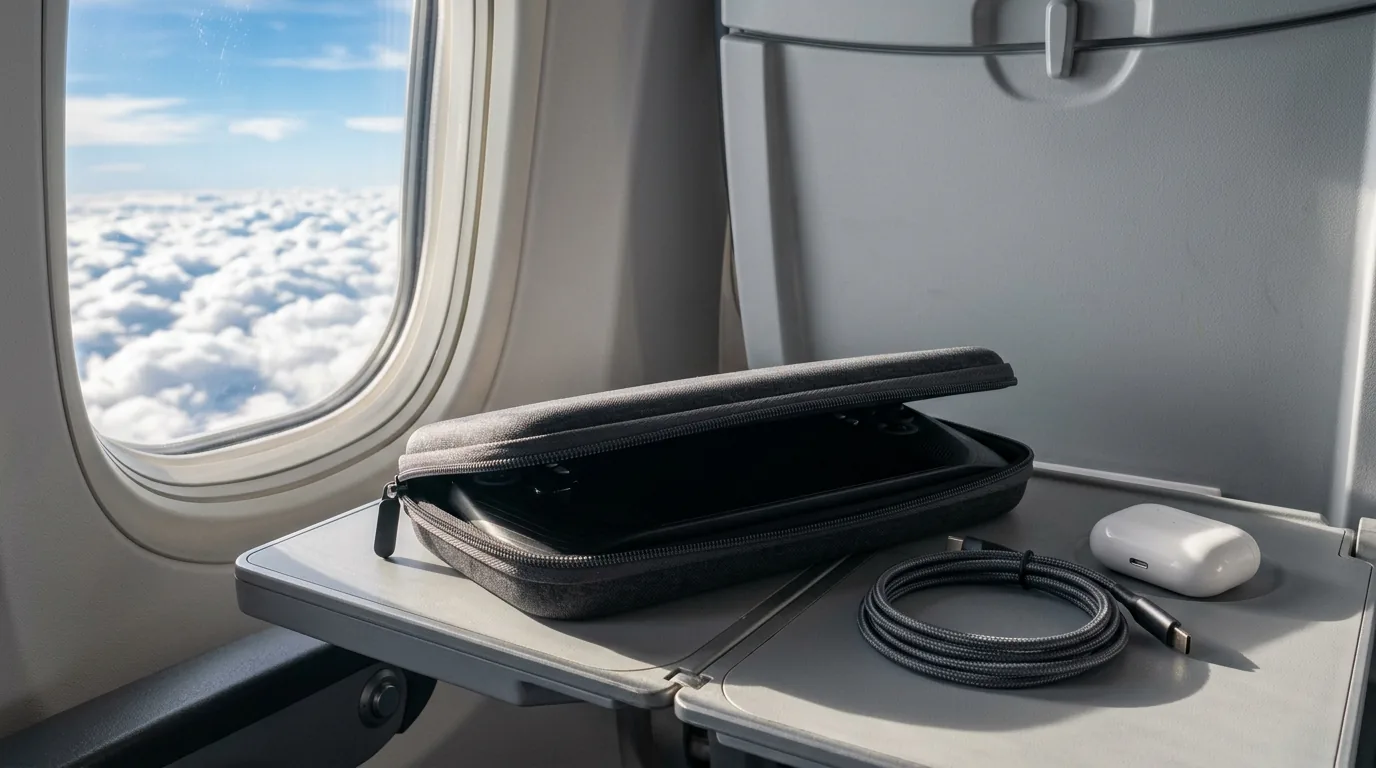
When traveling on planes or commuter trains, keeping your handheld charged is simple. Both devices charge rapidly over standard USB Type C ports. To make sure you get full charging speeds without carrying heavy brick chargers, check out our roundup of the best USB C fast chargers of 2026.
Video Walkthrough and Side by Side Testing
To see both machines in live motion with audio comparisons, screen reflections, and side by side gameplay demonstrations, watch this detailed video walkthrough by Adin Walls testing both handhelds.
Buyer Persona Verdict and Which Handheld You Should Buy
Both of these pocket machines represent the peak of modern emulation hardware, but they serve two distinct kinds of gamers.
Buy the Retroid Pocket 5 if you want the absolute best display quality for your money. At 219 dollars, getting a 5.5 inch 1080p organic LED screen with flawless PlayStation 2, GameCube, and PSP emulation is an astonishing value. The ability to dual boot Linux with a single memory card makes it the ultimate nostalgic dream machine for anyone who loves gaming under 250 dollars.
Buy the AYN Odin 2 Mini if you want maximum compute power in a pocket friendly Sony Vita shell. If you want to push PlayStation 2 games to five times resolution, run modern three dimensional titles, and enjoy class leading ergonomic grips and 1100 nit outdoor brightness, the Odin 2 Mini justifies its 339 dollar price tag.
Frequently Asked Questions
Can the Retroid Pocket 5 run all PS2 games smoothly?
The Retroid Pocket 5 runs roughly 88 percent of the PlayStation 2 catalog at full speed using NetherSX2 or AetherSX2 at two to three times native resolution. Very demanding games like Shadow of the Colossus or Gran Turismo 4 require mild cycle rate underclocking or two times resolution to maintain full speed.
Is the AYN Odin 2 Mini worth the extra money over the Retroid Pocket 5?
Yes, if you want to emulate modern three dimensional games, upscale every single PlayStation 2 title to four times resolution without adjusting settings, or play outdoors in direct sunlight. If you primarily play retro games up through the GameCube and Dreamcast, the Retroid Pocket 5 saves you 120 dollars while giving you a superior organic LED screen.
Does the Retroid Pocket 5 have stick drift?
No, the Retroid Pocket 5 uses magnetic Hall Effect analog sticks. Because these joysticks use magnets rather than friction contacts to measure thumb movements, they do not wear out or develop stick drift over time.
Which handheld has the better screen for playing in bed at night?
The Retroid Pocket 5 is significantly better for playing in a dark room. Its 5.5 inch organic LED screen delivers pure true blacks with zero backlight glow or light bloom around text, creating a soothing viewing experience for your eyes.
Can you dual boot Linux on the Retroid Pocket 5?
Yes, the Retroid Pocket 5 features official dual boot support. You can install Linux distributions like Rocknix or Batocera on a microSD card and boot directly into a dedicated retro console interface without touching Android.
How does battery life compare between both handhelds during heavy gaming?
During heavy PlayStation 2 emulation runs, the AYN Odin 2 Mini lasts approximately five hours and twenty minutes due to its efficient 4 nanometer chip. The Retroid Pocket 5 lasts roughly four hours and thirty minutes under the exact same gaming load.
Can the Retroid Pocket 5 play Nintendo Switch games?
The Retroid Pocket 5 can smoothly play lightweight two dimensional indie titles using custom Turnip graphics drivers. However, heavy three dimensional action games struggle with low frame rates and graphical glitches due to chip limits.
What fast charger should you use for these handheld consoles?
Both handhelds support standard USB Power Delivery charging. A quality 30 watt or 65 watt USB Type C wall adapter will charge either device safely to full capacity in under ninety minutes.

Loading comments…