


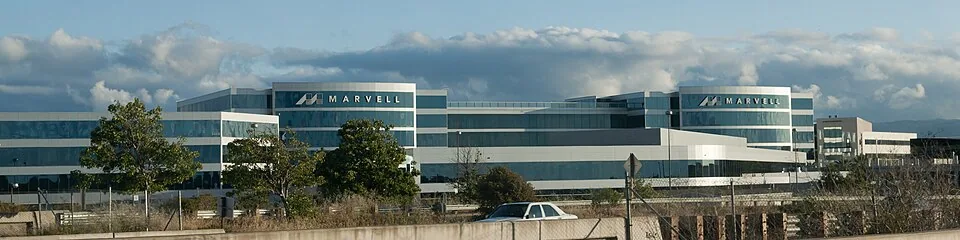
On August 19, 2026, Marvell Technology announced a deal that makes Google a near-10 percent shareholder in the chipmaker, with a warrant to buy up to 58.97 million Marvell shares at $206.58 apiece, worth $12.18 billion if fully exercised. The warrant is tied to Marvell's role as a developer of Google's custom Tensor Processing Units and adjacent data-center silicon, with revenue tied to performance targets that Morningstar estimates could bring roughly $120 billion in cumulative revenue through fiscal 2033 if Google hits them. Shares of Marvell jumped nearly 8 percent on the news. Shares of Broadcom, which had been Google's primary custom-silicon partner, fell more than 5 percent. The deal is the latest in a series of "Big Tech invests in chip suppliers" tie-ups that is reshaping the AI supply chain, including Nvidia's $105 billion backstop for OpenAI's Ohio data center (August 2026), AMD's October 2025 equity-for-supply deal with OpenAI, and Nvidia's $500 billion compute-financing platform with six Wall Street firms.
The right way to read the Marvell-Google deal is as the second stage of a structural shift in AI infrastructure funding. The first stage was the hyperscalers (Google, Amazon, Microsoft, Meta) building their own custom silicon to escape Nvidia's pricing power. The second stage is the hyperscalers buying equity stakes in their custom-silicon suppliers to lock in capacity, align incentives, and reduce the cost of switching. The third stage, which is now starting, is the asset-management industry treating AI compute as an investable asset class through debt and equity financing platforms. Each stage makes the next more capital-intensive and more interdependent. This guide works through the Marvell deal, the structural shift it represents, and what an operator should conclude about the AI supply chain in 2026-2028.
The deal at a glance
| Field | Detail |
|---|---|
| Announced | August 19, 2026 |
| Counterparties | Marvell Technology + Google |
| Warrant size | Up to 58.97 million shares at $206.58 |
| Warrant value if fully exercised | $12.18 billion |
| Trigger | Marvell's role in developing Google's TPUs and adjacent data-center silicon |
| Potential revenue through FY2033 | ~$120 billion (per Morningstar, if Google hits the warrant targets) |
| Marvell share price reaction | +~8% on announcement |
| Broadcom share price reaction | -~5% on announcement |
| Covered technologies | TPUs, AI model runtimes, storage management, data movement |
| Comparable deals in 2026 | Nvidia $105B backstop for OpenAI Ohio DC, AMD equity-for-supply with OpenAI (Oct 2025), Nvidia $500B financing platform (Aug 2026) |
Why Google is doing this
Google's custom silicon program, the Tensor Processing Unit (TPU) line that started in 2015, is the longest-running hyperscaler custom-chip effort in the industry. The sixth generation, Trillium (TPU v6), is the current production chip. Google's strategic rationale for the program is twofold: escape Nvidia's pricing power on GPUs, and build inference hardware that is better optimized for Google's own workloads (search ranking, ad serving, Gemini inference, Workspace AI features). The TPU program has been a competitive advantage for Google, allowing it to serve Gemini at a lower cost-per-token than competitors who rent Nvidia capacity at market rates.
Why Marvell, and not just Broadcom? Broadcom has been Google's primary custom-silicon partner since the TPU program began, with Broadcom providing the networking and co-design services that complement Google's in-house chip design team. The Marvell deal is additive rather than displacing: Marvell will develop adjacent silicon (data movement, storage, networking co-processors) that attach to the TPU ecosystem, while Broadcom continues on the TPU design services side. Morningstar analyst William Kerwin framed it as "a growing pie at Google for new sources, rather than a competitive displacement of Broadcom," which is the right read. The 5 percent drop in Broadcom's share price is the market reading the deal as net-negative for Broadcom's TPU exposure, which is partially correct but probably overshoots.
The structural shift: hyperscalers as chip-company shareholders
The Marvell-Google deal is the second Big-Tech-equity-for-chip-supply arrangement in 2026, following AMD's October 2025 deal with OpenAI (AMD agreed to supply OpenAI with chips worth tens of billions in annual revenue, with OpenAI getting the option to buy a roughly 10 percent stake). Nvidia's August 2026 deal to backstop up to $105 billion of OpenAI's Ohio data center project is the same pattern at a different layer: instead of equity in the chip supplier, Nvidia is providing financing for the data center that uses its chips. The three deals together establish a pattern: Big Tech companies are no longer just buying chips from suppliers, they are buying ownership stakes, financing arrangements, and long-term capacity commitments that lock in supply and align incentives.
Three forces drive this. First, supply concentration risk. The world's AI compute supply is concentrated in two companies, TSMC for chip manufacturing and Nvidia for GPU design. The hyperscalers (Google, Amazon, Microsoft, Meta) cannot tolerate the geopolitical and supply-chain risk that concentration creates. The Marvell deal, like the AMD deal before it, builds a second source of supply with a deep equity relationship that reduces the risk of capacity rationing. Second, the cost of switching. Nvidia's CUDA software stack is a durable moat that makes switching to alternative accelerators expensive. Equity stakes in alternative suppliers (Marvell, AMD, Cerebras, Etched) reduce the switching cost by giving the hyperscaler visibility into the alternative's roadmap and economics. Third, the scale of the buildout. The combined AI capex of the top 7 tech companies (Microsoft, Alphabet, Meta, Amazon, Apple, Nvidia, Oracle) is projected to surpass $730 billion in 2026, with most of that spend going to data centers and AI chips. At that scale, even the largest companies need help financing the buildout, and the equity-for-supply deals are one way to share the capital burden with the supplier.
The Nvidia $500 billion financing platform: the third stage
On August 10, 2026, Nvidia signed memoranda of understanding with Apollo Global Management, Blackstone, BlackRock, Brookfield Asset Management, Goldman Sachs, and KKR to establish independent "compute financing platforms" that will deploy more than $500 billion of third-party capital for AI infrastructure. The structure is novel: Nvidia provides the chips and the AI factory template, the asset managers provide the debt and equity financing, and the hyperscalers and AI labs lease the resulting infrastructure. Nvidia's chips become the collateral underlying the financing, and the asset managers treat AI compute as a new asset class similar to commercial real estate or toll roads.
The right read of the Nvidia deal is that it solves a structural problem in the AI buildout: the hyperscalers' balance sheets cannot fund the entire $730 billion 2026 capex alone, and traditional debt markets are not deep enough to absorb it. By turning Nvidia chips into an investable asset class, Nvidia is enabling a parallel capital channel that funds its customers without diluting their own equity. The arrangement also has a self-reinforcing effect on Nvidia's market position: customers who use Nvidia-financed infrastructure are locked into the Nvidia stack for the life of the financing, which can be 10-15 years.
The risk in the Nvidia arrangement is concentration. If Nvidia-financed infrastructure underperforms, or if Nvidia's pricing power erodes, the asset managers are exposed to a single-vendor concentration that has no precedent in the technology industry. The asset managers are sophisticated buyers and have done similar deals on real estate and infrastructure, but the technology-specific risk (chip obsolescence, software ecosystem shifts) is new. The deals will work in the base case where Nvidia's pricing power persists, but a downside scenario where inference commoditizes faster than expected would leave the asset managers holding depreciating collateral.
What the asset managers are buying
The asset managers in the Nvidia consortium (Apollo, Blackstone, BlackRock, Brookfield, Goldman Sachs, KKR) manage over $25 trillion of combined assets. They have decades of experience in infrastructure and real asset financing, with established underwriting frameworks. AI compute financing is new territory, but the underlying assets, physical data centers housing Nvidia chips with multi-year lease commitments from creditworthy hyperscalers, look similar to the toll-road and fiber-network deals that the same managers have done for years. The asset managers' underwriting assumption is that the lease income from the data centers is stable and predictable, which is broadly true for hyperscaler-anchored capacity.
The three things the asset managers are not hedging. First, technology obsolescence. Nvidia's chips have a 2-3 year useful life in the AI training and inference market, with regular refresh cycles (Hopper to Blackwell to Rubin to Vera). A 10-year debt facility secured by Nvidia chips today may be backed by hardware that is 3-4 generations behind by the time the loan matures. Second, demand durability. The asset managers are underwriting on the assumption that AI compute demand continues to grow at 30-40 percent annually through 2030, which is the consensus forecast but not guaranteed. A demand slowdown (which is what Citi's August 2026 crypto forecast cuts reflect for the speculative end of the AI trade) would reduce lease income. Third, regulatory risk. The US government has been tightening export controls on AI chips, particularly to China, and a more restrictive regime would reduce the addressable market for Nvidia chips.
What an operator should conclude
The Marvell-Google deal and the Nvidia $500 billion platform are two sides of the same structural shift: the AI supply chain is becoming more vertically integrated and more capital-intensive. Hyperscalers are locking in chip supply through equity stakes, chip designers are locking in customer demand through long-term commitments, and asset managers are funding the gap. The right way to model this for an operator is that the AI infrastructure buildout of 2026-2030 will be financed as much by the capital markets as by the hyperscalers' own balance sheets, and the resulting interdependencies will be durable.
Three concrete takeaways. First, if you are a chip designer competing with Nvidia, the hyperscaler-equity-for-supply pattern is the path to survival. Cerebras, Etched, Groq, and other inference-ASIC startups that want to be more than research projects need hyperscaler-equity relationships like Marvell-Google or AMD-OpenAI. The pattern is now the standard, not the exception. Second, if you are an asset manager evaluating AI infrastructure as an asset class, the underwriting is tractable for hyperscaler-anchored capacity with multi-year lease commitments, but the technology-specific risks (chip obsolescence, demand durability, regulatory) require careful scenario analysis. Third, if you are building AI infrastructure, the planning horizon is now tied to the financing structure. Nvidia-financed capacity has different upgrade paths and cost structures than hyperscaler-owned capacity, and the right architecture depends on which side of the divide your organization sits.
Frequently asked questions
What is the Marvell-Google deal
Marvell Technology has given Google a warrant to buy up to 58.97 million Marvell shares at $206.58 per share, worth $12.18 billion if fully exercised. The warrant is tied to Marvell's role in developing Google's TPUs and adjacent data-center silicon. Morningstar estimates the deal could bring roughly $120 billion in cumulative revenue through fiscal 2033 if Google hits the warrant targets.
Why did Google invest in Marvell
Three reasons. First, capacity. Google needs second-source supply for its custom silicon program beyond Broadcom. Second, alignment. An equity stake aligns Marvell's incentives with Google's TPU roadmap. Third, switching cost reduction. The equity relationship gives Google visibility into Marvell's roadmap and reduces the cost of switching chip suppliers for the adjacent silicon.
What does the Nvidia $500 billion deal do
Nvidia signed memoranda of understanding with Apollo, Blackstone, BlackRock, Brookfield, Goldman Sachs, and KKR to establish compute financing platforms that will deploy more than $500 billion of third-party capital for AI infrastructure. The asset managers fund data centers housing Nvidia chips, with the chips as collateral and the hyperscalers as lessees. The arrangement converts AI compute into an investable asset class.
How does this affect Nvidia's competitors
The Nvidia financing platform locks in Nvidia's market position for the life of the financing, which can be 10-15 years. For competitors like AMD, Cerebras, Etched, and Groq, the pattern is that hyperscalers want equity relationships with alternative suppliers to reduce their concentration risk. The Marvell-Google deal, the AMD-OpenAI deal, and the Cerebras-OpenAI deal all follow this pattern. Competitors without hyperscaler equity backing face higher customer-acquisition costs.
Why are hyperscalers investing in chip suppliers
Three forces. First, supply concentration risk (TSMC and Nvidia are the dominant suppliers, and the hyperscalers want alternatives). Second, switching cost reduction (an equity stake gives the hyperscaler visibility into the alternative supplier's roadmap). Third, capital structure (the $730 billion 2026 AI capex cannot be funded from the hyperscalers' balance sheets alone, and equity-for-supply is one way to share the capital burden).
Is this a bubble
The right framing is not bubble or no-bubble but whether the underlying economics support the asset prices. If AI compute demand continues to grow at 30-40 percent annually through 2030 (consensus forecast), the revenue at the supplier level (Nvidia, Marvell, AMD, Cerebras) supports the equity prices. If demand growth slows, the asset prices reset. The asset managers' underwriting of the Nvidia-financed infrastructure assumes the consensus forecast holds, which is the standard infrastructure-financing bet.
Sources
- Reuters — Marvell grants Google $12.2 billion stock warrant in custom chip deal — the deal announcement and cap table detail
- BNN Bloomberg — Marvell gives Google option to buy US$12.2 billion stake — $120B revenue forecast, Broadcom reaction
- CNBC — Marvell pops on AI chip deal letting Google buy up to $12.2B — share price reaction and analyst commentary
- NVIDIA Newsroom — $500 Billion Third-Party Capital Announcement — the six asset managers and the structure
- CNBC — Nvidia lines up $500 billion in financing — Huang's "investable asset" framing, third-party capital mechanics
- Reuters — Nvidia partners with Wall Street giants — $730B combined capex context




Loading comments…