



On August 10, 2026, Nvidia signed memoranda of understanding with Apollo Global Management, Blackstone, BlackRock, Brookfield Asset Management, Goldman Sachs, and KKR to establish independent "compute financing platforms" that will mobilize more than $500 billion of third-party capital for AI infrastructure over time. The structure is novel and potentially transformative: Nvidia provides the chips and the AI factory template, the asset managers provide the debt and equity financing, and the hyperscalers, frontier AI labs, and enterprises lease the resulting infrastructure. Nvidia's chips become the collateral underlying the financing, and the asset managers treat AI compute as a new investable asset class similar to commercial real estate or toll roads. Combined with the top-7 tech-company AI capex projection of more than $730 billion for 2026, the financing platform is what turns Nvidia's chips into Wall Street's newest asset class.
The right read of the $500 billion arrangement is that it solves a structural problem in the AI buildout. The hyperscalers' balance sheets cannot fund the entire $730 billion 2026 capex alone, and traditional debt markets are not deep enough to absorb it. By turning Nvidia chips into an investable asset class, Nvidia enables a parallel capital channel that funds its customers without diluting their own equity. The arrangement has a self-reinforcing effect on Nvidia's market position: customers who use Nvidia-financed infrastructure are locked into the Nvidia stack for the life of the financing, which can be 10-15 years. The risk is concentration, both for Nvidia (because the financing depends on continued demand for Nvidia chips) and for the asset managers (because their collateral is a single-vendor technology). This guide works through the structure, the economics, the comparable transactions, and what an operator should conclude about the third-party-capital channel for AI infrastructure.
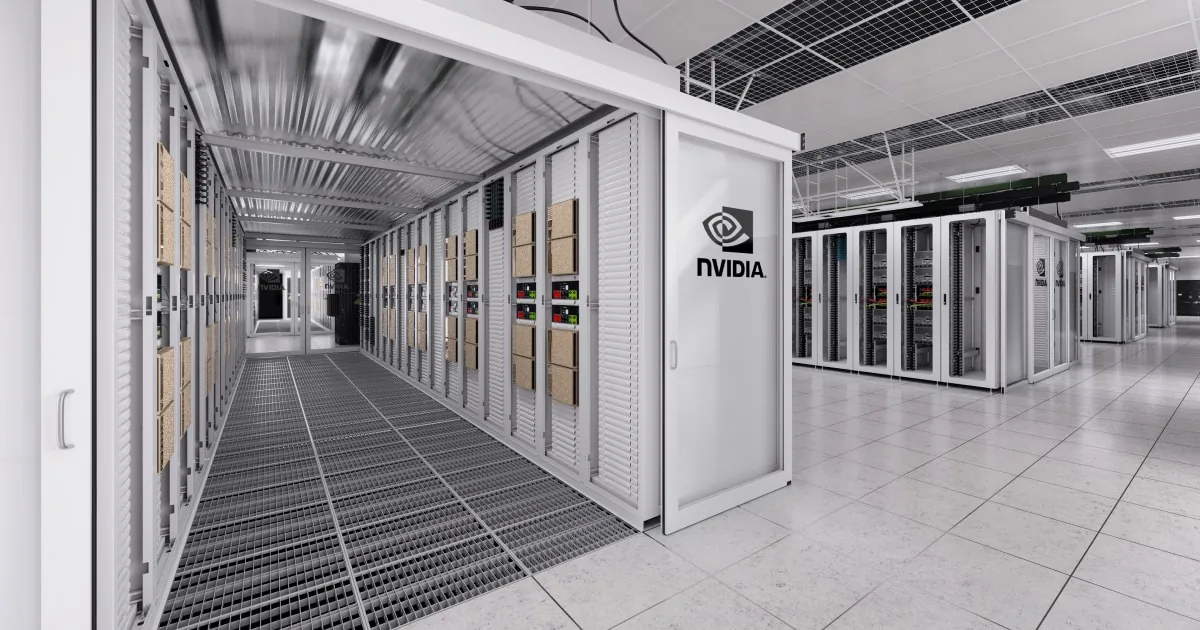
The deal at a glance
| Field | Detail |
|---|---|
| Announced | August 10, 2026 |
| Nvidia counterparty | Nvidia + 6 Wall Street asset managers |
| Asset manager partners | Apollo Global Management, Blackstone, BlackRock, Brookfield Asset Management, Goldman Sachs, KKR |
| Combined third-party capital target | $500 billion |
| Structure | Independent compute financing platforms (per asset manager) |
| Collateral | Nvidia chips and AI factories (data centers housing the chips) |
| Lessees | Hyperscalers, frontier AI labs, enterprises |
| Tenor | 10-15 years (typical infrastructure debt) |
| Comparable transactions | Broadcom $60B AI debt (Aug 2026), Nvidia $105B OpenAI backstop, Marvell-Google $12.2B warrant |
| Top-7 tech 2026 AI capex projection | $730+ billion |
How the structure works
The compute financing platform works as follows. Nvidia signs an MoU with each asset manager to establish an independent entity that will deploy capital for AI infrastructure. The asset manager raises debt (typically senior secured term loans) and equity (typically co-investment from the asset manager's infrastructure fund and Nvidia itself) and uses the proceeds to acquire Nvidia chips and to build or acquire data centers housing those chips. The chips are the primary collateral, with the data centers as secondary collateral. The hyperscalers, AI labs, and enterprises lease the chips and the data center capacity under multi-year contracts that generate the cash flow that services the debt and provides equity returns.
The risk allocation is split between Nvidia, the asset managers, and the lessees. Nvidia bears the residual risk that the chips become obsolete or that demand for AI compute contracts. The asset managers bear the credit risk on the leases and the technology risk on the chips. The lessees bear the rent obligation for the life of the lease, which is typically 10-15 years. If a lessee defaults, the asset manager can repossess the chips and re-lease them, but the chips may be 3-4 generations behind current Nvidia hardware by the time of the default, which compresses the recovery value.
The economics work because AI compute leases are priced at a yield that reflects both the credit risk on the lessee and the technology risk on the chips. A 15-year lease to a creditworthy hyperscaler (Microsoft, Alphabet, Meta, Amazon) on a data center housing current-generation Nvidia chips would price at a yield comparable to investment-grade corporate debt, with a 100-200 basis point spread for the technology risk. The all-in cost to the hyperscaler is competitive with the cost of issuing their own debt at investment-grade rates, with the benefit that the financing does not appear on the hyperscaler's balance sheet as debt (it is a lease, with different accounting treatment).
Why Nvidia did this
Three forces drove Nvidia to build the financing platform. First, the customer demand curve. The $730 billion 2026 AI capex projection is anchored by hyperscaler commitments, but the hyperscalers' balance sheets cannot fund the entire buildout at the speed the AI market is moving. Nvidia's financing platform lets the hyperscalers accelerate their AI infrastructure deployment without tapping their own balance sheets, which accelerates Nvidia's chip revenue. Second, the competitive moat. By providing the financing, Nvidia locks its customers into the Nvidia stack for the life of the financing. A hyperscaler that takes Nvidia-financed capacity cannot easily switch to AMD or Cerebras without breaking the financing terms, which makes the moat wider. Third, the asset-light economics. Nvidia's chip gross margins are already 75 percent on the high end, and the financing platform enables Nvidia to capture additional economics from the deployment of its chips without taking on the data center construction risk. The asset managers take that risk, with Nvidia providing the technology platform and a partial credit guarantee.
The right way to model this for Nvidia's earnings is that the financing platform does not change Nvidia's near-term revenue trajectory, but it does change the durability of the revenue. A hyperscaler that takes Nvidia-financed capacity is committing to Nvidia chip purchases for the next 10-15 years, plus upgrades every 2-3 years. The upgrades are typically financed by extending the lease or by issuing new debt against the upgraded chips. The economics for Nvidia are durable revenue from a customer base that is locked in by long-term lease commitments.
What the asset managers are underwriting
The asset managers are underwriting a long-duration lease income stream backed by hardware collateral and creditworthy lessees. The closest comparable transactions are commercial real estate (office buildings leased to investment-grade tenants) and infrastructure (toll roads, fiber networks, power generation leased to utility customers). The asset managers have decades of experience underwriting these deals, and the AI compute financing platform applies the same frameworks to a new asset class.
Three underwriting considerations are new to AI compute. First, technology obsolescence. Nvidia's chips have a 2-3 year useful life in the AI training and inference market, with regular refresh cycles. The asset managers are underwriting on the assumption that the chips retain enough residual value at the end of the lease to recover the principal, but the precedent is thin. A 10-year lease starting with a Hopper chip in 2024 ends with a 2-generation-old chip in 2034, which may have limited resale value. Second, lease structuring. Commercial real estate leases are typically structured as triple-net (lessee pays for taxes, insurance, maintenance), but AI compute leases are typically structured as full-service (lessor pays for power, cooling, maintenance, and chip replacement). The full-service structure transfers more risk to the lessor, which requires higher yields. Third, demand durability. The consensus forecast for AI compute demand growth is 30-40 percent annually through 2030, but the asset managers are underwriting 10-15 year leases at lower growth rates. A demand slowdown would reduce lease utilization and put pressure on the financing.
The risk for the asset managers
Three concrete risks for the asset managers in the Nvidia $500 billion financing platform. First, single-vendor concentration. The collateral is 100 percent Nvidia chips, and the lease economics depend on Nvidia's continued market leadership. If Nvidia's market share erodes materially (to AMD, Cerebras, Etched, hyperscaler custom silicon), the lease economics compress. Second, AI demand durability. The asset managers are underwriting on the assumption that AI compute demand continues to grow at 30-40 percent annually through 2030. A demand contraction (which is what Citi's August 2026 crypto forecast cuts reflect for the speculative end of the AI trade) would reduce lease income and put the financing under stress. Third, regulatory risk. The US government has been tightening export controls on AI chips, particularly to China, and a more restrictive regime would reduce the addressable market for Nvidia chips. The asset managers are not directly exposed to export-control risk (their collateral is in US data centers, leased to US hyperscalers), but the broader Nvidia market cap would decline under tighter export controls, which would affect the equity-side returns on the platform.
The right way to assess the risk-reward for the asset managers is to compare the Nvidia financing platform to the existing infrastructure asset classes the same managers underwrite. Real estate yields are 6-8 percent, infrastructure yields are 7-10 percent, and private credit yields are 10-15 percent. AI compute financing will price at the higher end of this range, with 10-15 percent yields to reflect the technology-specific risk. The asset managers' underwriting hurdle is the leveraged-equity IRR, which is typically 15-20 percent for infrastructure deals. If AI compute financing hits these targets, the asset managers will deploy more capital. If it falls short, the platform will not scale to the $500 billion target.
What an operator should conclude
The Nvidia $500 billion financing platform is the canonical example of late-cycle AI infrastructure funding, where the asset management industry is being brought in to underwrite the buildout that the hyperscalers cannot fund alone. The right way to model this for an operator is that AI infrastructure is becoming a third asset class alongside commercial real estate and infrastructure, with similar underwriting frameworks but new technology-specific risks. The capital structure of the AI buildout will be more like real estate than like software, with long-duration leases and asset-backed financing.
Three concrete takeaways. First, if you are a chip designer, the Nvidia financing platform is both an opportunity and a threat. The opportunity is that it accelerates AI infrastructure deployment, which grows the addressable market for all AI chips. The threat is that it locks Nvidia's customers into Nvidia chips for the life of the financing, which makes it harder for AMD, Cerebras, Etched, and others to break in. The competitive response is the Marvell-Google-equity-for-supply pattern: build deep equity relationships with hyperscalers and AI labs to lock in alternative supply. Second, if you are an asset manager evaluating the platform, the underwriting is tractable for hyperscaler-anchored capacity with multi-year lease commitments. The technology-specific risks require careful scenario analysis, but the existing infrastructure-financing frameworks are the right starting point. Third, if you are building AI infrastructure, the financing structure matters for the upgrade path and the cost of capital. Nvidia-financed capacity has different cost dynamics than self-financed capacity, and the right architecture depends on which side of the divide your organization sits.
Frequently asked questions
What is the Nvidia $500 billion AI financing deal
On August 10, 2026, Nvidia signed MoUs with Apollo, Blackstone, BlackRock, Brookfield, Goldman Sachs, and KKR to establish independent compute financing platforms that will deploy more than $500 billion of third-party capital for AI infrastructure over time. The asset managers fund data centers housing Nvidia chips, with the chips as collateral and the hyperscalers as lessees.
How does the structure work
The asset managers raise senior secured debt and equity from their infrastructure funds and Nvidia. The proceeds acquire Nvidia chips and fund data center construction. The chips and data centers are leased to hyperscalers, AI labs, and enterprises under 10-15 year contracts. The lease income services the debt and provides equity returns.
Who is underwriting the deal
Six asset managers: Apollo Global Management, Blackstone, BlackRock, Brookfield Asset Management, Goldman Sachs, and KKR. These are the largest infrastructure and credit investors in the world, with combined assets under management exceeding $25 trillion. The asset managers have decades of experience underwriting real estate and infrastructure deals, but AI compute is a new asset class.
How does this compare to the Broadcom $60 billion AI debt deal
Broadcom's deal is smaller and structured differently. Broadcom is raising $60 billion in debt for an AI chip financing vehicle that benefits Anthropic and other companies, with a roughly $30 billion junior debt tranche and a $60-70 billion senior-secured tranche that Broadcom partially guarantees. The Nvidia deal is larger and uses a third-party-capital structure rather than direct debt issuance.
What is the risk for the asset managers
Three risks. First, single-vendor concentration (the collateral is 100 percent Nvidia chips). Second, AI demand durability (the asset managers are underwriting 10-15 year leases on the consensus 30-40 percent annual growth forecast). Third, regulatory risk (tighter US export controls on AI chips would reduce the addressable market).
Does this affect Nvidia's earnings
The financing platform does not change Nvidia's near-term chip revenue, but it does change the durability of the revenue. A hyperscaler that takes Nvidia-financed capacity is committing to Nvidia chip purchases for 10-15 years, plus upgrades every 2-3 years. The economics are durable revenue from a customer base locked in by long-term lease commitments.
Sources
- NVIDIA Newsroom — $500 Billion Third-Party Capital Announcement — official announcement with the six asset managers
- CNBC — Nvidia lines up $500 billion in financing — Huang's "investable asset" framing, third-party capital mechanics
- Reuters — Nvidia partners with Wall Street giants — $730B combined capex context, hyperscaler buyer details
- SOLVE Fixed Income — Nvidia, Wall Street Firms Strike AI Financing Deal — fixed-income market perspective on the platform




Loading comments…