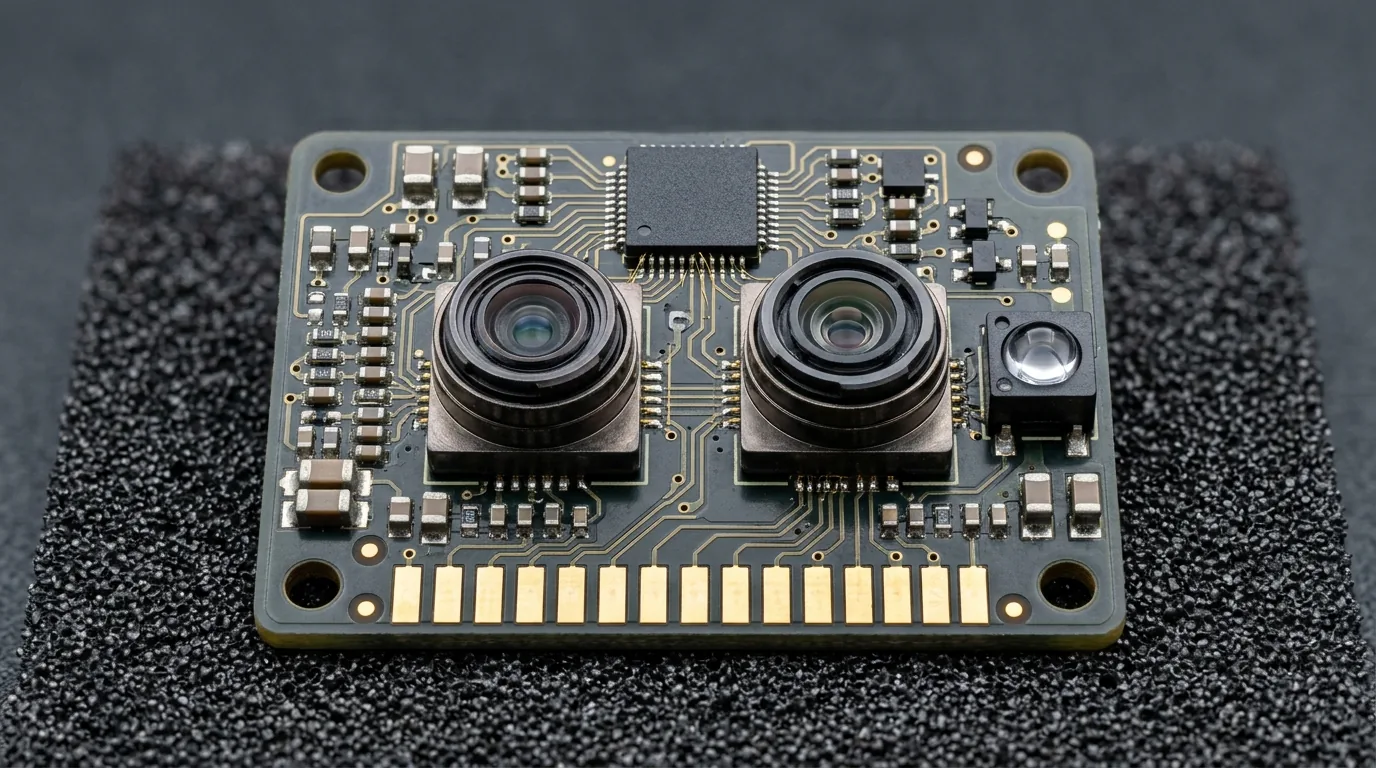



The Tensor G5 is the first Google-made chip built by TSMC, and the move off Samsung Foundry is the biggest manufacturing change in the Tensor line since the chip existed. It lands in the Pixel 10 series on TSMC's 3nm N3E process, the same node that underpins Qualcomm's Snapdragon 8 Elite and Apple's A18 Pro, and Google says the process lets it pack more transistors into the chip for more power and efficiency.[1] The headline performance claim is a CPU that is 34 percent faster on average than the Tensor G4, and independent testing lands close to that number in multi-core workloads.[1][3]
The codename for the chip in Google's internal documentation is Laguna, and the shift to TSMC is the single most important change in the specification, because it removes the process-maturity and thermal constraints that held the Samsung-built G1 through G4 back. The CPU layout, the GPU supplier, and the modem all change in the same generation, which makes the G5 less a year-on-year refinement than a re-platform of the whole design.[3][5]
Why the move to TSMC 3nm matters more than the benchmark numbers
Every Tensor before the G5 was built on Samsung Foundry processes, largely 5nm and 4nm nodes. Those processes delivered the AI and imaging results Google wanted, but they lagged the TSMC equivalent in power efficiency and sustained frequency, and that gap showed up in thermals and battery life rather than in peak benchmark scores.[3] The N3E node gives the G5 higher transistor density, better power efficiency, and more thermal headroom on familiar Arm cores, which is why the same Cortex-X4 prime core can run at 3.78 GHz on the G5 where earlier designs could not hold that clock under load.[3][4]
The CPU is an octa-core Arm design rearranged for multi-threaded balance. It uses one Cortex-X4 prime core at up to 3.78 GHz, five Cortex-A725 mid-cores at up to 3.05 GHz, and two Cortex-A520 efficiency cores at up to 2.25 GHz.[3][4] That is a 1-plus-5-plus-2 layout, a change from the G4's 1-plus-3-plus-4 arrangement, and the extra mid-cores are the part that matters for sustained work, because they are the cores that carry a multi-app workload after the prime core throttles. The result is roughly 18 percent better single-core performance and about 35 percent faster multi-core performance in Geekbench 6 against the G4, which lines up with Google's 34 percent average CPU claim.[5]
GPU and the Imagination switch
The graphics side is where the G5 is the least settled. It drops the Arm Mali GPU that the previous Tensor chips used and moves to an Imagination Technologies PowerVR DXT-48-1536, reported to be clocked around 1.1 GHz.[3] The DXT series is built on Imagination's Photon architecture, and the change is significant enough that synthetic results are inconsistent. In some tests the G5 GPU posts modest gains over the G4's Mali-G715, while in Vulkan-based scoring it regresses, and post-update GPU scores have landed in roughly the range of a mid-range gaming tier rather than a flagship one.[3][4]
The practical read is that the Tensor G5 is not a graphics-first chip. In 3DMark's Wild Life Extreme test, neither the Pixel 10 nor the Pixel 10 Pro breaks 20 FPS, while a Snapdragon 8 Elite phone posts around 38 FPS.[1] That is the clearest number in the chip's benchmark story, and it is the reason the G5's strength is framed around AI and efficiency rather than raw gaming throughput. The process node helps sustained gaming by keeping temperatures down, but the GPU architecture itself is not competing with the 8 Elite at the top end.[1]
On-device AI and the new Edge TPU
The TPU is the part of the chip Google optimises hardest, because the on-device AI features are the ones that are Pixel-exclusive. The G5 uses a new Google Edge TPU, and Google claims around a 60 percent improvement in AI processing over the previous generation, optimised for Gemini Nano running on the device.[3][5] The on-device model runs a library of pre-optimised neural networks for tasks from image classification to real-time camera processing, and the RAM configuration matters here in a way it does not for general compute. The base Pixel 10 has 12 GB of RAM, and in Geekbench's AI benchmark it loses to both the Snapdragon 8 Elite and Exynos 2500. The Pixel 10 Pro, with 16 GB, beats Samsung's chip but still falls short of Qualcomm.[1]
The RAM dependency is the key architectural point. On-device AI workloads are bounded by how much of the model and its working set fit in memory at once, and a 12 GB phone has less headroom for that than a 16 GB one. This is the same bandwidth-versus-capacity tension that shows up at the GPU level in desktop hardware, where the memory bus sets the ceiling for how much of a model can be active, and that trade off is broken down in our RTX 5080 versus 5090 comparison.
How the Tensor G5 compares to the A19 and Snapdragon 8 Elite
Against Apple's silicon the comparison is a draw with different emphases. Both the G5 and the A18 Pro run on the same TSMC 3nm node, so the process is no longer a differentiator. Apple's chip carries the stronger GPU and the faster single-core peak, while Google's design carries the stronger AI pipeline for its on-device features. The honest framing is that the Tensor G5 is not a benchmark-killer and will always trail Apple and Qualcomm in synthetic peak scores, and Google has never built it to be one.[1]
Against the Snapdragon 8 Elite the gap is wider in graphics and narrower in everyday responsiveness. The 8 Elite's higher clock prime core and larger GPU put it ahead in both gaming and peak CPU, while the G5's 1-plus-5-plus-2 layout is tuned for the sustained, multi-app workload that is how most people actually use a phone. In AnTuTu, the G5 scores around 1.29 million overall, a roughly 20 percent jump over the G4's 1.07 million, with the CPU sub-score nearly 2.3 times higher than the previous generation.[5] That is a real and noticeable improvement, and the CPU gain is the part that shows up in day-to-day use.
The modem and connectivity stack
The G5 keeps the Samsung Exynos 5400 5G modem, which is the one component of the platform that does not change with the move to TSMC silicon. The modem is sold as a separate die and supports sub-6GHz 5G bands, and the connectivity stack adds Wi-Fi 7 and Bluetooth 6.0 on the G5 over the G4's Wi-Fi 7 and Bluetooth 5.3.[5] For most buyers the modem is not a differentiator, but it is worth noting that the next Tensor is reported to drop the Samsung modem for a MediaTek one, which would make the G5 the last generation with that pairing.[6]
What the numbers mean for a buyer
The Tensor G5 is a chip that trades peak graphics and synthetic CPU scores for on-device AI, efficiency, and sustained responsiveness. If the purchase is driven by gaming at maximum settings or benchmark rankings, the Snapdragon 8 Elite and Apple's A-series are the better silicon. If the purchase is driven by the Pixel's AI features, battery life, and how the phone feels in everyday use, the G5 is a meaningful step over the G4, and the TSMC node is the reason it finally runs as cool as the marketing suggested it should.[1][5] The 35 percent multi-core CPU gain and the cooler thermals are the changes that survive contact with real use, and the GPU is the part to accept as a known limitation.
For readers weighing the Pixel 10 against the iPhone cycle that lands the same month, the phone side of the launch window is mapped out in our iOS 27 beta roadmap, which covers the September release timing across both platforms.
Frequently asked questions
Is the Tensor G5 faster than the Tensor G4?
Yes, in CPU work. Independent testing shows about 18 percent better single-core and roughly 35 percent faster multi-core performance in Geekbench 6 against the G4, which matches Google's 34 percent average CPU claim.[5] The overall AnTuTu score is about 20 percent higher. The GPU is the exception, where results are mixed and it does not clearly beat the G4 in every test.[3]
Why did Google switch to TSMC?
Process maturity. The Samsung Foundry nodes used for the G1 through G4 lagged TSMC's 3nm in power efficiency and sustained frequency, which showed up as thermal limits and battery drain rather than peak scores. The move to TSMC's N3E node gives higher transistor density, better efficiency, and more thermal headroom, which is the main reason the G5 runs cooler and holds its clocks longer.[3]
Is the Tensor G5 good for gaming?
For mainstream titles at standard settings, yes. At the top end, no. In 3DMark's Wild Life Extreme test the Pixel 10 and Pixel 10 Pro both stay under 20 FPS, while a Snapdragon 8 Elite phone posts around 38 FPS.[1] The chip is tuned for AI and efficiency rather than peak graphics, so demanding titles at maximum settings are where the gap shows.
What is the Laguna codename?
Laguna is the internal codename for the Tensor G5 in Google's documentation.[2] It refers to this generation of the chip and is used in engineering and leak coverage ahead of launch. The codename does not change the specification, which is a 1-plus-5-plus-2 Arm CPU on TSMC 3nm with an Imagination PowerVR GPU and a new Edge TPU.
Does the Tensor G5 support AI features that other chips cannot?
The on-device AI features are Pixel-exclusive because they run on Google's Edge TPU, which is optimised for Gemini Nano.[3] Other chips can run similar models, but the Pixel's implementation is the one Google tunes and supports, and the 16 GB Pixel 10 Pro in particular has enough RAM headroom for the larger on-device models that the 12 GB base model does not.
References
- Android Central — Google Tensor G5: Benchmarks and everything you need to know
- Google — Pixel 10 introduces new chip, Tensor G5 (20 August 2025)
- Cyberraiden — Google Tensor G5: Technical Specifications (19 August 2026)
- Android Ayuda — Google Tensor G5 in the Pixel 10: Highlights and Shadows of Its Performance
- Beebom — Google Tensor G5 vs Tensor G4: Benchmarks and Specs
- Gizbot — Google Tensor G6 vs Tensor G5: Benchmarks Tested and Compared




Loading comments…