

Sony is building a new PlayStation handheld, and it is the most credible hardware rumor in the company's pipeline. But "credible" is doing a lot of work in that sentence. As of mid-2026 the PSP 2 has not been announced, not been spec'd publicly, and, according to the most detailed reporting on the project, is still in its high-level design phase and may be at least two years from launch.[1][3] This piece is an analysis of what is known, what is plausible, and what the hardware would have to do to land against a Nintendo Switch 2 and a Steam Deck OLED that are already on shelves.
The earlier version of this article on this site treated the PSP 2 as a confirmed product and quoted a "Rembrandt+" APU with invented specifications. That framing was wrong, and the specifics in this rewrite come from the actual reporting: a custom AMD APU, an RDNA-based GPU, a realistic 2026-to-2027 window, and a price analysts peg well above the PS Vita's launch price. Everything below is flagged by confidence, because the difference between "Sony confirmed" and "a respected leaker reported" is the entire difference between this being a review and this being an analysis.
What is actually confirmed, and what is rumor
The confirmed part is narrow but real. Sony's Mark Cerny has discussed the next PlayStation hardware cycle in public, and the company's AMD partnership extends past the PS5 Pro into the next console and, reporting says, the handheld.[4][5] That is the ground. Everything more specific is rumor, and the strongest current reporting comes from Moore's Law is Dead, who places the device in its "high-level design phase," notes it is "at least two years out," and is explicit that it is "technically not green lit for launch yet."[3]
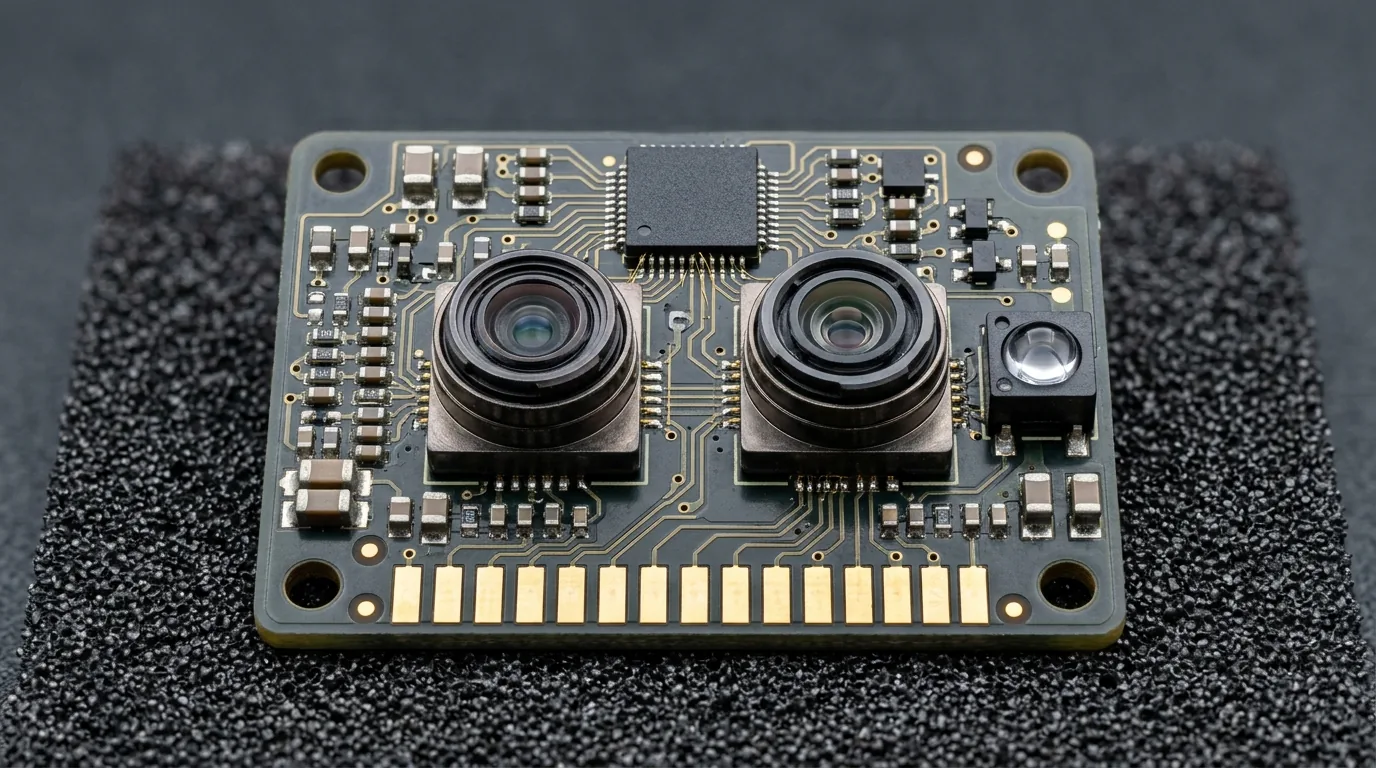
The rumor content, as reported, is this: a custom AMD APU built on AMD's UDNA (Unified Data and Network Architecture) line, an RDNA-based GPU with 16 compute units and 32 ROPS, 16 GB of LPDDR5-9600 memory with an additional 16 MB of on-chip cache, and a memory bandwidth around a third of a PS5's.[1][3] The performance target, per multiple reports, is PS4-quality gaming on the handheld, with the possibility that some titles get a "Pro-like" patch to push individual games toward PS5-level quality.[1] None of those numbers are confirmed by Sony. They are the current best guess from people who have been right about AMD-PlayStation silicon before.
Why AMD, and what the chip would actually need to be
The silicon choice is the least speculative part of the whole story, because Sony and AMD have a long-standing relationship that runs through the PS4, PS5, and PS5 Pro. An APU here is near-certain; the only open question is which APU. The 2026 reporting points to AMD's UDNA-based parts rather than a refreshed Rembrandt, which matters because Rembrandt is a 2022 Zen 4 mobile design and a 2026 launch would be well past its architectural window.[5]
The constraint that defines the whole chip is thermal. A battery-powered device running PS4-class games has to hold a 10 to 15-watt sustained envelope, and that budget has to cover CPU, GPU, memory controller, and the display driver all at once. That is why the reported configuration pairs a moderate core count with a 16 GB unified memory pool and an on-chip cache to reduce the trips to DRAM, because every byte served from the 16 MB of cache is a byte that does not burn bandwidth budget. The reported figure that the memory bandwidth would be roughly a third of a PS5's is the number to watch, because it is the ceiling that determines which game settings are actually playable and which are marketing screenshots.[1]
The Sony brand still carries weight in a market where it has been absent for over a decade, because the original PSP and the PlayStation Vita defined what a first-party portable PlayStation experience feels like, and that franchise equity is why the same company has spent more than a decade without a competing hardware portfolio.[2]
The competitive field it would land into
This is where the analysis gets concrete, because the PSP 2 is not entering an empty market. It is landing against three shipping products, each with a different definition of "good enough."
The Nintendo Switch 2 is the direct competitor for the same shelf. Its custom NVIDIA T239, built on the Ampere architecture, delivers approximately 4 TFLOPS of GPU throughput on 8 GB of unified LPDDR5, and it is the only one of the three that sells a native first-party library as its core value.[6] The full spec sheet is in our Switch 2 versus PS5 versus Xbox comparison. A Sony handheld targeting PS4-quality would beat the Switch 2 on raw graphics in most titles, and that is the argument Sony would make. The argument the Switch 2 would make back is that first-party exclusives are not a bandwidth problem.
The Steam Deck OLED is the argument for the open ecosystem. Its Zen 2 CPU with RDNA 2 GPU produces 1.6 TFLOPS on 16 GB of LPDDR5, which is far less than the PSP 2's reported target, but it runs the entire Steam catalog and costs less.[7] For a buyer whose library already lives on Steam, the PSP 2's closed ecosystem is a downgrade no matter how fast the APU is. That is the real competitive threat to a Sony handheld, and it is not a silicon threat at all. It is a catalog and price threat.
The third product is the one Sony most needs to beat on feel, which is the Switch 2 in docked mode. A PS4-quality handheld that can run the same library as the PS5, at a price analysts peg between 499 and 699 dollars, has to justify that spread over a PS5 Pro that already plays PS4 and PS5 games on a TV.[1][4] Portability is the only feature a docked PS5 Pro does not have, and the PSP 2 has to be good enough that portability is worth the premium.
Distribution and the digital-only question
Every PlayStation since the PS1 has shipped a physical media option, and the Vita was the last one to lean on it heavily. A PSP 2 in 2026 or later would almost certainly be digital-first, and that changes the economics of the hardware in a way that does not show up in the spec sheet. A digital-only device does not need an optical or UHS drive, which frees space in the chassis and budget for a bigger battery or a faster memory pool. It also means the device's value proposition is tied to the PlayStation Store's library and its licensing terms, which is a different bet than the Steam Deck's open one.
The "Pro-like patch" idea in the reporting, where individual games get an optional performance boost that pushes them toward PS5 quality, is the feature that would justify a digital-first model, because it requires a network connection to fetch and apply. If Sony ships that, the PSP 2 is a device that improves over time through software, which is a PlayStation pattern the company has used before with the PS4 Pro and the PS5 Pro.[1][4]
Pricing, timing, and what to watch for
On price, analyst estimates cluster between 499 and 699 dollars, with the higher end reflecting the PS5 Pro's 699 price point and the expectation that a premium handheld sits at or above the base console it mirrors.[1] On timing, the reports agree on 2026 at the earliest and 2027 as the more likely window, which puts a potential launch after the Switch 2 has had a full year of reviews, price adjustments, and first-party exclusives to build out its library.[1][3]
The tells to watch are three. First, any Sony job posting that mentions a handheld or portable product with an AMD APU, because Sony's hardware hiring has been a reliable early signal for the PS5 cycle. Second, any AMD presentation that names a UDNA mobile part with a 16 CU RDNA GPU, because that is the exact configuration in the reporting. Third, any change in the "high-level design phase" language from Moore's Law is Dead, because that is the source that has been most specific about the schedule and the most accurate on the AMD-PlayStation relationship.[3][5] Until one of those appears, the PSP 2 is a credible plan, not a confirmed product, and the analysis here is about what the hardware would have to be to win, not about what it is.
Frequently asked questions
Has Sony officially confirmed the PSP 2?
Not in the way the earlier version of this article implied. Sony has confirmed the next-generation PlayStation hardware cycle and its AMD partnership, and reporting is credible that a handheld is in development. But the most detailed reporting on the PSP 2 specifically places it in the high-level design phase, at least two years out, and not yet greenlit for launch. It is a credible plan, not an announced product.
What chip will the PSP 2 use?
Reporting points to a custom AMD APU on AMD's UDNA line, with an RDNA-based GPU of 16 compute units and 32 ROPS, paired with 16 GB of LPDDR5-9600 memory and 16 MB of on-chip cache. None of these numbers are confirmed by Sony. The earlier claim of a "Rembrandt+" APU was not supported by the reporting and should be treated as incorrect.
Will the PSP 2 play PS5 games?
The reporting says the target is PS4-quality gaming natively, with the possibility that individual titles get a "Pro-like" performance patch to push them toward PS5-level quality. There is no reporting that the device would run the full PS5 library at full fidelity, and the memory bandwidth reported for the device, around a third of a PS5's, is the hard ceiling that limits what "full fidelity" would mean on a battery.
How does the PSP 2 compare to the Switch 2 and Steam Deck OLED?
Against the Switch 2, a PS4-quality PSP 2 would likely win on raw graphics, because the Switch 2's T239 delivers roughly 4 TFLOPS on 8 GB of unified memory, but the Switch 2 sells a native first-party library that a new Sony handheld would have to rebuild. Against the Steam Deck OLED, the PSP 2 would be faster but more expensive and closed-ecosystem, which is a downgrade for anyone whose library is on Steam. The Switch 2 figures above are the shipped specs used in our Switch 2 performance comparison.
When will the PSP 2 launch and how much will it cost?
Reporting puts the launch at 2026 at the earliest and 2027 as more likely, and analyst price estimates cluster between 499 and 699 dollars. Both numbers are estimates, not confirmations, and the "not yet greenlit" language in the most detailed reporting means either could shift. Treat any specific date or price as a placeholder until Sony announces the device.
References
- The Shortcut — PSP 2: price, expected release date, and everything you need to know (19 June 2025)
- Wikipedia — PlayStation Vita (launch price and history reference)
- Gadget Insiders — Sony PSP 2: New PlayStation Handheld in the Making, Insider Leaks Revealed
- Tom's Guide — Sony's Mark Cerny explains why your PS5 Pro is getting an upgrade in 2026
- Tom's Guide — AMD tipped to provide chips for PS6, new PlayStation handheld and the next Xbox
- New Tech Reviewer — Nintendo Switch 2 vs PS5 vs Xbox Series X performance comparison (T239, approximately 4 TFLOPS, 8 GB unified LPDDR5)
- Steam — Steam Deck (Zen 2 / RDNA 2, 16 GB LPDDR5)




Loading comments…