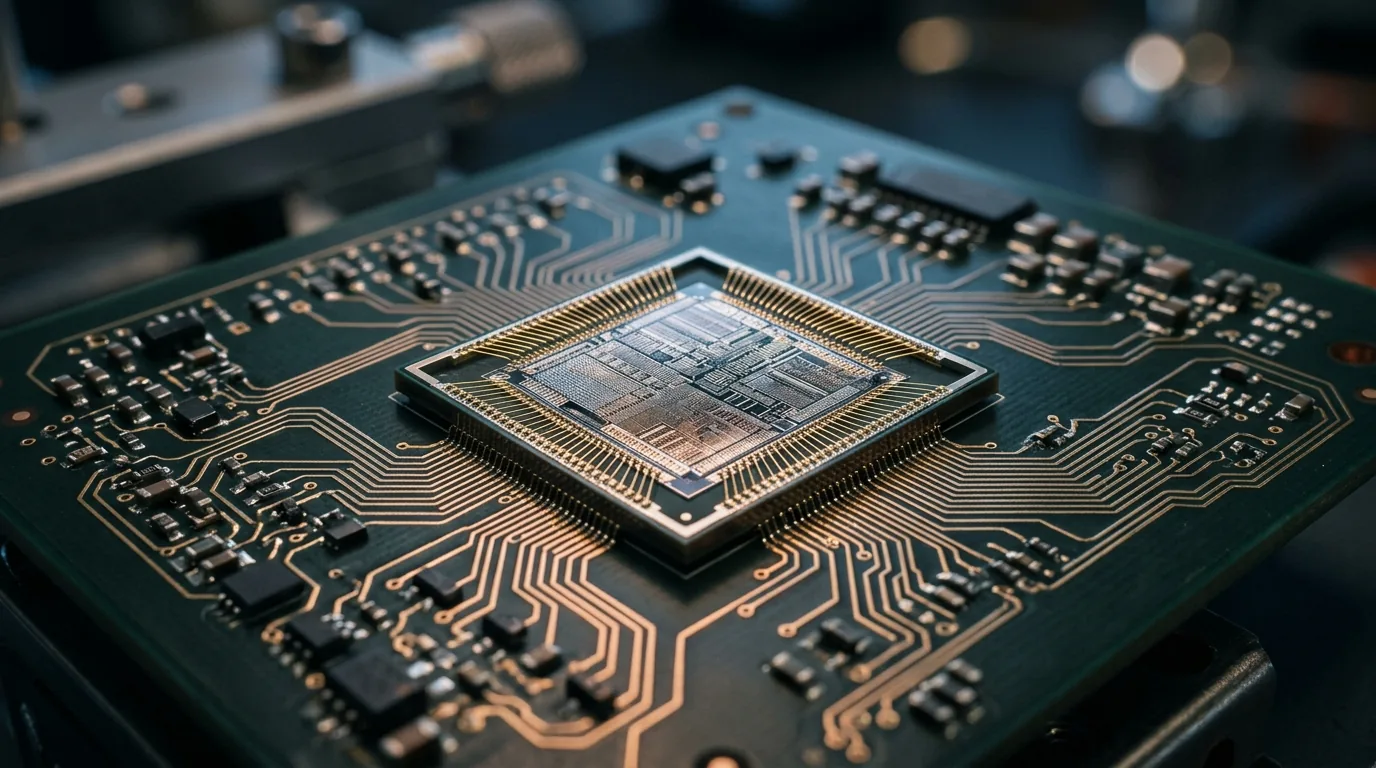
On September 22, 2026, at the annual Apsara Cloud Conference in Hangzhou, Alibaba Group officially unveiled the Zhenwu V900 (真武 V900), a flagship artificial intelligence accelerator engineered by its proprietary semiconductor subsidiary, T-Head (PingTouGe). Delivering three times the raw computational throughput of the Zhenwu M890 introduced earlier this year, the V900 is positioned by Alibaba Chief Executive Officer Eddie Wu as the most powerful domestic AI processor developed in China.
Beyond headline FLOPS, the Zhenwu V900 marks an aggressive structural escalation in the global semiconductor race. Designed to scale into unified clusters containing up to 500,000 accelerators, the silicon provides the core compute foundation for Alibaba’s upcoming 5-trillion to 10-trillion-parameter frontier artificial intelligence models. Concurrently, Alibaba Cloud established a long-term infrastructure roadmap targeting over 20 Gigawatts of global data center power capacity by 2032, backed by more than $53 billion in cumulative AI capital expenditures over the past three years. For hyperscalers and semiconductor architects worldwide, the announcement demonstrates that stringent Western export restrictions have accelerated, rather than arrested, the emergence of fully sovereign, high-bandwidth domestic silicon stacks.
The Apsara 2026 Keynote: Compute Sovereignty in the Post-Sanctions Era
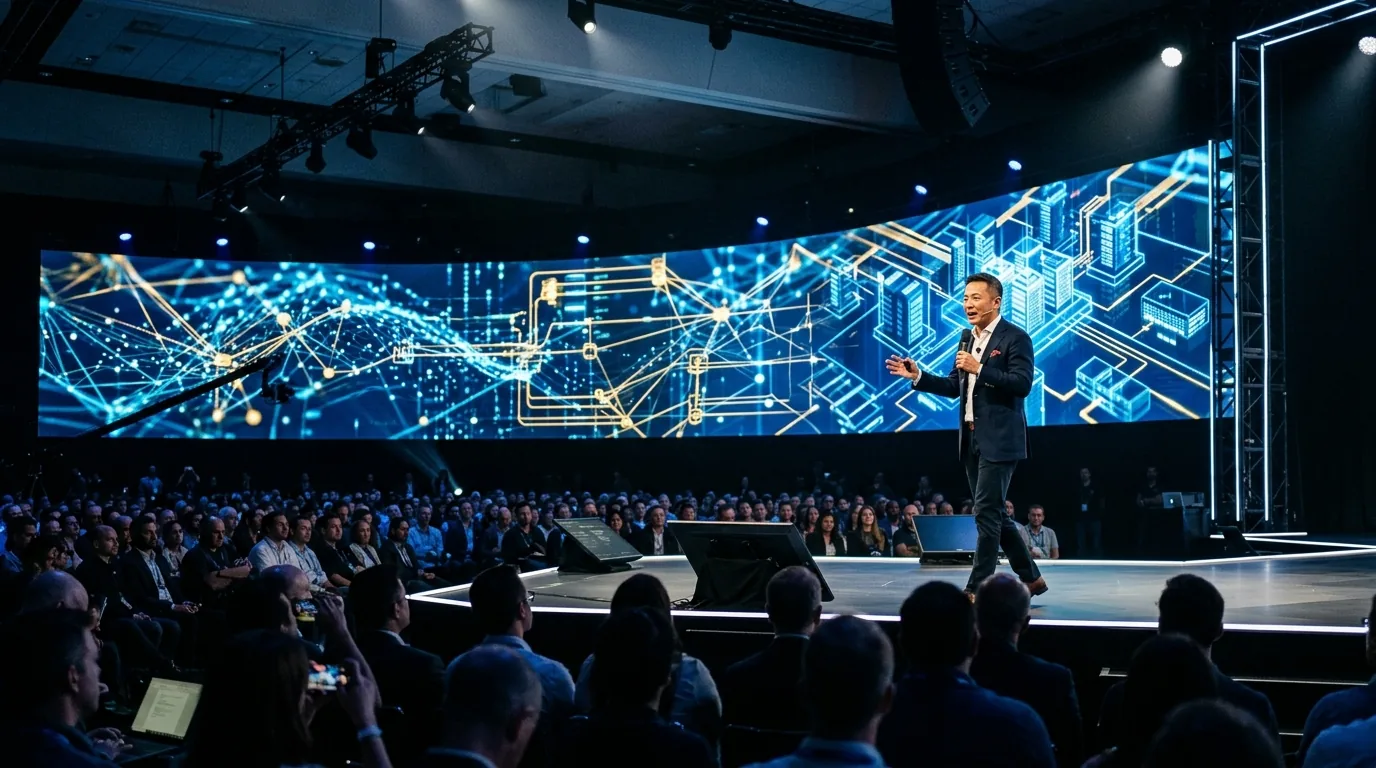
For several years, Chinese cloud providers navigated successive rounds of export controls enacted by the U.S. Department of Commerce’s Bureau of Industry and Security (BIS). When cutting-edge GPUs—including NVIDIA’s A100, H100, and Blackwell architectures—were barred from commercial export to Chinese entities, domestic hyperscalers were forced to rely on compromised, export-compliant variants like the NVIDIA H20. However, the H20's restricted compute density created severe rack-space inefficiencies, requiring massive clusters simply to achieve baseline training throughput.
Alibaba’s response was a decisive pivot toward silicon self-sufficiency. Established in 2018 through the consolidation of the C-SKY Microsystems acquisition and Alibaba's internal algorithmic hardware teams, T-Head initially gained industry acclaim for its open-source XuanTie RISC-V processors and Yitian 710 server CPUs. With the Zhenwu accelerator family, T-Head has transitioned from general-purpose microarchitectures to high-density matrix multiplication engines tailored explicitly for transformer attention heads and mixture-of-experts (MoE) routing layers.
According to figures released during the keynote, T-Head’s domestic deployment has expanded dramatically. As of September 2026, the company has shipped over 560,000 Zhenwu-series accelerators across more than 650 commercial clients in telecommunications, algorithmic finance, autonomous driving, and industrial logistics. With the V900 scheduled for commercial volume production in the first quarter of 2027, Alibaba aims to decouple its core cloud infrastructure entirely from foreign silicon supply chains.
Microarchitecture Teardown: 216GB HBM, 1,200 GB/s Interconnect, and Native FP4 Engines
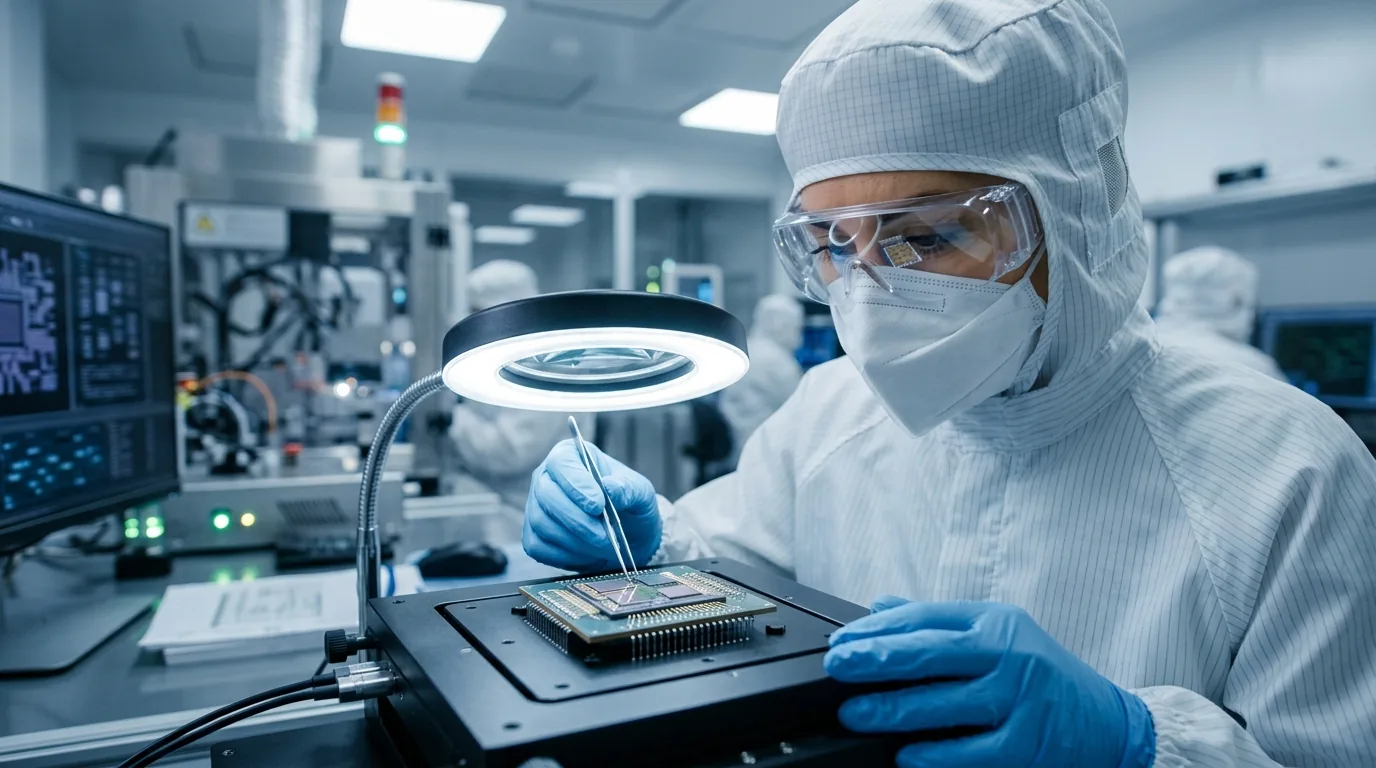
In modern deep learning training, compute capability is useless without memory capacity and communication throughput. Training frontier multi-trillion parameter networks is fundamentally memory-bound: model parameters, optimizer states (such as Adam momentum and variance), and activation maps rapidly exceed the physical DRAM limits of standard accelerators.
The Zhenwu V900 directly addresses these bottlenecks through three major hardware architectural innovations:
- 216GB High Bandwidth Memory: Integrating six or eight stacks of advanced HBM over a 2.5D silicon interposer, the V900 delivers 216GB of addressable on-package memory. This represents a 50% capacity increase over the 144GB integrated on the preceding Zhenwu M890, enabling full shards of dense MoE models to reside in local memory without spilling into host DDR5 RAM.
- 1,200 GB/s Inter-Chip Interconnect: Inter-accelerator communication is facilitated by T-Head’s proprietary high-speed transport fabric, which provides 1,200 GB/s of bidirectional interconnect bandwidth. While lagging the raw 1,800 GB/s of NVIDIA's NVLink 5 on GB200, it significantly outperforms the constrained 900 GB/s of export-compliant H20 systems, drastically reducing communication latency during tensor-parallel all-reduce operations.
- Native FP8 and FP4 Matrix Cores: The V900 incorporates dedicated hardware execution pipelines supporting FP32, TF32, FP16, and BF16, alongside native hardware acceleration for FP8 (E4M3 and E5M2 formats) and FP4. By leveraging microscopic FP4 precision for inference and low-rank adapter (LoRA) fine-tuning, the V900 triples the inference density per watt compared to M890 silicon.
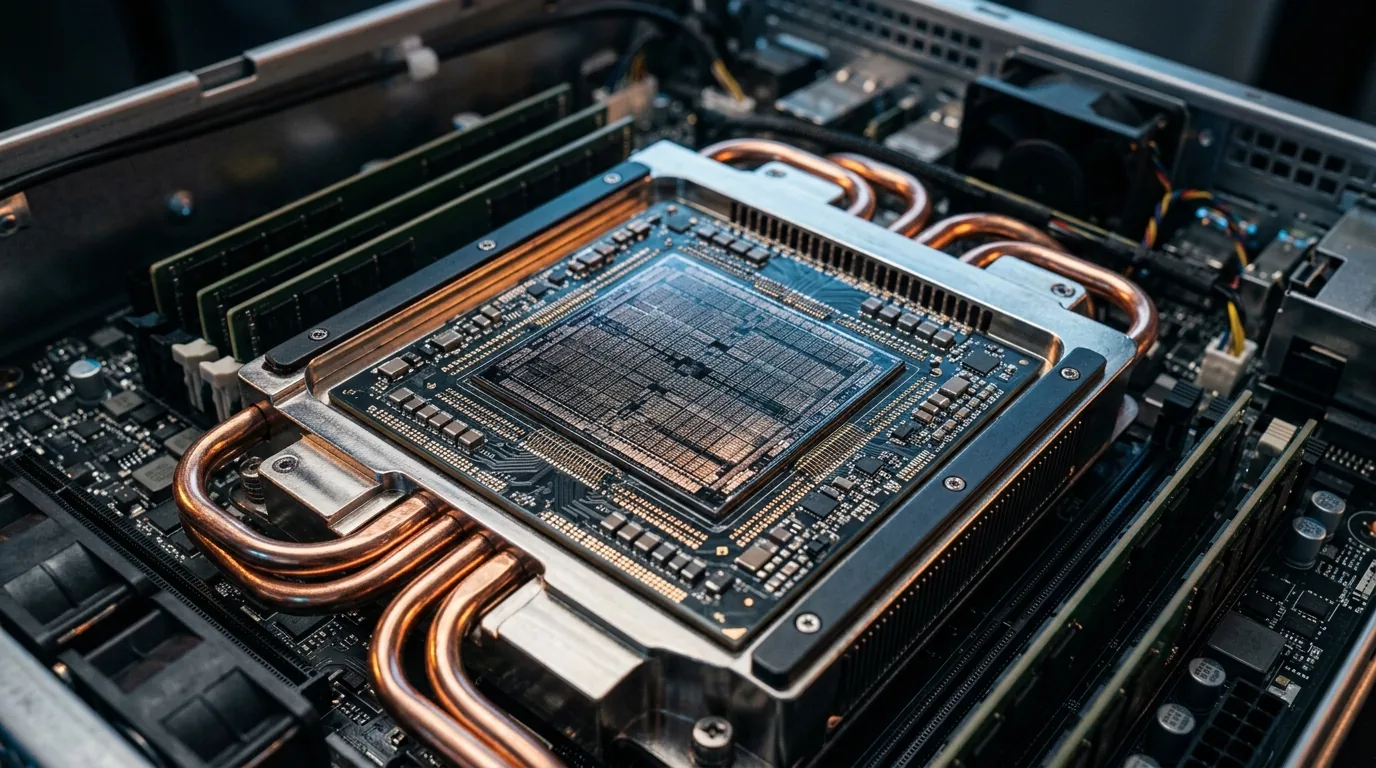
Unlike edge AI silicon—such as the dataflow processors analyzed in our review of Microchip's Hailo acquisition, which optimize for fanless sub-5W envelopes—the Zhenwu V900 operates within a high-power 600W to 750W datacenter thermal envelope, relying on direct-to-chip liquid cooling cold plates to manage thermal junction dissipation across dense multi-die chiplets.
Hyperscale Cluster Architecture: Scaling to 500,000 Accelerators in a Unified Fabric
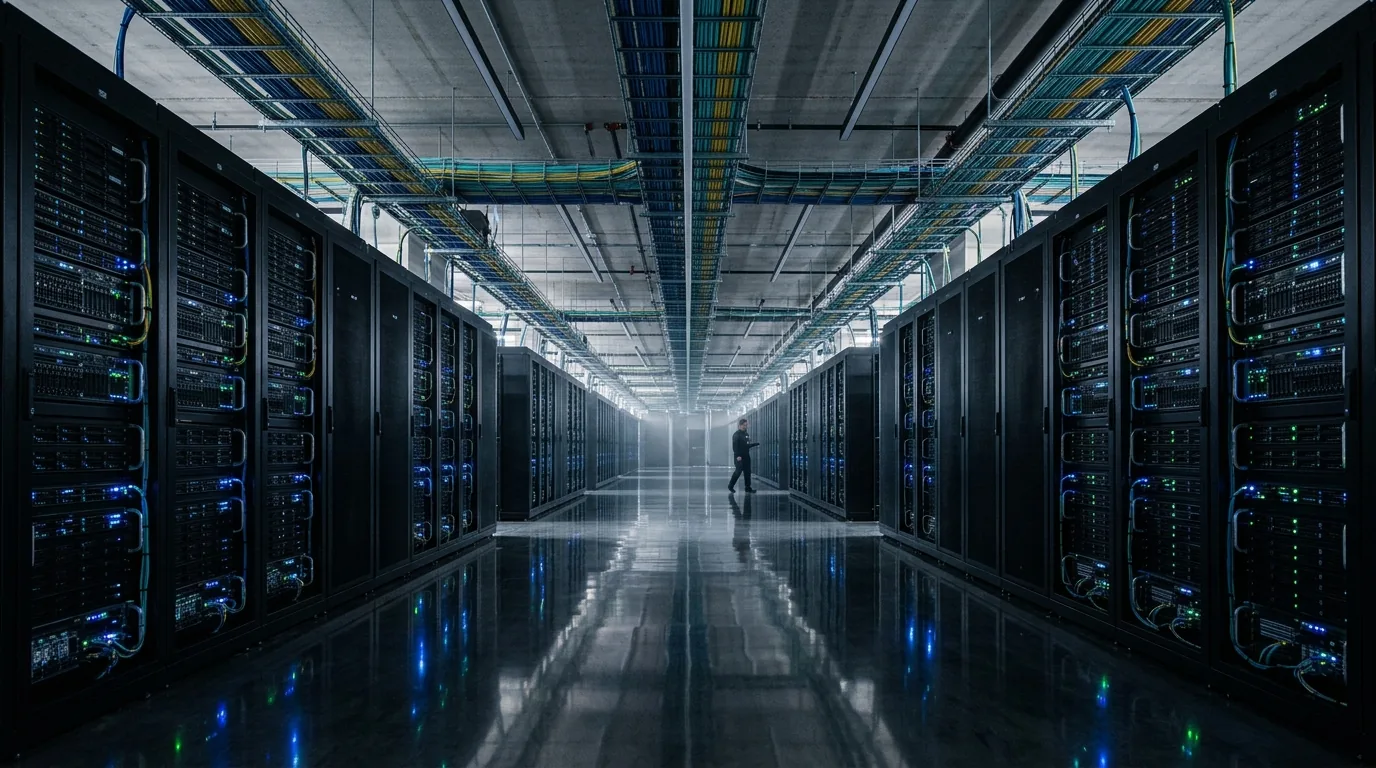
Designing a performant AI accelerator is only half the battle; scaling thousands of chips into a singular, non-blocking computational fabric presents severe distributed systems challenges. At cluster scales exceeding 100,000 accelerators, network tail latencies, optical transceiver failures, and packet drops can degrade linear scaling efficiency, causing expensive compute clusters to spend 40% or more of their runtime idling during parameter synchronization.
To support clusters scaling up to 500,000 Zhenwu V900 accelerators, Alibaba Cloud designed an integrated rack-and-network architecture:
- Panjiu High-Density Liquid-Cooled Racks: Evolving from the Panjiu AL128 platform (which housed 128 accelerators in a single liquid-cooled frame), the new rack architecture incorporates blind-mate liquid quick-disconnect manifolds, 54V DC busbars, and centralized optical backplanes, minimizing physical copper cabling distances inside the chassis.
- RoCEv2 with Congestion-Free Flow Control: The intra-cluster networking leverages an enhanced RDMA over Converged Ethernet (RoCEv2) protocol managed by Alibaba’s proprietary SmartNICs and host DPUs. Hardware-level telemetry dynamically reroutes packets around congested leaf switches to maintain microsecond-level synchronization across pipeline-parallel stages.
- Optical Interconnect Co-Design: To overcome the severe physical degradation of electrical signals over long cable runs—a challenge examined in our analysis of Marvell's 2nm optical interconnects—Alibaba has deployed high-density optical transceivers and linear pluggable optics (LPO) throughout the spine-and-leaf fabric.
Silicon Benchmark Matrix: Zhenwu V900 vs. The Competition
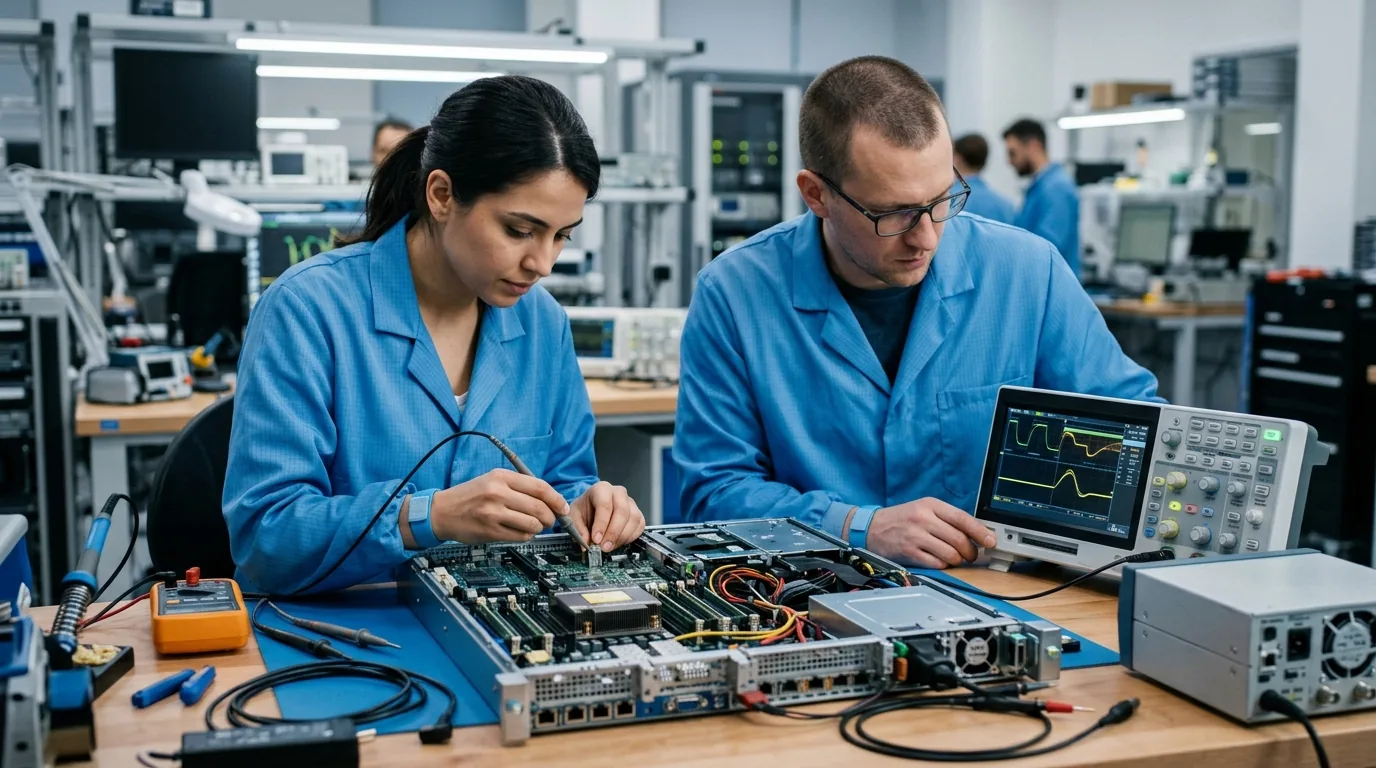
To evaluate how the Zhenwu V900 compares against both prior domestic hardware and export-restricted Western offerings, hardware engineers must examine memory bandwidth, compute precision, and cluster scaling limits side-by-side:
| Silicon / Platform | Developer / Entity | HBM Capacity | Inter-Chip Interconnect Bandwidth | Precision Formats Supported | Max Single-Cluster Scaling | Production Timeline |
|---|---|---|---|---|---|---|
| Zhenwu V900 | Alibaba (T-Head) | 216 GB | 1,200 GB/s | FP32, TF32, FP16, BF16, FP8, FP4 | 500,000 units | Commercial release Q1 2027 |
| Zhenwu M890 | Alibaba (T-Head) | 144 GB | 800 GB/s | FP32, FP16, BF16, FP8, FP4 | 128,000 units | Volume deployment May 2026 |
| NVIDIA H20 (China Export) | NVIDIA | 96 GB | 900 GB/s (NVLink 4) | FP32, TF32, FP16, BF16, FP8, INT8 | 32,000 units (Practical limit) | Active production (Restricted) |
| Huawei Ascend 910C | Huawei (HiSilicon) | 128 GB | 780 GB/s (HCCS) | FP32, FP16, BF16, INT8 | 64,000 units | Commercial volume Q3/Q4 2026 |
The matrix highlights why the Zhenwu V900 represents an operational leap for Chinese cloud computing. By providing 216GB of HBM, the V900 offers more than double the memory capacity of NVIDIA’s restricted H20 (96GB), allowing enterprise customers to train larger models without encountering catastrophic out-of-memory (OOM) faults during activation recomputation.
Frontier Model Training & The 20GW Energy Supergrid: Scaling to 10 Trillion Parameters

The hardware capabilities of the Zhenwu V900 are directly aligned with Alibaba's algorithmic ambition: training the next generation of its Tongyi Qwen model family. While the current flagship Qwen 3.8 Max model operates at 2.4 trillion parameters, Eddie Wu revealed that Alibaba is architecting frontier architectures scaling between 5 trillion and 10 trillion parameters.
At these astronomical parameter counts, model training demands immense power infrastructure. To support this scale, Alibaba Cloud announced an ambitious infrastructure expansion target: reaching over 20 Gigawatts of global data center power capacity by 2032. For contextual scale, 20 Gigawatts is roughly equivalent to the entire continuous electrical generation capacity of the Three Gorges Dam, representing one of the largest computational energy pledges in enterprise history.
As regulatory scrutiny around massive compute clusters intensifies—a trend analyzed in our reporting on the AI slowdown cartel antitrust investigations—Alibaba is pairing its compute expansion with aggressive green energy power purchase agreements (PPAs) in northwestern China, utilizing desert solar and wind farms combined with high-voltage direct current (HVDC) transmission lines to power its computing supergrid.
With the Zhenwu V900 entering mass production in Q1 2027 and the next-generation Zhenwu J900 already scheduled for Q3 2028, Alibaba has demonstrated that its silicon roadmap is not a temporary defensive posture, but a permanent, capital-intensive campaign to establish an enduring alternative to the global semiconductor status quo.
Frequently Asked Questions
What are the core technical specifications of Alibaba's Zhenwu V900 AI chip?
The Zhenwu V900 features 216GB of High Bandwidth Memory (HBM), 1,200 GB/s of bidirectional inter-chip interconnect bandwidth, and native hardware acceleration for FP32, TF32, FP16, BF16, FP8, and FP4 precision formats. It delivers three times the computational performance of its predecessor, the Zhenwu M890.
How does the Zhenwu V900 compare to NVIDIA's export-compliant H20 GPU?
The Zhenwu V900 provides 216GB of HBM and 1,200 GB/s interconnect bandwidth, compared to the NVIDIA H20's 96GB of HBM and 900 GB/s interconnect. The V900 also supports native FP4 execution and scales up to 500,000 units in a single cluster, whereas the H20 is restricted in both raw compute density and cluster scaling by U.S. export regulations.
When will the Zhenwu V900 enter mass production and commercial cloud availability?
Alibaba confirmed that the Zhenwu V900 is scheduled for mass production and commercial cloud deployment in the first quarter of 2027 (Q1 2027), following internal tape-out and validation phases completed in 2026.
What models will Alibaba train on the Zhenwu V900 platform?
Alibaba plans to utilize the Zhenwu V900 and its 500,000-chip cluster architecture to train the next generation of its open-source and proprietary Qwen model family, targeting multimodal and mixture-of-experts (MoE) architectures scaled between 5 trillion and 10 trillion parameters.
What is Alibaba's long-term semiconductor roadmap beyond the V900?
Alibaba has adopted an annual-to-biennial silicon refresh cadence through its T-Head subsidiary. Following the Zhenwu V900 in Q1 2027, the company has officially scheduled its next-generation accelerator architecture, designated the Zhenwu J900, for commercial launch in the third quarter of 2028 (Q3 2028).

Loading comments…