On September 22, 2026, Meta joined with NEC Corporation and Sumitomo Electric Industries to announce Petal, the world’s first commercial transoceanic submarine cable designed to transmit one petabit of data per second. Spanning roughly 7,000 kilometers across the North Atlantic floor to connect the eastern seaboard of the United States directly with the western coast of France, Petal doubles the data-carrying capacity of the fastest cables in service today. The milestone represents a decisive break from decades of traditional glass design, introducing dual-core optical fiber at intercontinental distances to meet the massive bandwidth appetites of frontier artificial intelligence.
Scheduled to enter commercial service in 2029, Petal delivers 1,000 terabits per second across 24 fiber pairs. In standard telecommunication deployments, adding capacity required either stringing additional single-mode fiber pairs inside an already cramped cable casing or pushing higher laser power into existing cores. Both techniques have slammed into hard physical limits. By adopting two distinct optical cores inside every glass filament, the Petal consortium sidesteps the non-linear distortion limits of silica glass while keeping the outer cable profile compact enough for conventional deep-sea plows and cable-laying ships.
The Subsea Bottleneck and the Rush for Dedicated Hyperscale Pipes

Over ninety-five percent of all intercontinental internet traffic travels through thin glass tubes laid along the ocean floor, not through communications satellites. For decades, consortiums of national telecommunication monopolies shared ownership of these subsea highways. That model collapsed as cloud giants such as Meta, Google, Microsoft, and Amazon became the primary generators of international data traffic. Today, private hyperscalers fund, design, and direct the majority of new transoceanic routes to guarantee private line bandwidth between their regional data center campuses.
In 2020, Google demonstrated 250 terabits per second with its 12-fiber-pair Dunant system. Meta followed with Amitié in 2023 at 400 terabits per second, and completed the 24-fiber-pair Anjana cable linking South Carolina to Spain with nearly 500 terabits per second. Yet the rapid expansion of distributed artificial intelligence training clusters has outpaced even those record-setting lines. Training models with hundreds of billions of parameters requires continuous replication of model weights, optimizer states, and gradient updates across geographically separated data center clusters to balance regional electrical grid loads.
When subsea capacity pinches, synchronization intervals stall, leaving costly graphics processor clusters idling while waiting for parameter exchanges across the ocean. While regional networks benefit from innovations such as the terrestrial packaging advancements discussed in our breakdown of Marvell 2nm optical interconnects, intercontinental spans face fundamentally harsher attenuation and propagation constraints. Petal was conceived to eliminate this transoceanic bottleneck by establishing a dedicated 1-petabit pipe between North American supercomputing hubs and European enterprise nodes.
Optical Physics Breakdown and Breaking the Non-Linear Shannon Limit with Multi-Core Glass
Every long-haul fiber optic system eventually collides with the non-linear Shannon limit. In standard single-mode optical fiber, data travels as infrared light through a single central germanium-doped silica core measuring roughly 9 microns in diameter. To push more information through that single path, optical engineers modulate light across more wavelengths using Dense Wavelength Division Multiplexing and apply dense constellations like 64-QAM. However, as optical signal power increases to maintain signal-to-noise ratios over thousands of miles, the Kerr effect causes the refractive index of silica glass to fluctuate. This non-linearity distorts phase information, generates noise, and ultimately caps the practical capacity of a single-mode fiber pair to approximately 20 to 25 terabits per second across oceanic distances.
The telecommunications industry initially solved this through Space Division Multiplexing by adding more fiber pairs into the cable sheath. However, submarine cables cannot expand indefinitely. Cables must remain slim and flexible enough to spool into the holds of cable ships, pass through cable engines, and withstand the crushing hydrostatic pressure of seven thousand meters of seawater. Packing more than 24 standard fiber pairs inside a cable introduces severe micro-bending losses and exceeds the safe mechanical diameter of submarine plant.
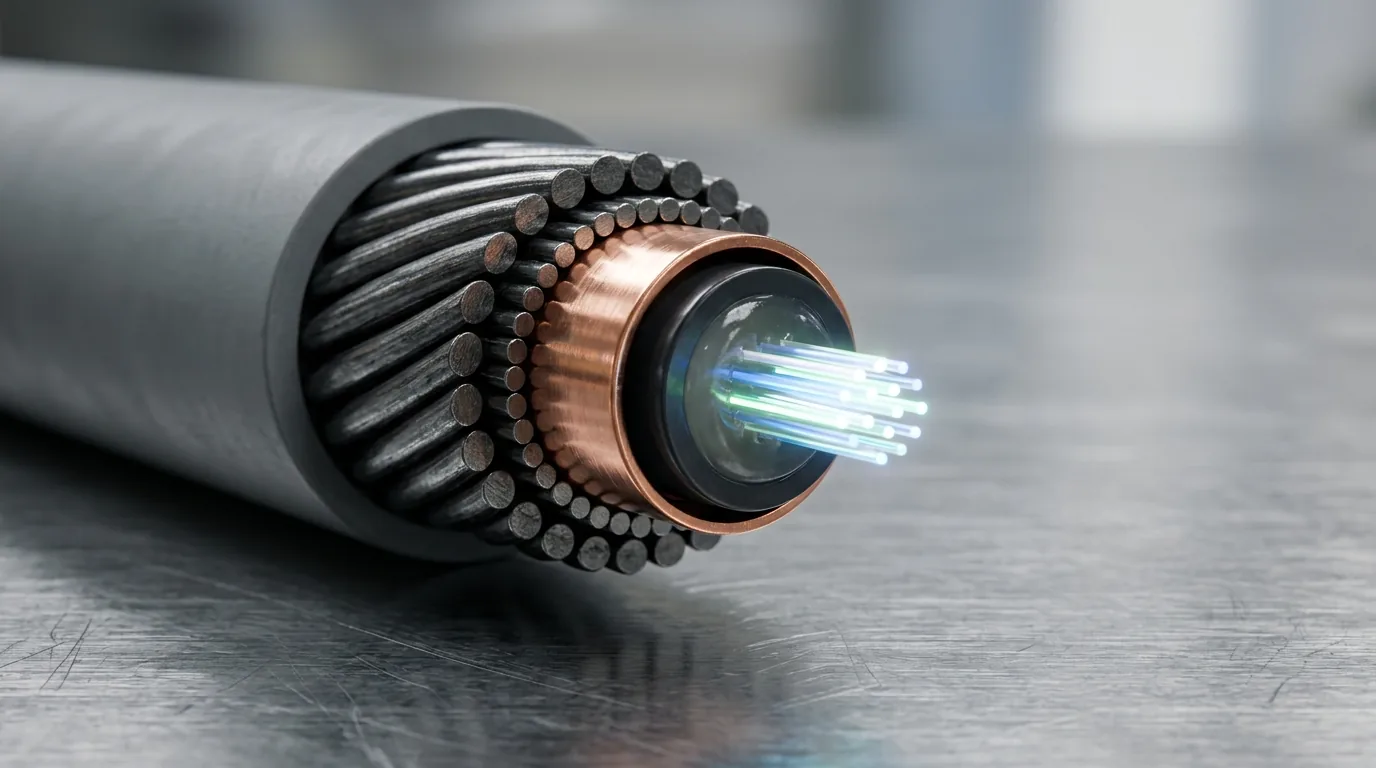
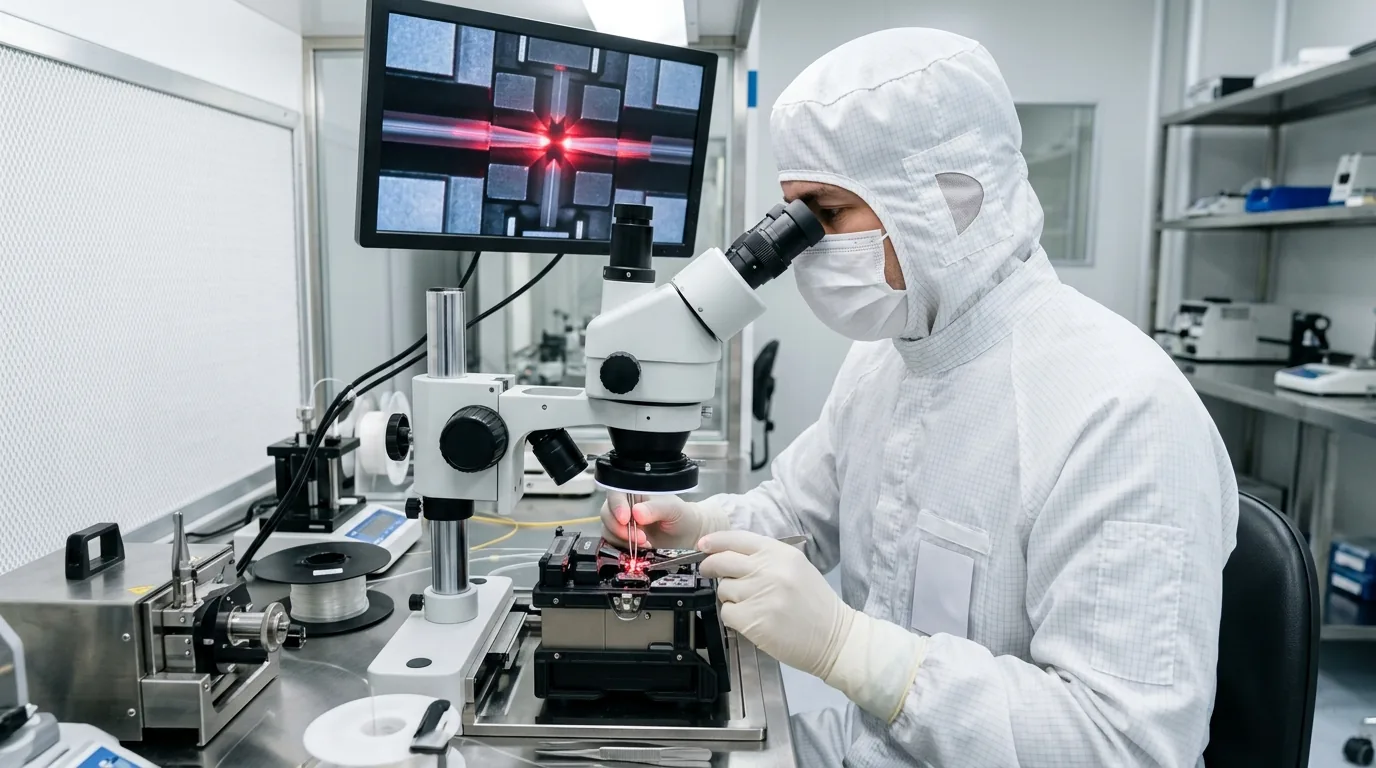
Petal bypasses this boundary by utilizing multi-core fiber manufactured by Sumitomo Electric, designated as 2C Z-PLUS Fiber ULL. Instead of a single core, each strand of glass contains two distinct, parallel optical cores embedded within a standard 125-micron outer cladding diameter. Because both cores are manufactured from ultra-low loss pure silica, light encounters minimal attenuation while traveling inside. The critical engineering challenge of multi-core fiber has always been inter-core crosstalk, where photons tunneling through the cladding leak into the adjacent core and corrupt data. Sumitomo resolved this by tailoring refractive index trench profiles around each core, suppressing inter-core optical leakage below detection thresholds across the full 7,000-kilometer crossing.
Repeater Engineering and Solving the High-Voltage Sea Power Challenge
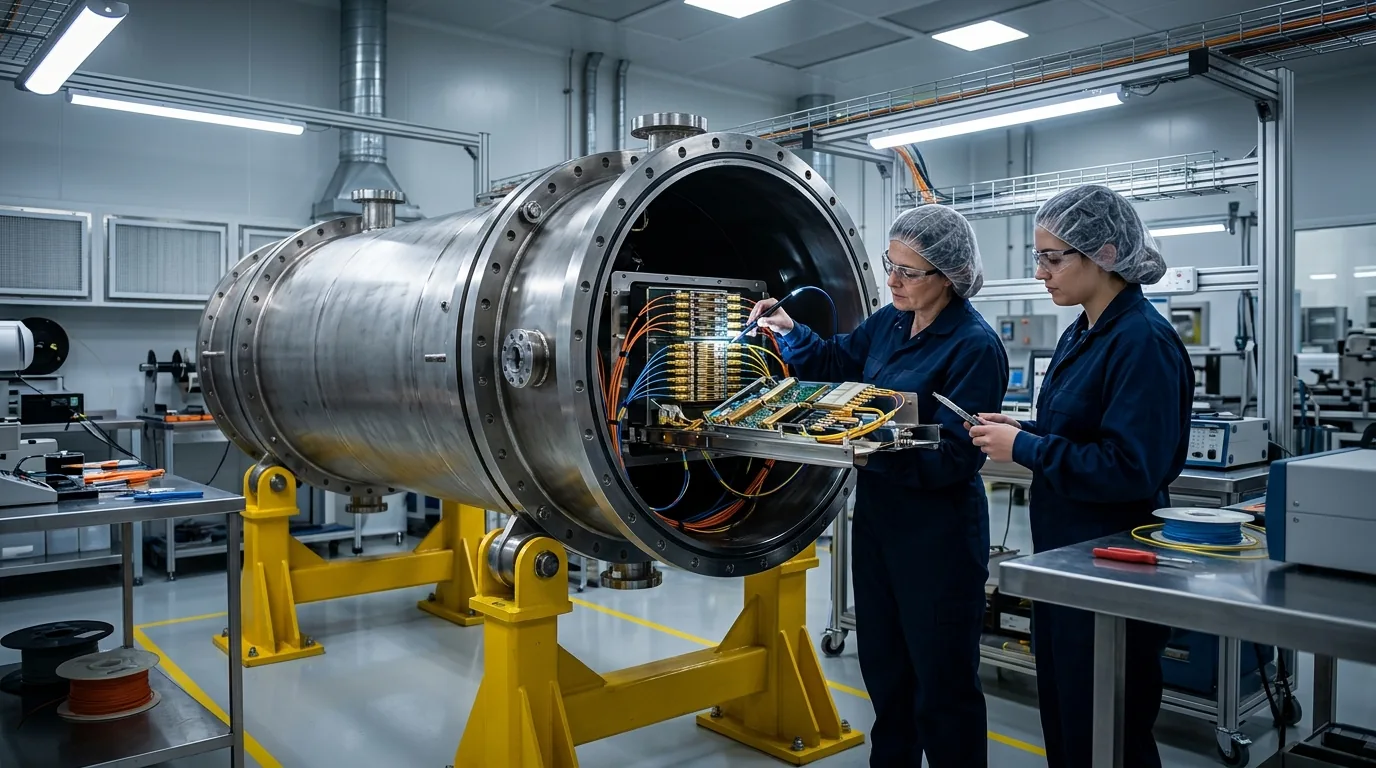
Glass fibers carry photons, but photons fade over distance. Every 60 to 90 kilometers along the Atlantic seabed, optical repeaters must amplify the decaying light pulses. These repeaters are enclosed within sealed titanium pressure vessels designed to operate unattended on the ocean floor for twenty-five years. Supplying electrical power to dozens of repeaters spaced across an entire ocean requires feeding thousands of volts of direct current through a copper conductor jacket surrounding the cable core from landing stations on shore.
Subsea power feeding equipment operates under strict safety and insulation thresholds, typically limited between 15,000 and 18,000 volts DC. If an optical architecture requires excessive electrical power to run its amplification lasers, the cable cannot span the full width of the ocean without suffering electrical insulation breakdown or requiring mid-ocean power feeds that do not exist. Experimental multi-core optical amplifiers that attempt to pump multiple cores simultaneously often suffer from unequal gain distribution, known as amplification tilt, which degrades signal clarity.
To overcome this hurdle, turnkey system supplier NEC Corporation engineered an innovative single-housing repeater architecture based on Fan-In and Fan-Out optical couplers. When the 2-core fiber enters an NEC repeater housing, a passive micro-optical coupler separates the two embedded cores into two individual single-mode fiber leads. Each path then passes through a field-tested, highly efficient Erbium-Doped Fiber Amplifier powered by standard 980-nanometer pump laser diodes. After amplification, another coupler merges the paths back into the 2-core fiber before exiting the repeater. This clever arrangement allows the system to utilize proven amplifier reliability and low electrical consumption while doubling the spatial path density within a single repeater housing.
Transatlantic Optical Highway Benchmark Matrix

To understand the technological leap Petal represents, examine how the system compares against the most prominent transatlantic cables deployed over the past six years.
| Subsea Cable System | Primary Operators / Backers | Design Capacity | Fiber Configuration | Fiber Technology | Approximate Length | Ready for Service Date |
|---|---|---|---|---|---|---|
| Petal | Meta, Orange (Landing) | 1,000 Tbps (1 Pbps) | 24 Pairs (48 Cores) | 2-Core Multi-Core (Sumitomo ULL) | 7,000 km | 2029 |
| Anjana | Meta | 500 Tbps | 24 Pairs | Single-Mode SDM | 7,121 km | 2024 / 2025 |
| Amitié | Meta, Microsoft, Orange, Vodafone | 400 Tbps | 16 Pairs | Single-Mode SDM | 6,783 km | 2023 |
| Grace Hopper | 352 Tbps | 16 Pairs | Single-Mode SDM | 6,250 km | 2022 | |
| Dunant | Google, Orange | 250 Tbps | 12 Pairs | Single-Mode SDM | 6,400 km | 2020 |
The numbers illustrate why the transition to multi-core glass is so consequential. Between 2020 and 2024, transatlantic capacity grew from 250 Tbps to 500 Tbps by doubling the physical number of single-mode fiber pairs from 12 to 24. Reaching 1,000 Tbps by packing 48 separate single-mode pairs would have produced a cable too thick, too heavy, and too power-hungry for transatlantic reliability. Petal achieves 1,000 Tbps inside the mechanical footprint of a standard 24-pair cable by multiplying spatial channels within the glass itself.
The AI Datacenter Imperative and Powering Distributed Foundation Models

The timing of the Petal deployment reflects a broader structural transformation in hyperscale artificial intelligence architecture. As frontier foundation models like Meta's open-weights Llama family and proprietary enterprise engines scale into trillions of parameters, training clusters require unprecedented electrical power. Concentrating hundreds of thousands of high-wattage accelerators in a single geographic campus—such as the massive server farms discussed in our review of Alibaba's 500,000-node AI cluster roadmap—places severe stress on local regional power grids.
To navigate regional power ceilings, hyperscalers are transitioning to distributed, cross-datacenter training topologies. Massive compute facilities in Virginia, Ohio, and North Carolina can train model subsets concurrently with facilities in Northern and Western Europe, provided that high-bandwidth, ultra-low-jitter optical connections link them together. When inter-cluster optical pipelines can transmit an entire petabit of data every second, gradient updates between transatlantic model shards can synchronize without stalling backpropagation cycles.
Beyond distributed training, Petal strengthens global inference resilience for billions of consumers using conversational assistants, smart glasses, and generative media tools. By establishing a direct, diverse routing path between North America and France, Meta and its landing partner Orange create route diversity that bypasses crowded English Channel chokepoints. This geographic resilience safeguards mission-critical cloud traffic against accidental trawler snags, commercial anchor drags, and seabed seismic events, ensuring seamless transatlantic uptime.
Frequently Asked Questions
What is the Petal submarine cable and who is developing it?
Petal is a transatlantic submarine fiber optic cable system announced in September 2026. The project is funded and operated by Meta, with NEC Corporation serving as the turnkey system supplier and Sumitomo Electric Industries providing the proprietary 2-core optical fiber. French telecommunications provider Orange serves as the landing party on the Atlantic coast of France.
How much data can a 1 petabit per second cable transmit at once?
One petabit per second equals 1,000 terabits per second or 1,000,000 gigabits per second. At this speed, the Petal cable can transmit approximately 125 terabytes of data every second, equivalent to streaming over 40 million concurrent high-definition video feeds or transferring the entire text contents of the United States Library of Congress in under a single second.
What is Multi-Core Fiber and how does it differ from traditional optical fiber?
Traditional optical fiber uses a single core of doped glass to carry light pulses within a protective cladding layer. Multi-Core Fiber embeds two or more independent optical cores inside a single strand of glass of the same standard 125-micron outer diameter. This configuration doubles or multiplies the spatial transmission paths without increasing the cable's physical thickness or weight.
How do underwater repeaters amplify 2-core optical signals without overheating?
NEC’s subsea repeaters utilize low-loss Fan-In and Fan-Out optical couplers that split the dual cores into separate single-core paths inside each repeater housing. Each individual path is then amplified using proven Erbium-Doped Fiber Amplifiers powered by low-wattage laser diodes before being recombined. This approach avoids the complex power imbalances of experimental multi-core amplifiers while remaining within the strict 15,000 to 18,000 volt power feed limits of subsea cables.
How does Petal compare to existing cables like Anjana and Amitié?
Petal delivers 1,000 terabits per second, which is double the capacity of Meta’s Anjana cable (500 terabits per second) and two and a half times the capacity of the Amitié cable (400 terabits per second). It achieves this throughput by utilizing 24 pairs of 2-core multi-core fiber, providing 48 total spatial transmission channels across a 7,000-kilometer route.
When will the Petal submarine cable begin commercial operation?
The Petal system is scheduled to complete offshore marine surveys, seabed cable laying, and landing station integration to achieve full commercial ready-for-service status in 2029.



Loading comments…