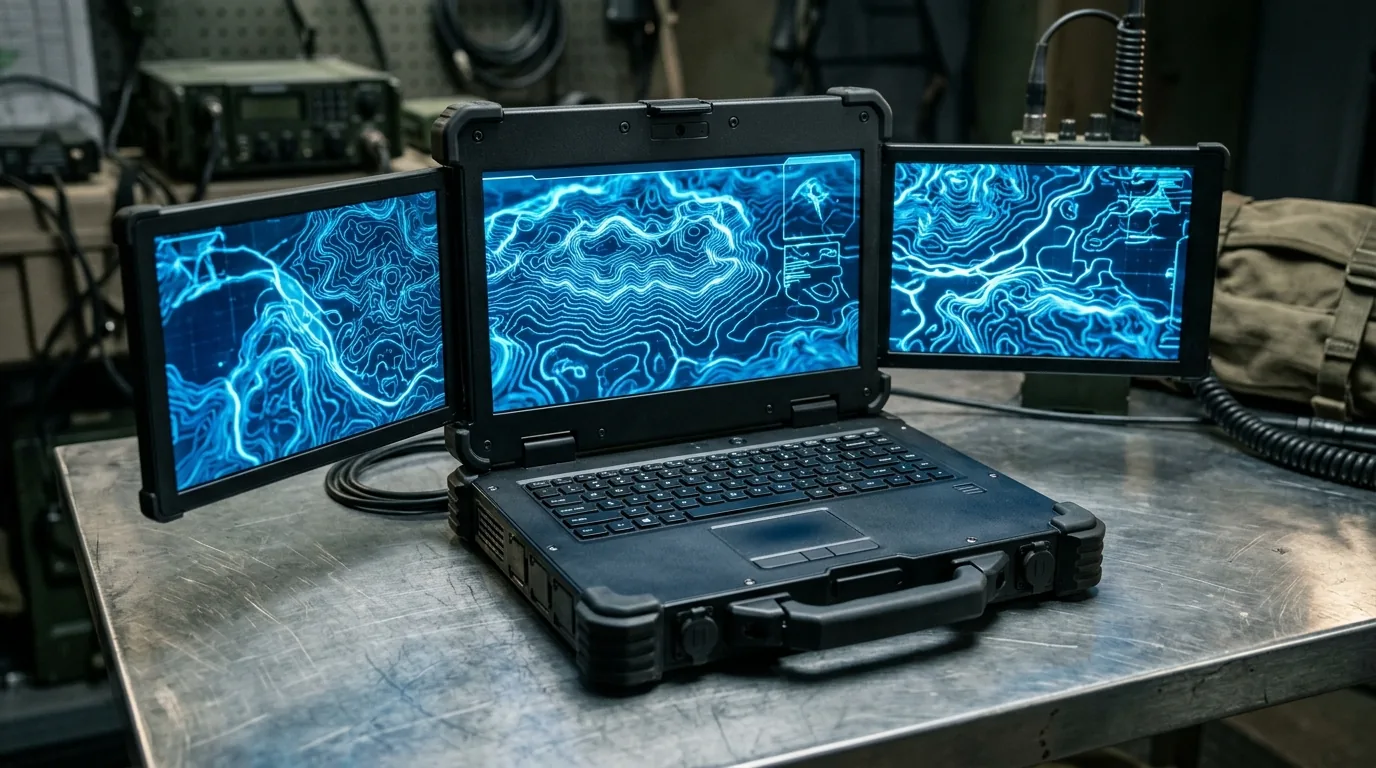
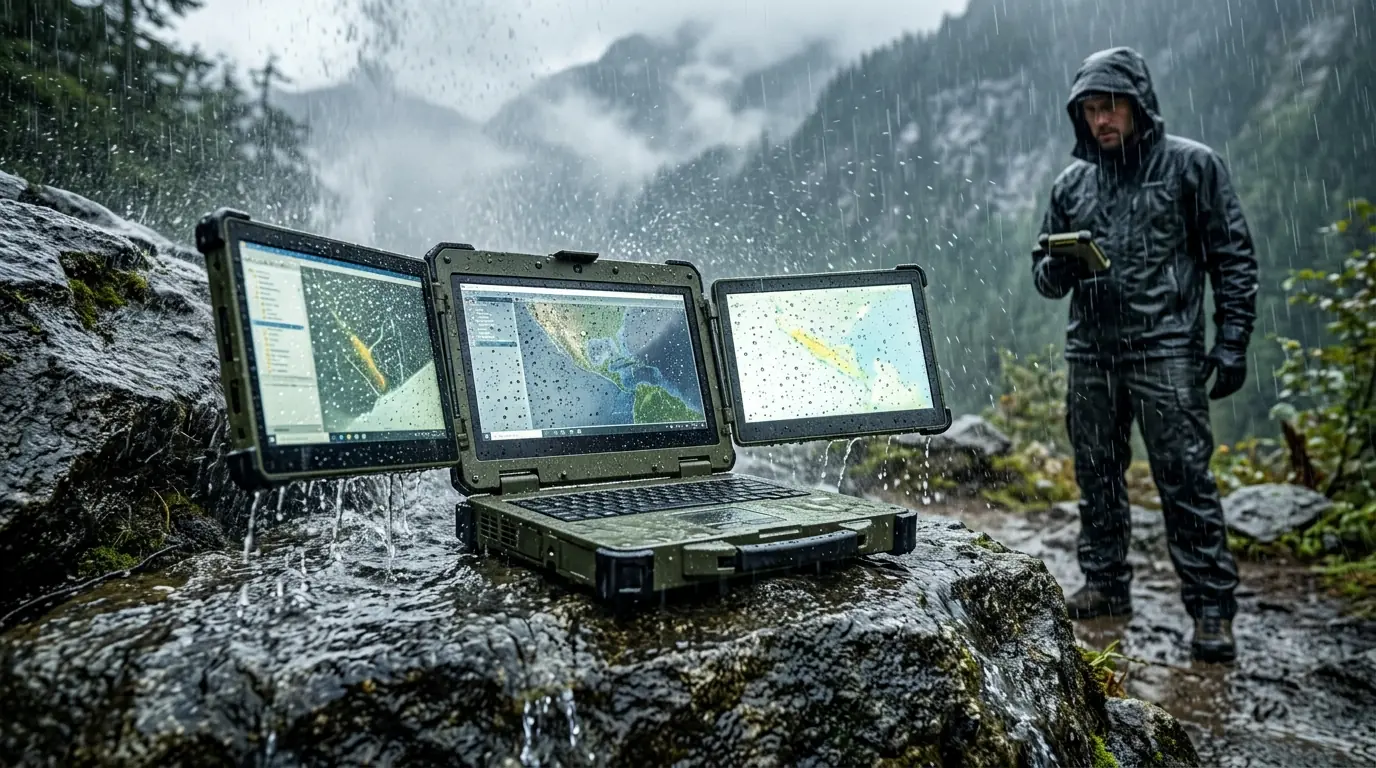
On September 22, 2026, Durabook officially announced the Z14I-DX3, a workstation-class rugged mobile computer featuring an integrated triple-display configuration designed for extreme field computing. For years, tactical operators, emergency response coordinators, and industrial field engineers have wrestled with a frustrating compromise when deploying outside traditional operations centers. Field personnel either settled for a single cramped laptop screen while toggling between mapping layers, drone video feeds, and telemetry dashboards, or transported fragile USB monitor extenders that rattled loose under harsh field vibrations. The Z14I-DX3 eliminates that compromise by mounting two motorized folding side displays directly to the main lid assembly, creating an expansive panoramic command post that deploys in seconds.
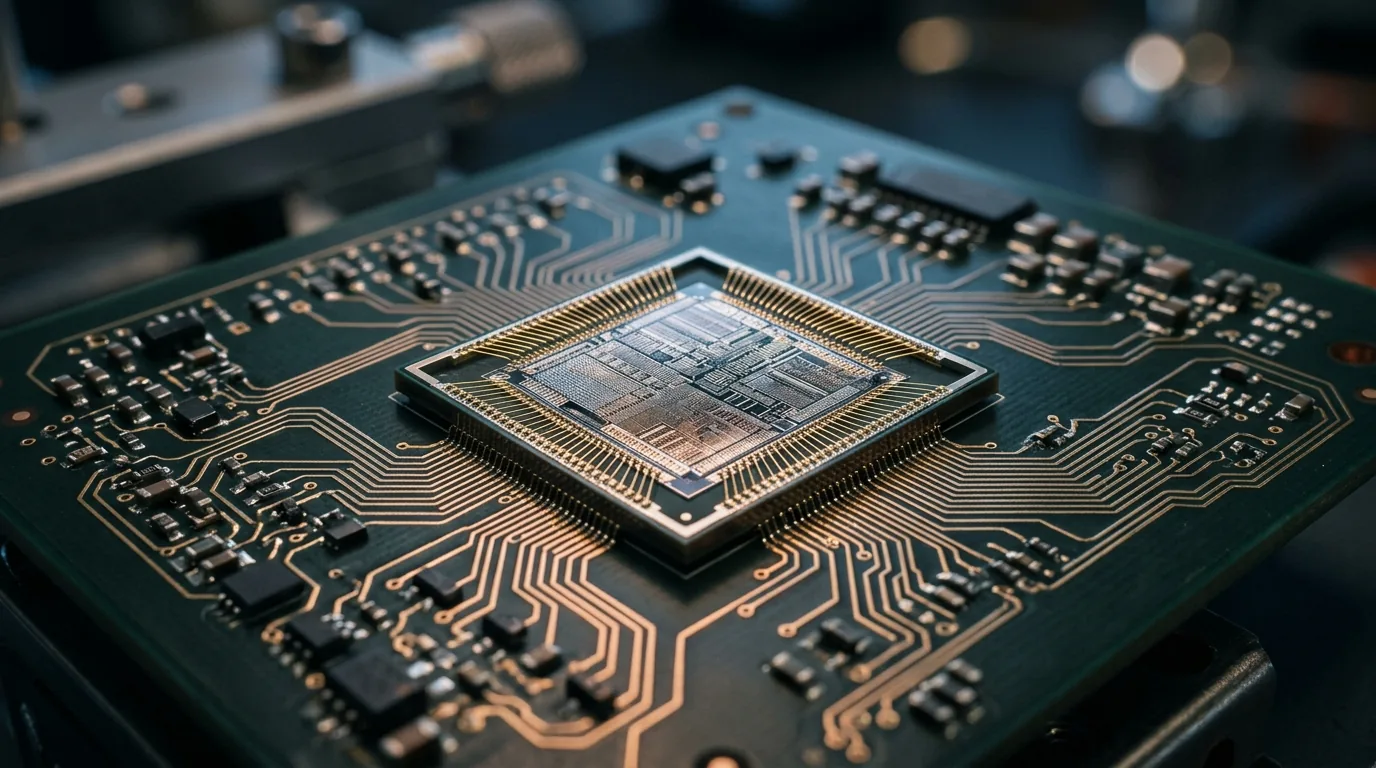
Engineered by Taiwan-based Twinhead International Corporation under its Durabook brand, the machine pairs this display array with high-density silicon. Powered by Intel Core Ultra processors featuring an integrated neural processing unit alongside optional discrete graphics scaling up to the NVIDIA RTX 5000 Ada Generation laptop GPU, the system delivers up to 682 trillion operations per second of artificial intelligence compute. By bringing data center caliber matrix acceleration directly to disconnected edges, the platform enables real-time aerial sensor fusion, automated geospatial anomaly detection, and localized computer vision without relying on fragile satellite uplinks.
From Concept Prototypes to Mission Command Reality
The concept of a multi-screen portable computer has captured the hardware industry's imagination for over a decade. Prototypes like Razer's Project Valerie drew crowds at trade shows with mechanical sliding screens, but commercialization always foundered on the harsh realities of hinge durability, panel alignment wear, thermal throttling, and excessive battery drain. Commercial portable multi-screen solutions remained confined to awkward lunchbox style industrial PCs that required external alternating current wall power and offered zero drop protection.
Durabook approached the challenge from a defense and industrial perspective. Rather than building a consumer novelty, the company engineered the Z14I-DX3 to meet stringent military standards including MIL-STD-810H and MIL-STD-461G. The chassis survives six-foot drops onto concrete, intense vehicular vibration profiles, blowing sand, explosive atmospheres, and electromagnetic interference from nearby military radios. In contrast to lightweight consumer ultrabooks—such as the hybrid productivity devices examined in our teardown of the Googlebook Android laptop launch—the Z14I-DX3 prioritizes physical survivability and uninterrupted field operation over thinness.
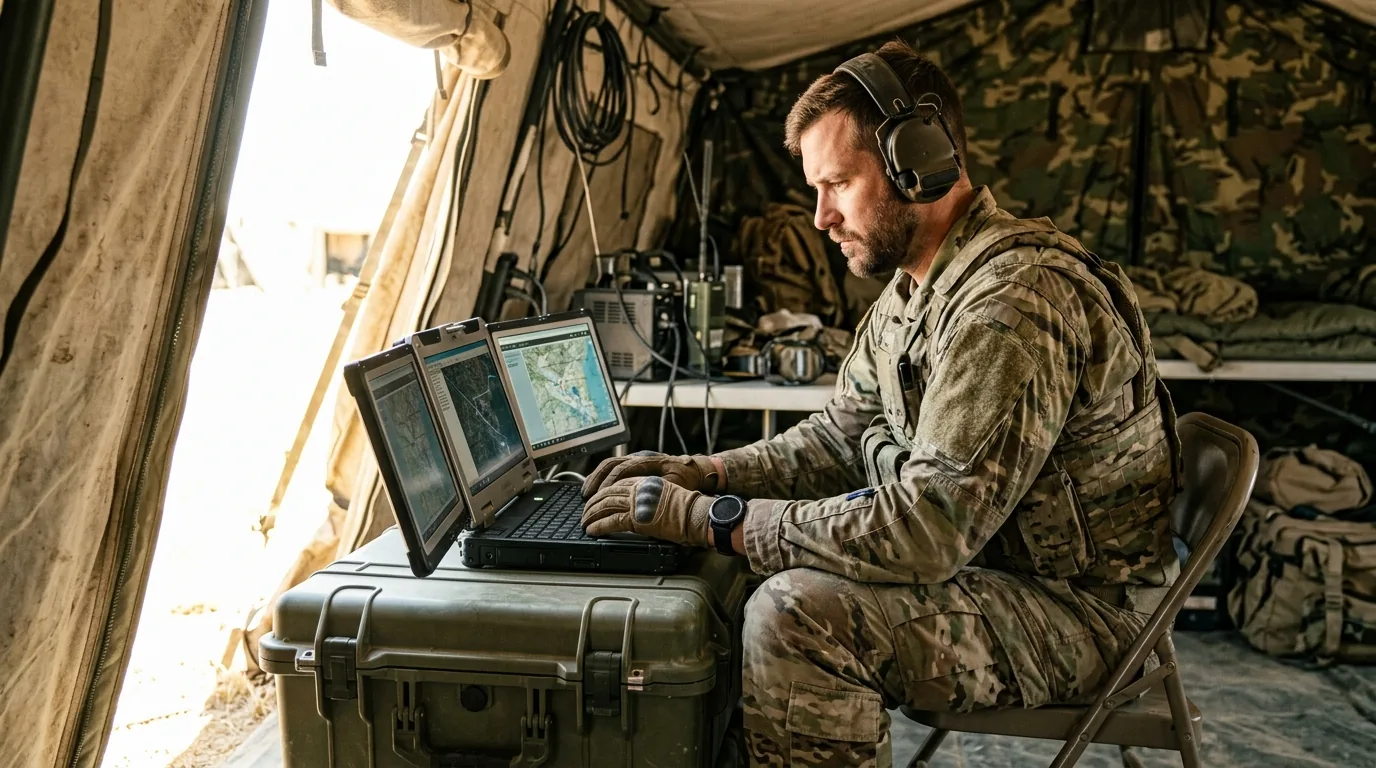
Weighing approximately 9.8 kilograms (21.6 pounds) with its cast magnesium-aluminum alloy frame and heavy-duty steel carry handle, the Z14I-DX3 functions as a self-contained tactical operations center. A single operator can carry the unit into a forward operating base, unfold the side wing panels, and immediately access three independent workspaces without setting up external monitors, tables, or rat nests of power cables.
Mechanical Kinematics and The 1,200-Nit DynaVue Display Array
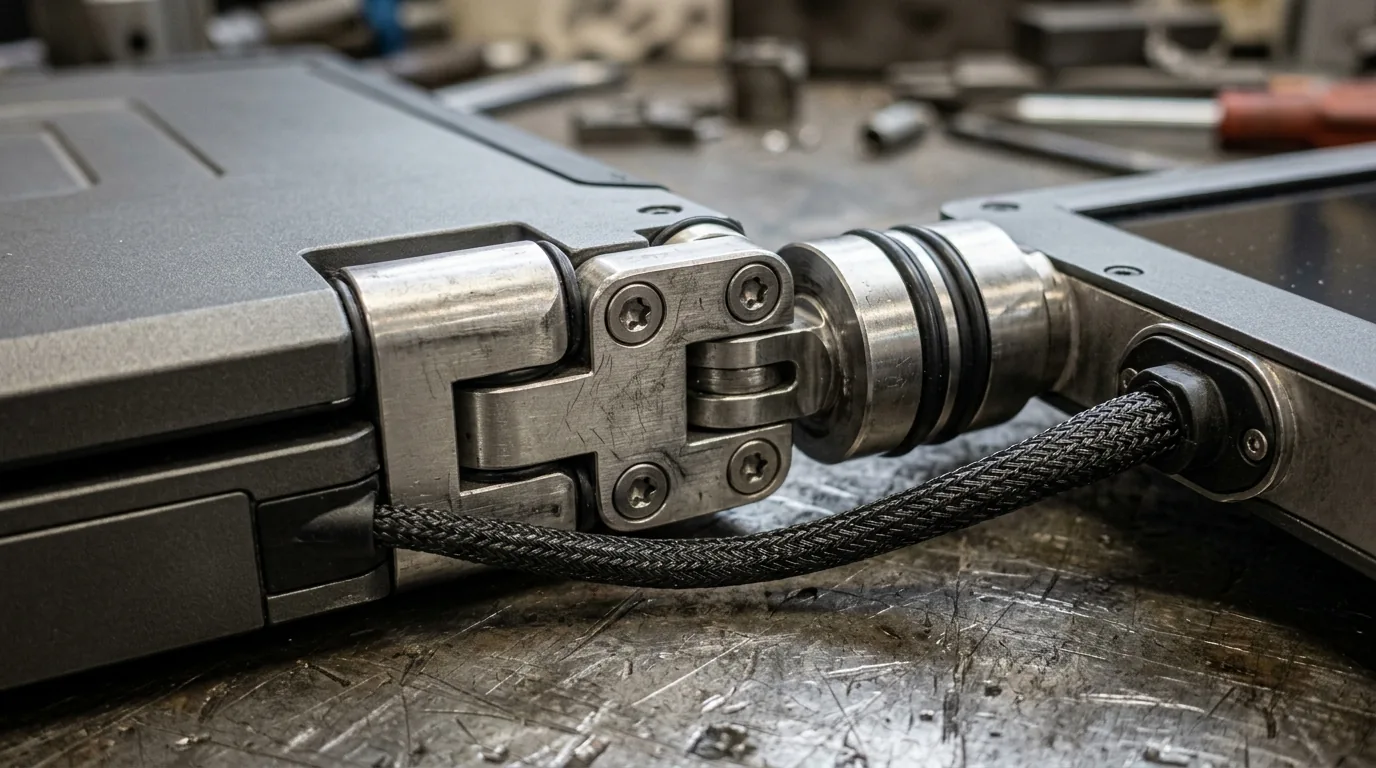
The mechanical core of the Z14I-DX3 lies in its dual-axis friction hinge architecture. The central display acts as the structural anchor. Two flanking 14.0-inch Full HD (1920 by 1080 pixel) panels fold inward flush against the main screen during transit, protected by reinforced magnesium backplates and rubber shock dampeners. When opened, the operator swings the left and right panels outward to any desired viewing angle. High-torque stainless steel hinges maintain rigid panel orientation even when buffeted by helicopter rotor wash or high winds on offshore drilling decks.
Outdoor visibility has always been the downfall of field displays. The Z14I-DX3 outfits all three panels with Durabook's proprietary DynaVue optical technology, pushing peak luminance to 1,200 nits across every screen. Direct optical bonding eliminates the internal air gap between the protective glass and the liquid crystal layer, dramatically reducing internal reflections. Combined with circular polarizers and anti-reflective surface coatings, the displays remain legible under direct high-noon desert sunlight. The capacitive touch digitizers support multiple input modes, including specialized profiles for heavy tactical gloves, passive styluses, and rain rejection algorithms that prevent stray water droplets from triggering false touches.
Routing high-bandwidth display signals across moving joints in harsh environments requires meticulous electrical isolation. Durabook utilized custom internal flexible printed circuits encased in braided stainless steel and copper shielding. This prevents high-frequency video signals from radiating electromagnetic noise that could interfere with tactical radios or aircraft navigation systems, satisfying strict MIL-STD-461G avionics compliance.
Edge Compute Architecture and 682 TOPS Tensor Acceleration
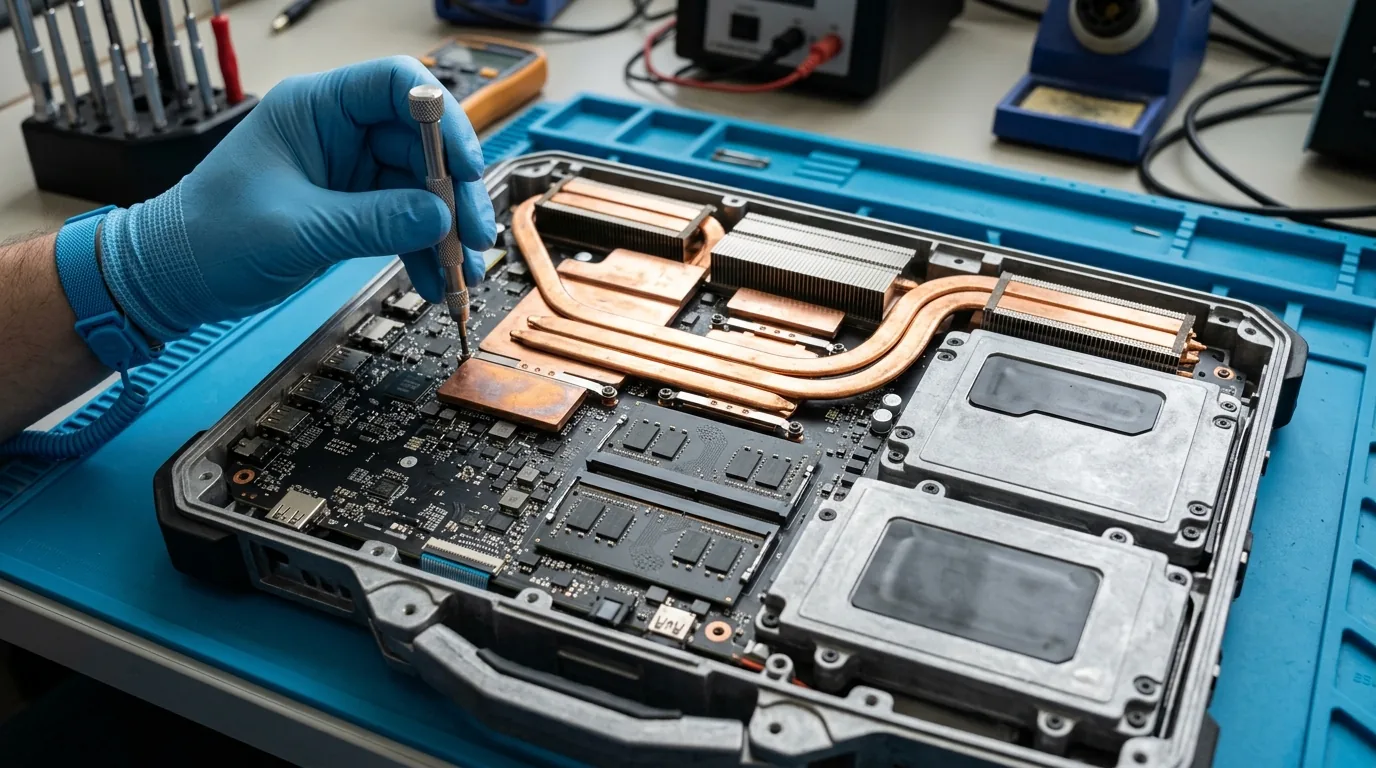
The computational horsepower of the Z14I-DX3 is tailored for an era where field units cannot depend on constant cloud connectivity. Operating in electromagnetic contested environments or remote wilderness areas means all artificial intelligence processing must occur entirely on local hardware. The machine offers Intel Core Ultra 5 and Core Ultra 7 processors with dedicated Intel AI Boost neural processing units to handle real-time background telemetry, voice transcription, and system telemetry with minimal power draw.
For heavy machine vision and deep learning inference, Durabook provides discrete graphics options culminating in the NVIDIA RTX 5000 Ada Generation laptop GPU. Equipped with 9,728 CUDA cores, 76 third-generation RT cores, and 304 fourth-generation Tensor Cores paired with 16GB of high-speed GDDR6 error-correcting memory, this silicon configuration yields up to 682 TOPS of INT8 compute. While specialized edge silicon—such as the sub-5W automotive inference chips analyzed in our review of Microchip's Hailo acquisition—optimizes for micro-watt efficiency, the RTX 5000 Ada tackles dense, uncompressed tensor matrices at full workstation speed.
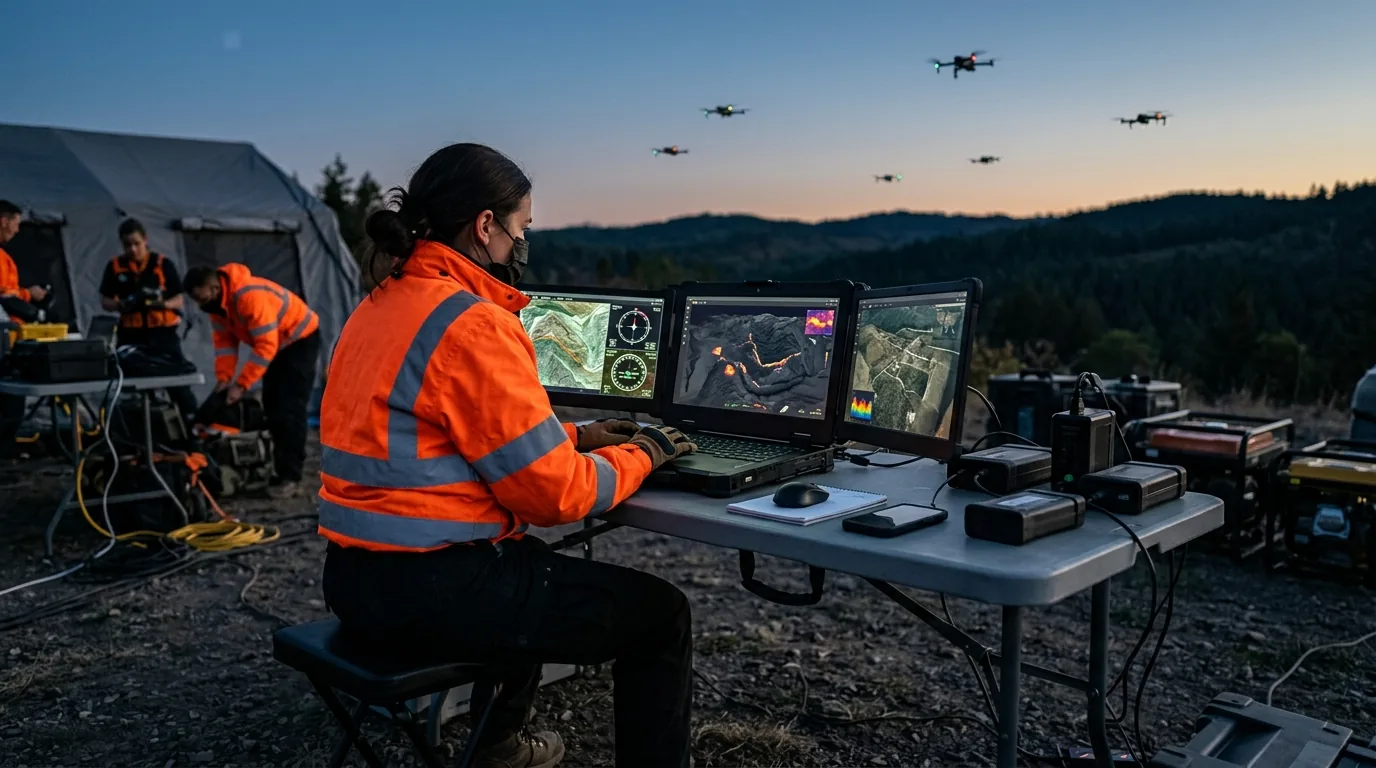
In operational practice, this compute density allows field operators to run multiple complex neural networks concurrently across the three screens. The left display can host high-resolution synthetic aperture radar feeds, the center screen renders 3D geospatial terrain mapping, and the right display executes live object detection and classification across four simultaneous 4K drone video streams. All processing occurs locally in system memory without latency or security exposure.
Rugged Field Benchmark Matrix
To evaluate how the Durabook Z14I-DX3 fits into the rugged computing landscape, examine how its specifications contrast with the leading defense and industrial laptops in active deployment.
| Rugged Laptop Model | Display Setup and Brightness | Compute Silicon and GPU | Edge AI Compute Rating | System Weight | Power Architecture |
|---|---|---|---|---|---|
| Durabook Z14I-DX3 | Three 14.0-inch FHD (1,200 nits each) | Intel Core Ultra + NVIDIA RTX 5000 Ada | Up to 682 TOPS (INT8) | 9.8 kg (21.6 lbs) | Dual Hot-Swappable Smart Lithium Packs |
| Panasonic Toughbook 40 | Single 14.0-inch FHD (1,200 nits) | Intel Core Ultra + Intel Arc / Optional dGPU | Up to 34 TOPS (NPU baseline) | 3.35 kg (7.4 lbs) | Dual Modular Hot-Swap Batteries |
| Dell Latitude 7330 Rugged | Single 13.3-inch FHD (1,400 nits) | Intel Core 12th Gen + Intel Iris Xe | Baseline CPU Vector Compute | 2.32 kg (5.1 lbs) | Dual Hot-Swappable ExpressCharge Packs |
| Getac B360 Pro | Single 13.3-inch FHD (1,400 nits) | Intel Core 12th Gen + NVIDIA GTX 1650 | Legacy CUDA Acceleration (~15 TOPS) | 3.08 kg (6.8 lbs) | Dual High-Capacity Hot-Swap Batteries |
The comparative matrix highlights the distinct operational niche the Z14I-DX3 occupies. Established competitors like the Panasonic Toughbook 40 and Dell Latitude 7330 emphasize modularity and personal carry weight, making them well suited for police cruisers and foot patrols. However, they remain constrained by single displays and modest graphics power. The Z14I-DX3 trades lightweight portability for massive visual real estate and extreme artificial intelligence acceleration, establishing an entirely new class of transportable field workstations.
Thermal Engineering, Power Logistics, and Real-World Missions
Powering three 1,200-nit displays alongside a 115-watt GPU and a 45-watt CPU inside a sealed, dust-tight enclosure presents massive thermal challenges. Traditional laptops rely on open vent grilles that suck in ambient moisture and sand, destroying internal electronics. Durabook engineered an IP66-sealed thermal chamber utilizing sintered copper heat pipes and wide-surface vapor chambers that pull heat away from silicon dies toward isolated perimeter cooling fins. High-pressure brushless fans blow outside air across the external radiator fins through a sealed chamber that never exposes sensitive motherboards to ambient contaminants.
For field power management, the Z14I-DX3 incorporates dual high-capacity smart lithium-ion battery packs. The power subsystem supports hot-swapping under full load. When battery levels deplete during long operations, field technicians can swap fresh batteries into the side compartments one at a time without shutting down running applications or dropping critical network uplinks. For stationary vehicular use, the laptop connects to military direct-current converters supporting 12-volt to 32-volt vehicle power supplies with built-in surge suppression.
Beyond military defense, the machine addresses critical bottlenecks in emergency management and industrial engineering. During wildfire disaster responses, incident commanders can run fire perimeter spread simulations on one monitor, track firefighter GPS locator transponders on the second, and coordinate airborne water tanker drops on the third. In offshore energy exploration, petroleum geologists can inspect multi-channel acoustic well logs in real time at the drilling head without carrying multiple fragile consumer monitors into hazardous environments.
Frequently Asked Questions
What is the Durabook Z14I-DX3 and how do its three screens unfold?
The Durabook Z14I-DX3 is a fully rugged workstation laptop featuring three integrated 14-inch Full HD displays. During transport, the two outer wing screens fold inward flush against the main center display, protected by cast magnesium covers. In the field, the operator opens the laptop and swings the two side panels outward on heavy-duty stainless steel hinges to form a continuous triple-monitor field workspace.
How bright are the three screens on the Durabook Z14I-DX3?
All three 14-inch displays feature Durabook's DynaVue optical technology delivering 1,200 nits of peak brightness per screen. Direct optical bonding and anti-reflective optical filters reduce glare, ensuring high legibility under direct sunlight. The touchscreens support input with heavy work gloves, styluses, and wet fingers.
What graphics cards and AI capabilities are available in the Z14I-DX3?
The system offers graphics configurations ranging from integrated Intel Arc graphics up to discrete NVIDIA RTX A500, RTX 3500 Ada, and RTX 5000 Ada laptop GPUs. When equipped with the RTX 5000 Ada GPU, the laptop delivers up to 682 TOPS of INT8 artificial intelligence processing power for real-time edge computer vision, sensor fusion, and multi-stream video analysis.
What durability certifications does the Durabook Z14I-DX3 have?
The laptop is certified to MIL-STD-810H standards for six-foot drops, mechanical shock, vibration, extreme temperatures ranging from minus 29 to 63 degrees Celsius, and humidity. It also holds MIL-STD-461G certification for electromagnetic compatibility, IP66 ingress protection against dust and high-pressure water jets, and ANSI/ISA 12.12.01 Class I Division 2 certification for safe operation in hazardous explosive gas environments.
How does the Durabook Z14I-DX3 compare to the Panasonic Toughbook 40?
While the Panasonic Toughbook 40 is lighter at 3.35 kg and features modular expansion bays, it offers only a single display and lower graphical compute density. The Durabook Z14I-DX3 weighs 9.8 kg but provides three integrated 1,200-nit displays and up to 682 TOPS of GPU acceleration, functioning as an all-in-one portable command center rather than a standard field notebook.
How does the battery system maintain continuous field operation?
The Z14I-DX3 is equipped with dual hot-swappable lithium-ion smart battery packs. The internal power management circuitry allows operators to remove and replace depleted batteries one at a time while the system remains fully powered, enabling continuous 24/7 field deployment without interrupting software execution or requiring reboots.

Loading comments…