On September 22, 2026, machine vision titan Cognex Corporation announced a definitive agreement to acquire RealSense in an all-cash transaction valued at roughly 500 million dollars. Funded entirely from existing balance sheet reserves, the takeover represents one of the most consequential consolidations in robotics hardware this decade. Beyond the headline purchase price, Cognex committed an additional 56.5 million dollars in cash retention incentives and roughly 50 million dollars in restricted stock units across three years to keep the engineering minds behind RealSense on board. With the transaction scheduled to close in the fourth quarter of 2026, the deal fundamentally redraws the competitive map for spatial computing and autonomous robotic navigation.
For more than forty years, Cognex dominated industrial automation through stationary smart cameras, barcode readers, and surface inspection systems fixed above factory conveyor lines. However, modern factory floors and logistics hubs are undergoing a massive transition from static machinery to mobile, spatial automation. Autonomous mobile robots navigate warehouse aisles, multi-axis robotic arms reach into disordered bins, and commercial bipedal humanoids move among human coworkers. By bringing RealSense under its roof, Cognex secures the premier stereoscopic vision platform in robotics, pairing its world-class VisionPro algorithms with custom silicon depth processing.
A Decade of Evolution from Intel Research to Commercial Independence
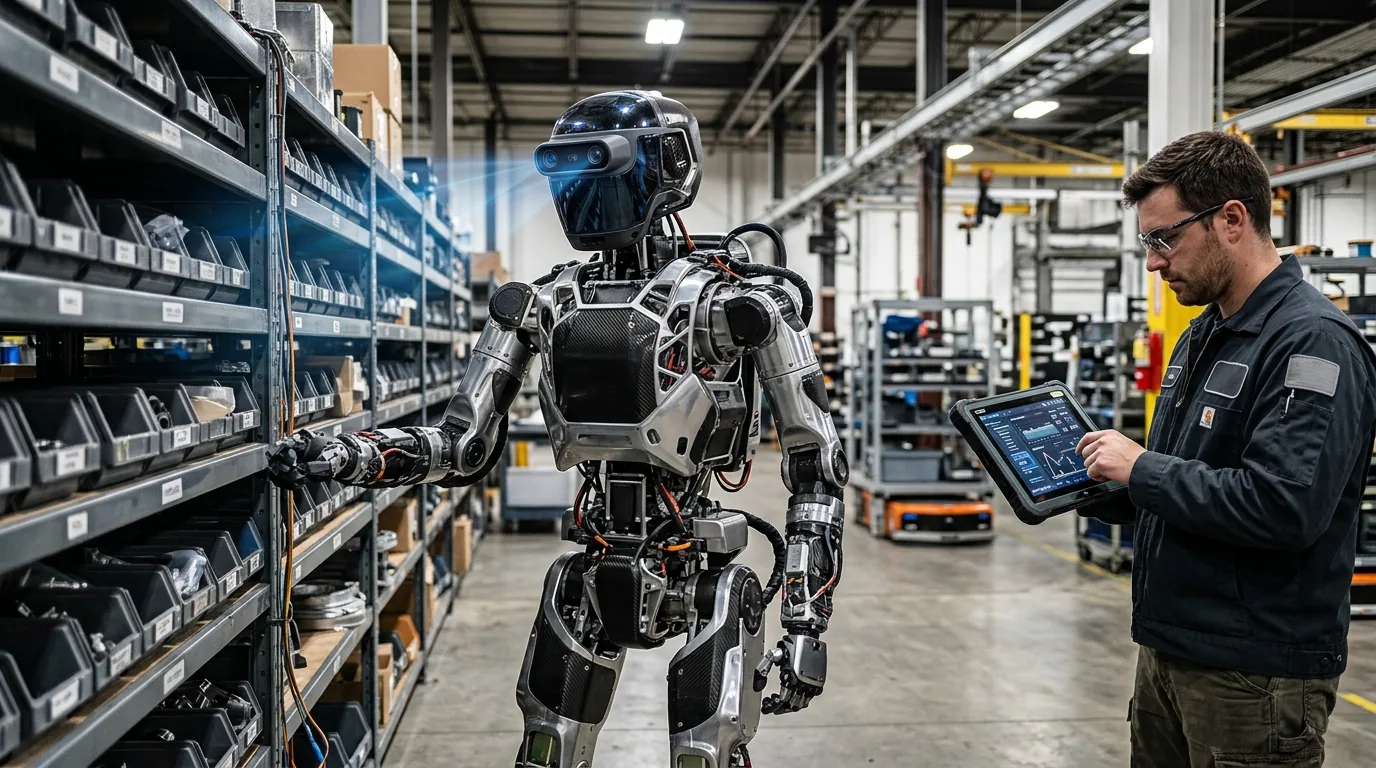
The journey of RealSense began inside Intel Corporation in 2014 under its Perceptual Computing division. Early initiatives attempted to bring depth sensing to consumer laptops for gesture control and facial recognition. While consumer adoption sputtered, engineering teams in Haifa, Israel recognized that industrial robotics suffered from a profound lack of affordable, reliable 3D perception. The division systematically developed dedicated application-specific integrated circuits, culminating in the Vision Processor D4, and rolled out the landmark D400 family of active stereo cameras.
During Intel's corporate restructuring in July 2025, RealSense was spun out as an independent venture-backed startup. Over the subsequent fourteen months of independence, RealSense demonstrated surprising operational maturity, scaling into a profitable business projected to generate between 80 million and 90 million dollars in 2026 revenue. The company expanded its hardware portfolio with industrial GMSL2 serializer interfaces, improved global shutter calibration, and strengthened its position across logistics fleets and robotics laboratories worldwide.
As part of the definitive agreement with Cognex, RealSense agreed to execute a pre-closing corporate spinout of its facial authentication product line into a separate company. This carve-out ensures that Cognex avoids consumer biometric privacy compliance hurdles, keeping its corporate focus squarely on physical robotics perception, automated sorting, and industrial spatial artificial intelligence.
Micro-Optics and Stereoscopic Depth Processing Architecture
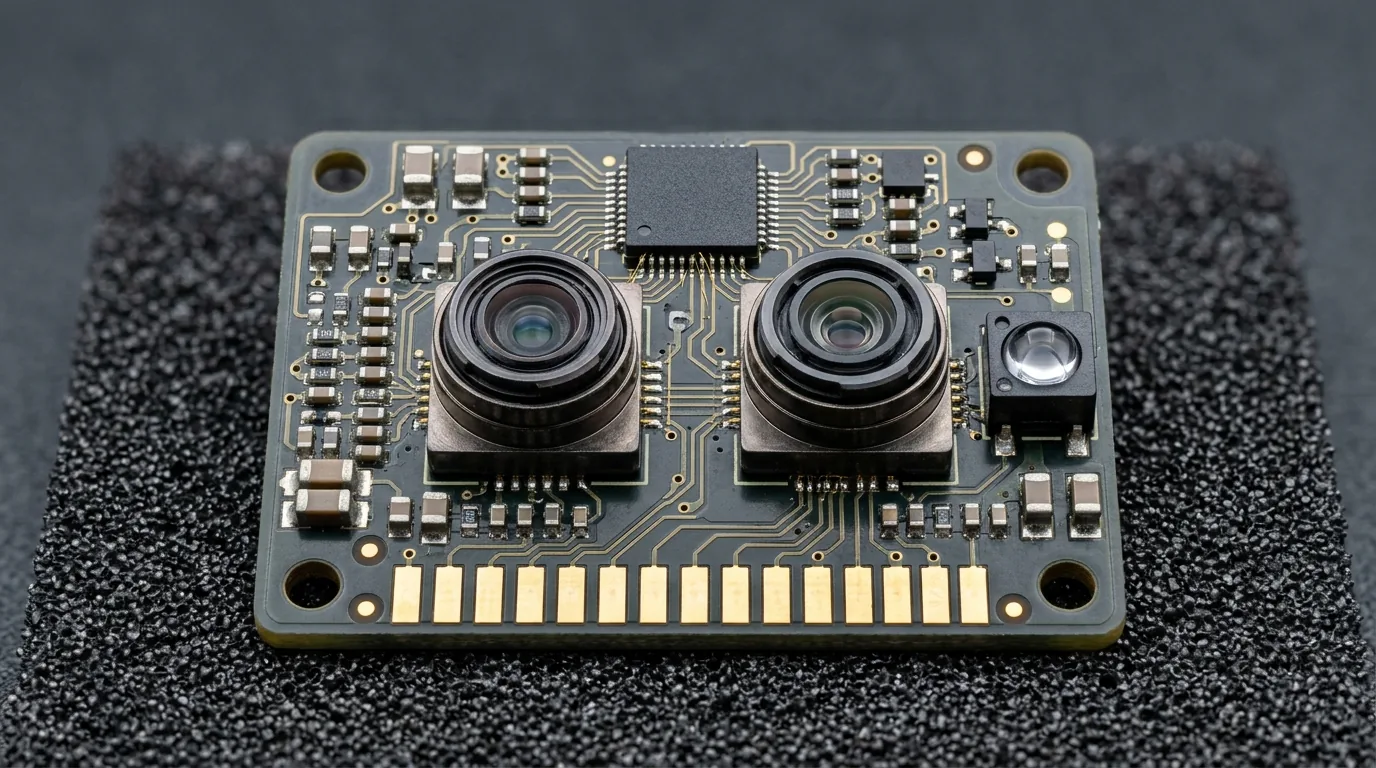
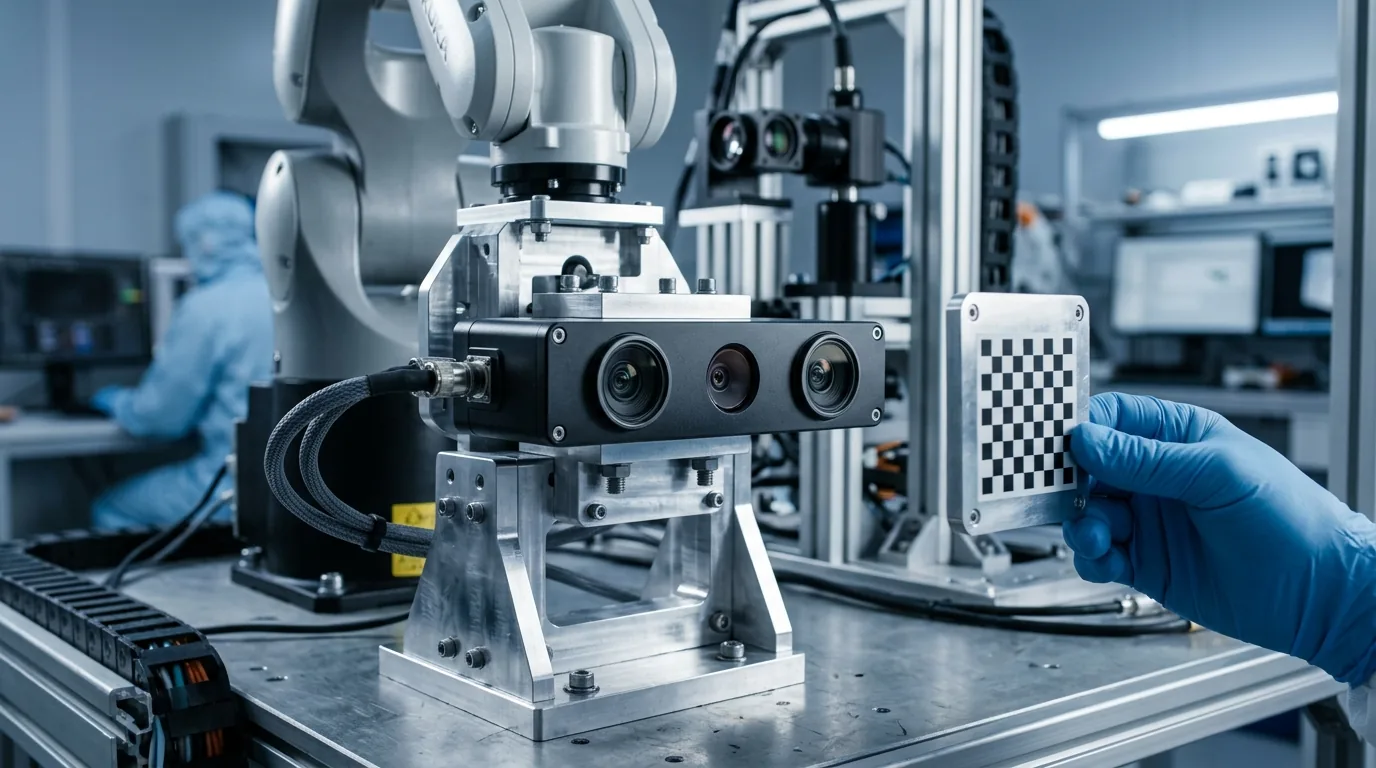
At the mechanical and optical heart of RealSense technology lies active infrared stereoscopy. Human depth perception relies on our eyes observing a scene from slightly separated vantage points, allowing the brain to compute depth through parallax disparity. RealSense replicates this using two matched infrared CMOS image sensors spaced across a rigid baseline. In environments with plain, featureless walls or dim lighting, standard passive cameras fail because they cannot identify matching texture points across both views. RealSense resolves this by firing an invisible, structured infrared speckle pattern across the environment, effectively painting artificial texture over every surface.
Computing pixel-by-pixel stereo disparity in high definition at ninety frames per second requires immense computational throughput. If handled on a central processing unit, disparity calculations saturate host processing cores and introduce unbearable latency into robotic control loops. RealSense bypassed this bottleneck by designing custom silicon, the Vision Processor D4. This compact, low-wattage hardware accelerator ingests raw dual video feeds, computes the spatial disparity matrix via dedicated hardware logic, and outputs clean depth frames and RGB color alignment without stealing a single clock cycle from the robot's main navigational computers.
In harsh industrial deployments, physical connectivity makes or breaks reliability. While early developer units relied on standard USB-C cables, modern RealSense industrial models like the D457 feature automotive-grade Gigabit Multimedia Serial Link 2 connections. GMSL2 carries high-speed video over shielded coaxial cables up to fifteen meters with microsecond latency, resisting the electrical motor noise and mechanical vibrations that routinely sever consumer USB links on moving machinery.
Autonomous Mobile Navigation and Warehouse Logistics
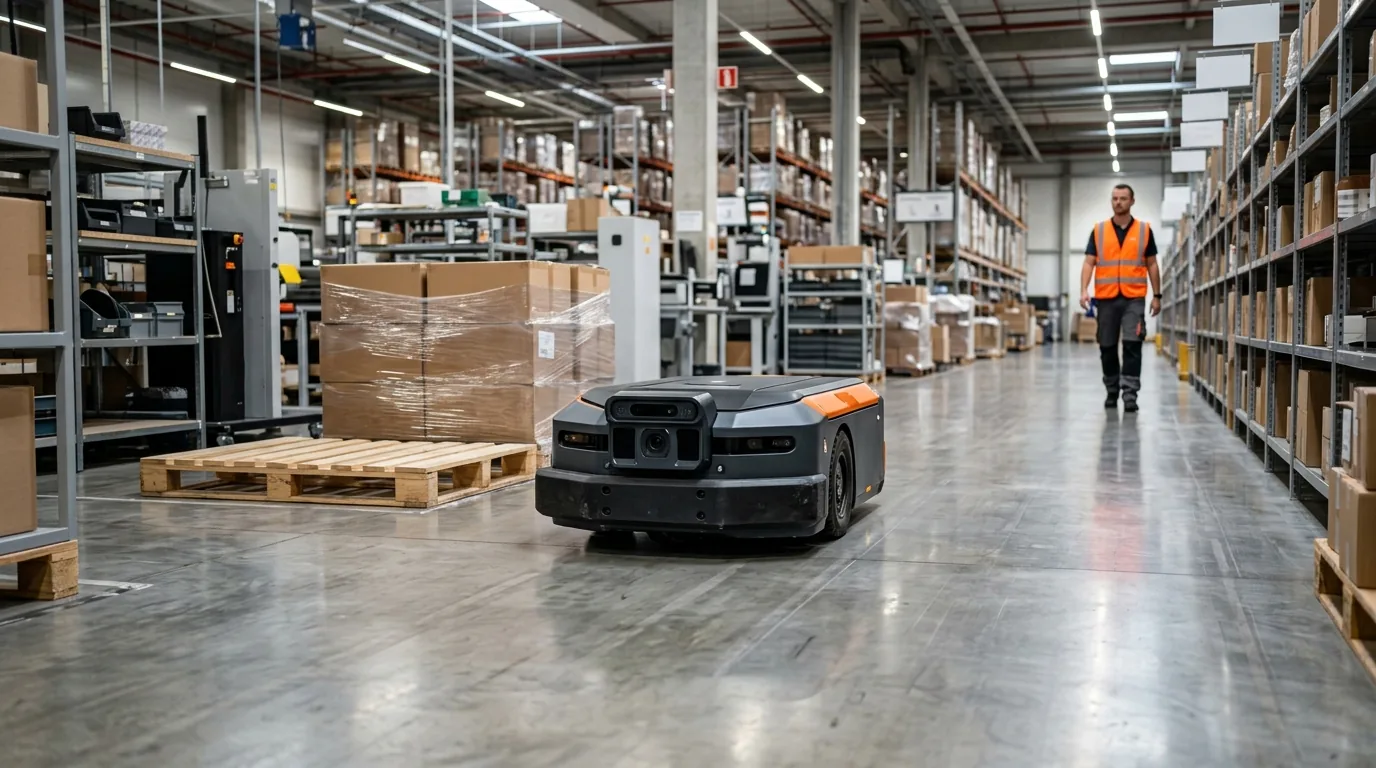
Nowhere is the demand for reliable depth vision more acute than in autonomous mobile robotics. Fulfillment centers worldwide rely on swarms of automated guided vehicles and mobile robots to move pallets, totes, and shipping containers. While single-layer safety LiDAR provides reliable horizontal obstacle detection, it remains blind to overhead hazards, low-lying floor debris, and forklift tines suspended at waist height.
RealSense cameras provide the dense three-dimensional point clouds necessary for obstacle classification and visual simultaneous localization and mapping. By integrating these spatial point clouds directly with Cognex barcode decoding and optical character recognition software, a single mobile robot can navigate complex warehouse aisles while simultaneously scanning parcel tracking codes on nearby shelves. This dual functionality eliminates the need for separate navigation sensors and identification cameras, drastically lowering total bill of materials costs for fleet manufacturers.
While low-power edge accelerators—such as the neural processors discussed in our analysis of Microchip acquiring Hailo—handle localized inference, RealSense delivers raw geometric ground truth. This spatial accuracy ensures robots can distinguish between an empty cardboard box and a solid steel column, preventing false emergency stops that cripple fulfillment throughput.
3D Robotic Vision Benchmark Matrix
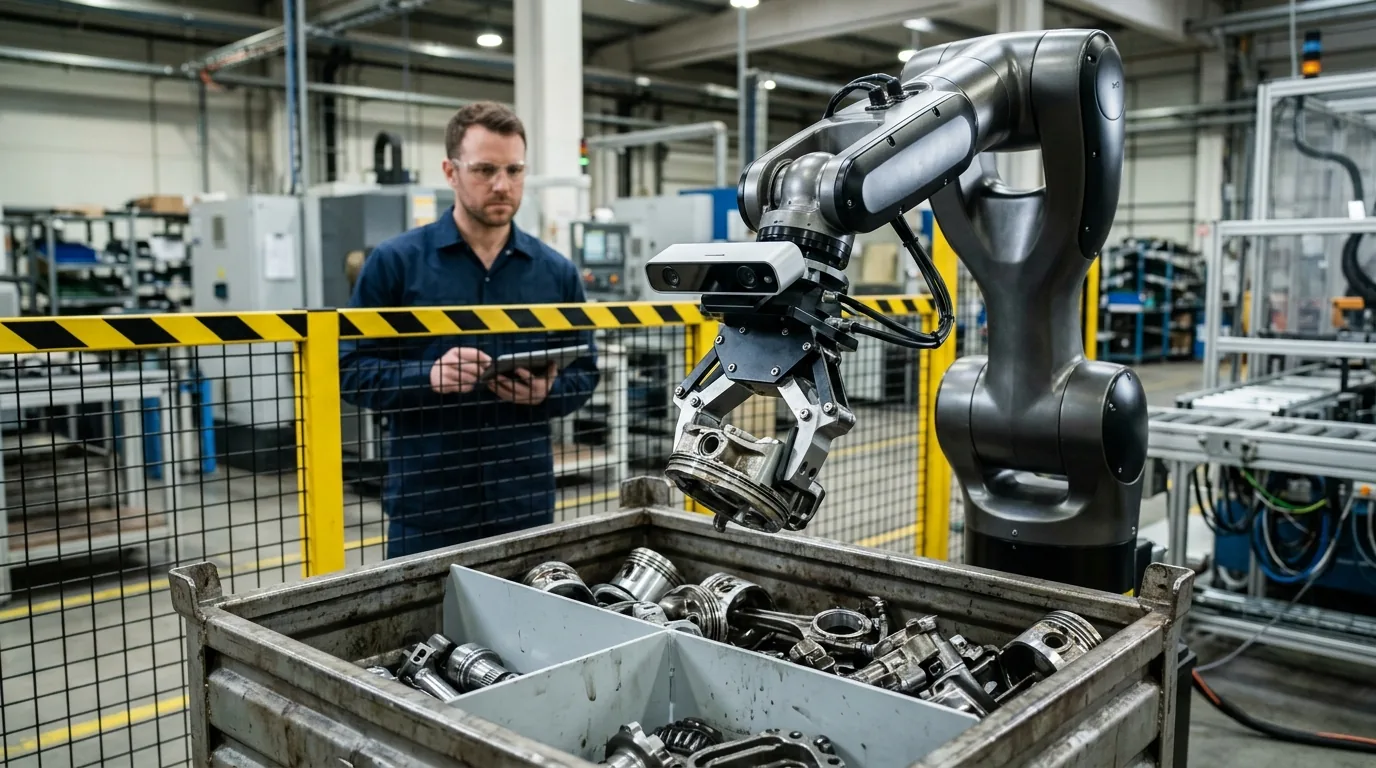
To understand why Cognex selected RealSense over alternative 3D vision suppliers, examine how the platform stacks up against its primary market competitors.
| Perception Platform | Depth Technology | Onboard Processing Architecture | Operating Range | Shutter Type | Primary Data Interfaces |
|---|---|---|---|---|---|
| RealSense D455 and D457 | Active Infrared Stereo | Vision Processor D4 ASIC | 0.4m to 6.0m | Global Shutter (IR and RGB) | USB 3.1 Type-C, GMSL2 Coaxial |
| Stereolabs ZED 2i | Passive Dual RGB Stereo | Host NVIDIA GPU via CUDA | 0.2m to 20.0m | Electronic Rolling Shutter | USB 3.0 Type-C |
| Orbbec Femto Mega | Time-of-Flight plus RGB | NVIDIA Jetson Nano Onboard | 0.25m to 5.0m | Global Shutter Depth | Gigabit Ethernet with PoE, USB-C |
| Luxonis OAK-D Pro | Active IR Stereo plus AI | Intel Movidius VPU Onboard | 0.7m to 12.0m | Global Shutter IR | USB 3.1, Gigabit Ethernet with PoE |
The comparison matrix reveals RealSense's unique architectural advantage. While Stereolabs delivers long-range performance, it offloads heavy disparity computation onto host graphics cards, requiring expensive mobile GPUs that drain robot batteries. Orbbec and Luxonis embed general-purpose microcomputers or vision processing units, which increases cost and heat dissipation. RealSense’s dedicated D4 ASIC calculates disparity with minimal power draw, delivering an unmatched balance of affordability, latency, and power efficiency.
The Humanoid Robotics Imperative and Physical AI
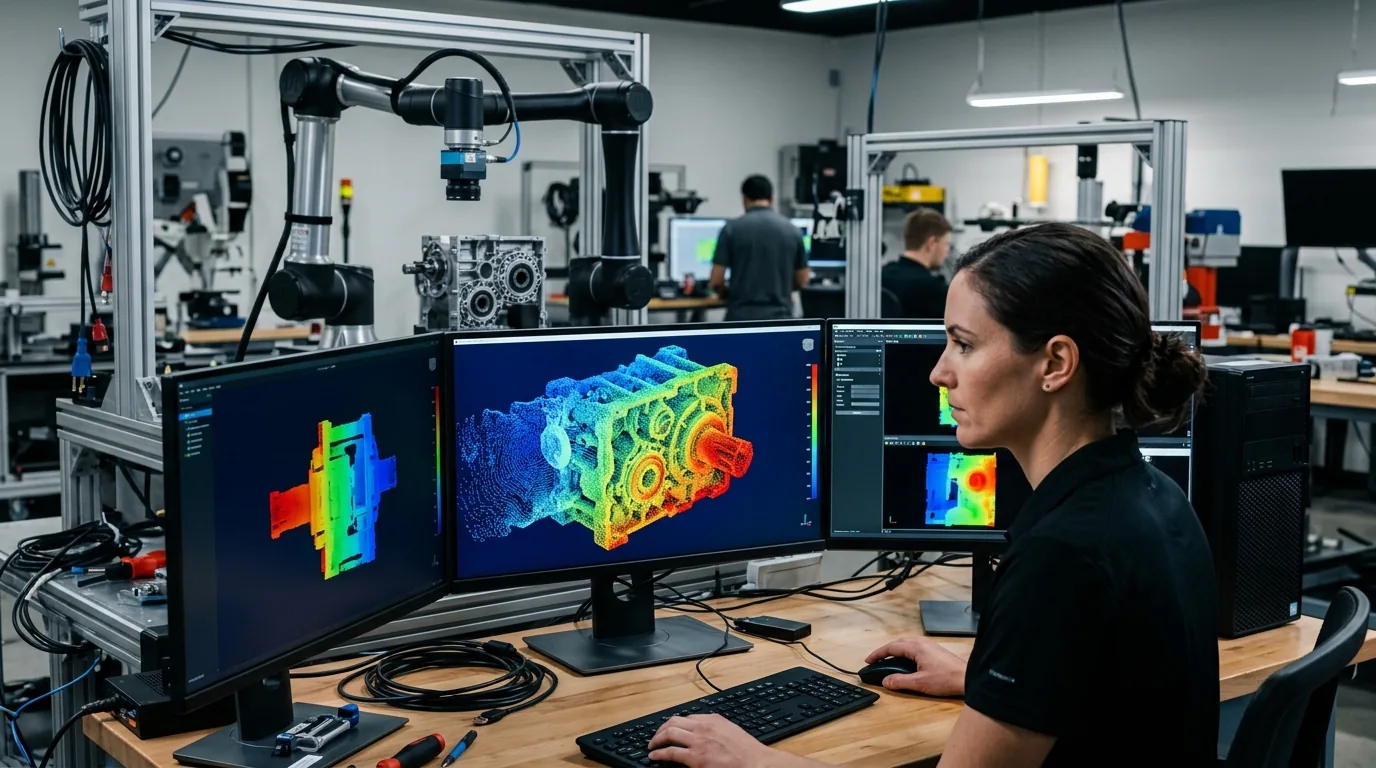
The timing of Cognex's acquisition reflects the unprecedented acceleration of the humanoid robotics industry. Over the past twenty-four months, leading technology companies and automotive manufacturers poured billions into bipedal general-purpose robots, as detailed in our comprehensive evaluation of humanoid robotics platform specifications. For humanoids to operate effectively in environments designed for people, they require continuous three-dimensional perception across multiple body locations.
A typical humanoid robot deploys between three and six depth cameras across its chassis, including primary navigation sensors in the head, foot-level terrain clearance cameras in the torso, and wrist-mounted cameras for manipulation guidance. Because humanoids operate under strict battery envelopes and payload limitations, vision modules must be compact, lightweight, and thermally efficient. RealSense checks every box, already serving as the default perception baseline for dozens of academic and commercial bipedal platforms.
For Cognex, acquiring RealSense represents an essential hedge against the future. Traditional manufacturing lines are shifting away from fixed tooling toward adaptable robotic workcells where robots reconfigure themselves for small batch production. By controlling both the physical cameras and the industrial vision software, Cognex positions itself as the foundational visual nervous system for the physical artificial intelligence era.
Frequently Asked Questions
What are the financial terms of the Cognex acquisition of RealSense?
Cognex Corporation agreed to purchase RealSense for approximately 500 million dollars in an all-cash transaction funded directly from balance sheet reserves. Additionally, Cognex allocated 56.5 million dollars in cash retention packages and roughly 50 million dollars in restricted stock units across a three-year period to retain key engineering talent.
Was RealSense still owned by Intel before this acquisition?
No. While RealSense was created inside Intel in 2014, Intel spun the business out as an independent venture-backed startup in July 2025. RealSense operated independently for fourteen months, generating between 80 million and 90 million dollars in projected 2026 revenue before entering into the acquisition agreement with Cognex.
Will Cognex continue supporting the open-source librealsense library and ROS2?
Yes. Cognex committed to supporting RealSense developer communities, preserving open-source access to the librealsense SDK, ROS, and ROS2 camera drivers. Maintaining developer goodwill is essential because hundreds of commercial robotics projects originate in academic and open-source software environments.
Why did RealSense spin off its facial authentication business before the sale?
RealSense opted to spin out its biometric facial recognition division into an independent entity prior to closing so Cognex could focus exclusively on industrial machine vision and robotic perception. This corporate separation shields Cognex from consumer facial biometric regulations and compliance liabilities.
How does active stereo depth perception compare to Time-of-Flight cameras?
Active stereo vision uses twin infrared sensors to compute depth through triangulation assisted by an infrared pattern projector. Time-of-Flight sensors measure the precise time it takes for an emitted pulse of light to bounce back from an object. Active stereo generally performs better under bright sunlight and avoids multipath interference issues common in metallic factory environments.
When will the acquisition officially close?
The transaction is expected to close in the fourth quarter of 2026, subject to customary regulatory antitrust approvals and closing conditions.
Loading comments…