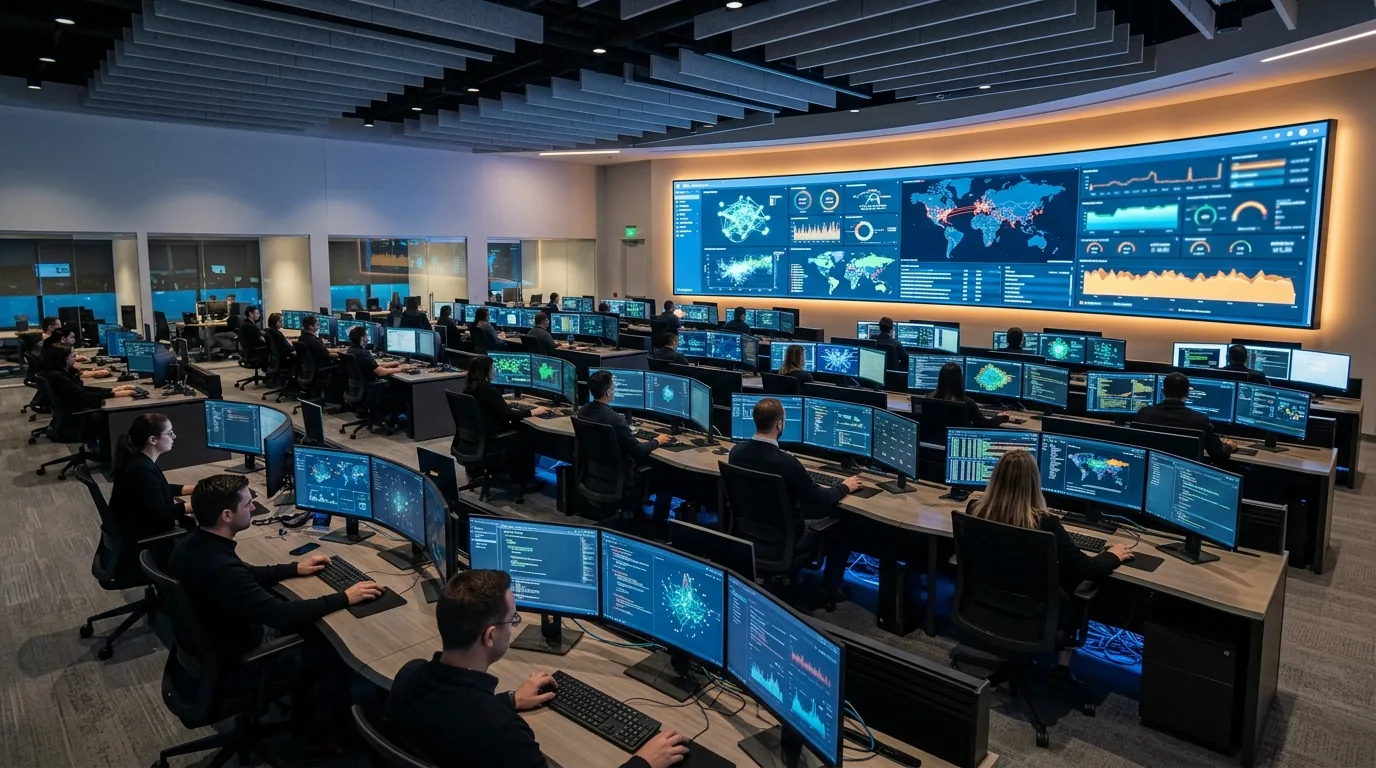
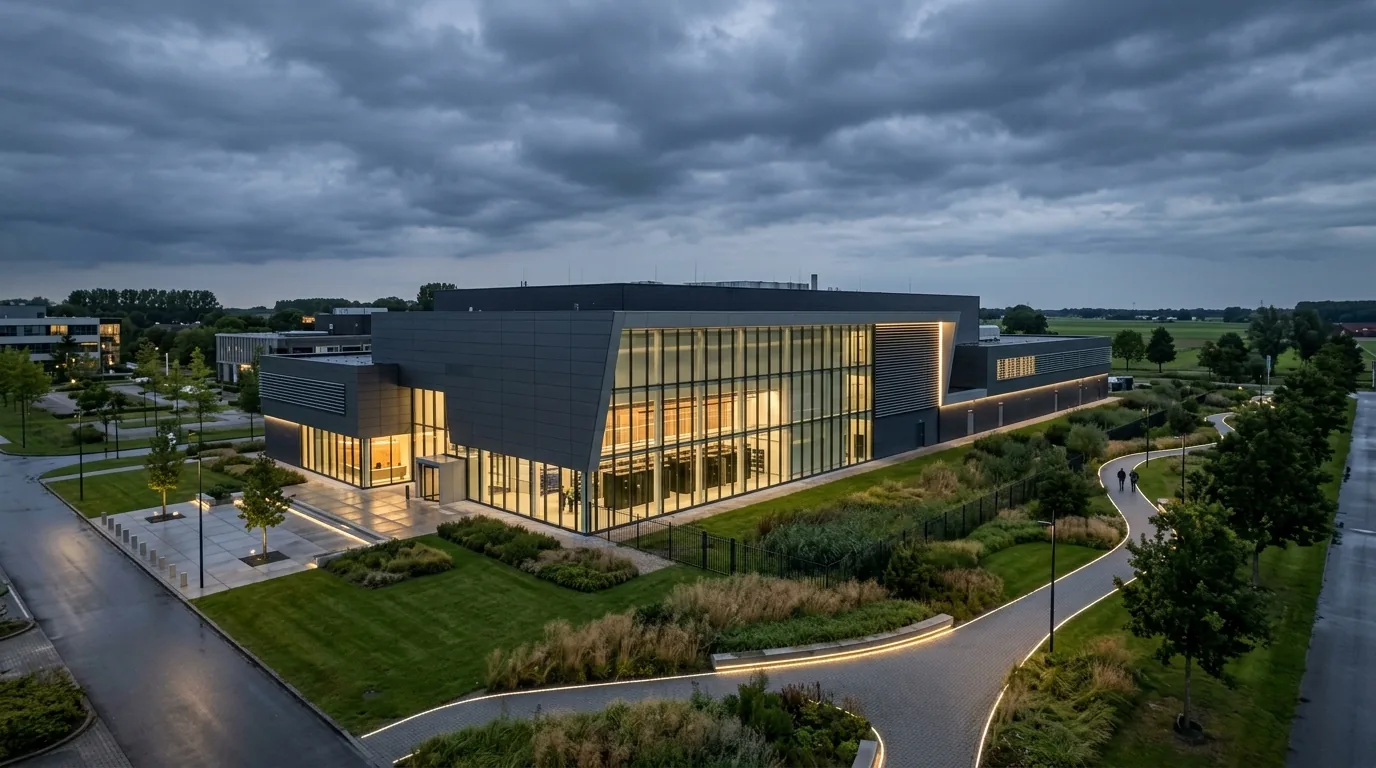
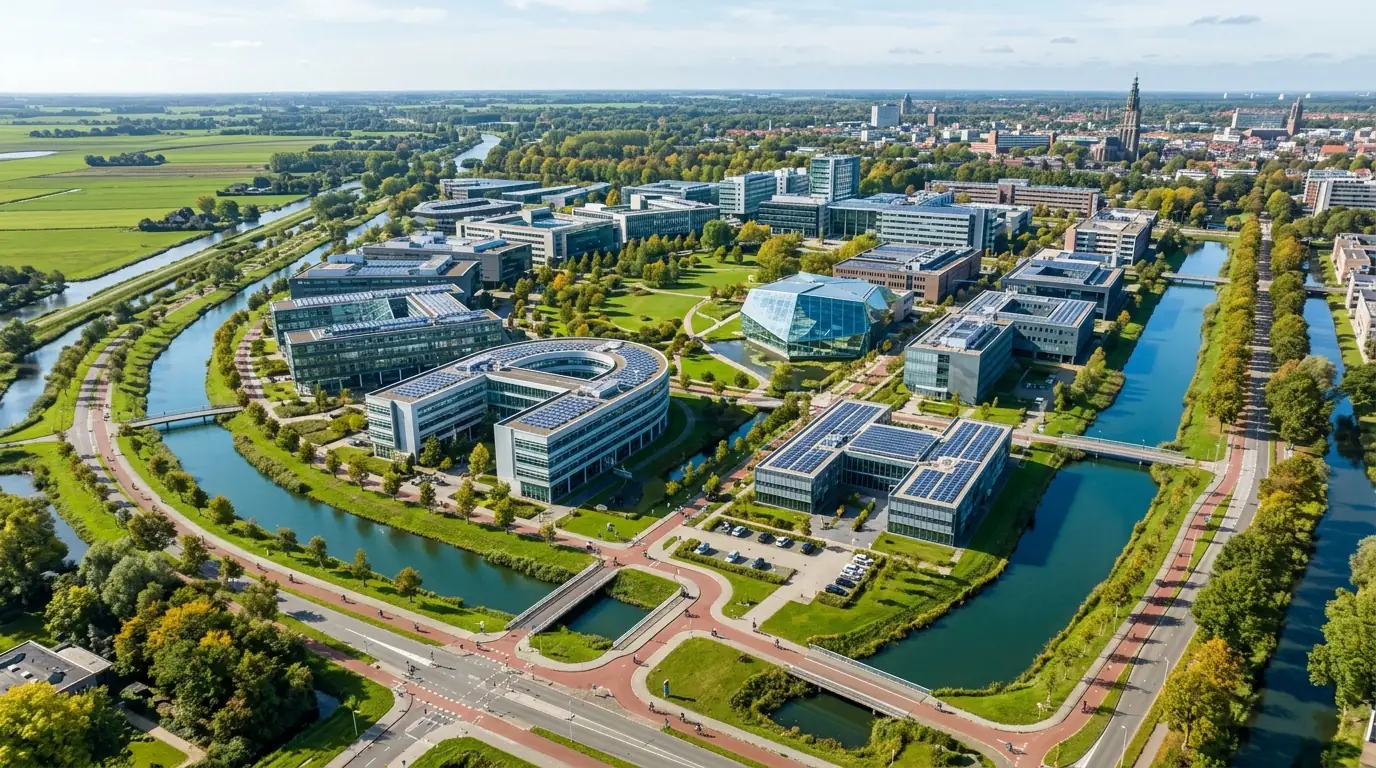
The Netherlands has formally committed 201 million euros to construct a dedicated sovereign artificial intelligence supercomputing facility in Groningen. Coordinated by Dutch research computing cooperative SURF and co-financed through the European Union EuroHPC Joint Undertaking, the initiative anchors Europe's drive to establish autonomous compute infrastructure independent of American hyperscalers and Asian hardware conglomerates. Following a competitive European tender awarded on September 21, 2026, Eurofiber Cloud Infra will host the supercomputing cluster at its established data center campus on Zernike Campus in Groningen, integrating high-density enterprise accelerators directly into municipal district heating systems.
Strategic Capital Allocation and the EuroHPC Framework
The realization of the Netherlands AI Factory represents a coordinated public financing model designed to distribute operational risk while securing national computational sovereignty. Total capitalization reaches 201 million euros assembled from three targeted public investment pillars. The European Union EuroHPC Joint Undertaking provides 71 million euros as part of its continent-wide mandate to establish localized AI Factories near established research clusters. The Dutch national government contributes 70 million euros through the Ministry of Economic Affairs and Climate Policy. An additional 60 million euros originates from Nij Begun, the regional economic recovery fund established to support long-term economic restructuring across Groningen and northern Drenthe following the cessation of natural gas extraction from the Groningen gas field.
Complementing the core hardware capitalization, a supplementary 14.1 million euro operational grant spanning 2026 through 2029 funds the software service tier, half of which is underwritten by the European Commission. This layered capitalization model mirrors parallel infrastructure deployments across the continent, such as France's Jules Verne exascale system and Spain's MareNostrum 5 AI partition, while prioritizing regional economic reindustrialization in northern Europe.
Rather than constructing a greenfield data center complex from scratch, SURF structured the procurement tender around existing enterprise data center facilities. Eurofiber Cloud Infra secured the contract by demonstrating immediate high-voltage grid availability on Zernike Campus, bypassing the severe multi-year electrical interconnection queues currently paralyzing commercial data center construction across the Amsterdam and Randstad metropolitan corridors.
Supercomputing Architecture and Hardware Security
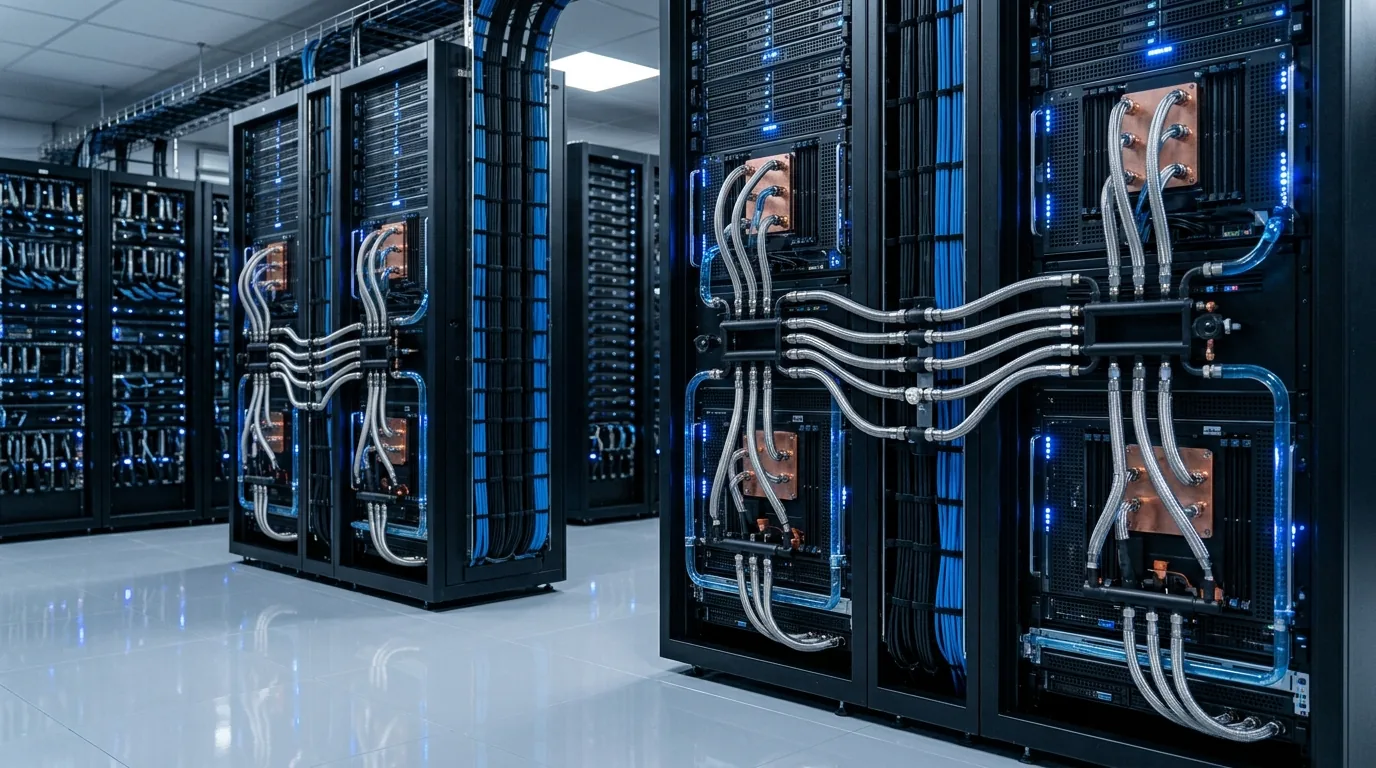
The computational engine of the Dutch AI Factory is specified around approximately 1,800 enterprise AI acceleration graphics processing units organized in high-density rack configurations. While formal procurement contracts for the silicon vendor remain subject to final European public procurement milestones, the technical baseline requires multi-instance GPU virtualization, ultra-wide high-bandwidth memory, and non-blocking optical switching fabrics. These network topologies build on the industry-wide transition toward optical transceivers detailed in our analysis of Marvell 2nm optical interconnects for AI data centers.
At an architectural scale of 1,800 GPUs, the Dutch facility does not seek to rival the monolithic 500,000-accelerator training expanses covered in our breakdown of the Alibaba Zhenwu V900 AI supercomputer cluster. Instead, the Groningen facility targets domain-specific foundation model training, advanced scientific fine-tuning, automated code verification, and high-security enterprise inference. To service public healthcare authorities, financial institutions, and European defense contractors, the cluster incorporates hardware-enforced confidential computing enclaves.
Confidential computing ensures that model parameters, synthetic datasets, and proprietary customer records remain cryptographically isolated inside hardware memory enclaves during live execution. Hypervisor administrators, facility operators, and third-party tenants cannot inspect plain text memory lines, providing strict compliance with the European Union AI Act and European General Data Protection Regulation requirements.
Circular Thermal Engineering and WarmteStad Integration
The selection of Eurofiber's Zernike Campus site was determined by environmental criteria. As European regulatory scrutiny intensifies over data center water depletion and carbon intensity, the Groningen facility implements a complete zero-water consumption cooling design. The cooling plant consumes zero municipal drinking water and zero surface water, eliminating evaporative cooling towers that lose hundreds of thousands of liters of potable water into the atmosphere daily.
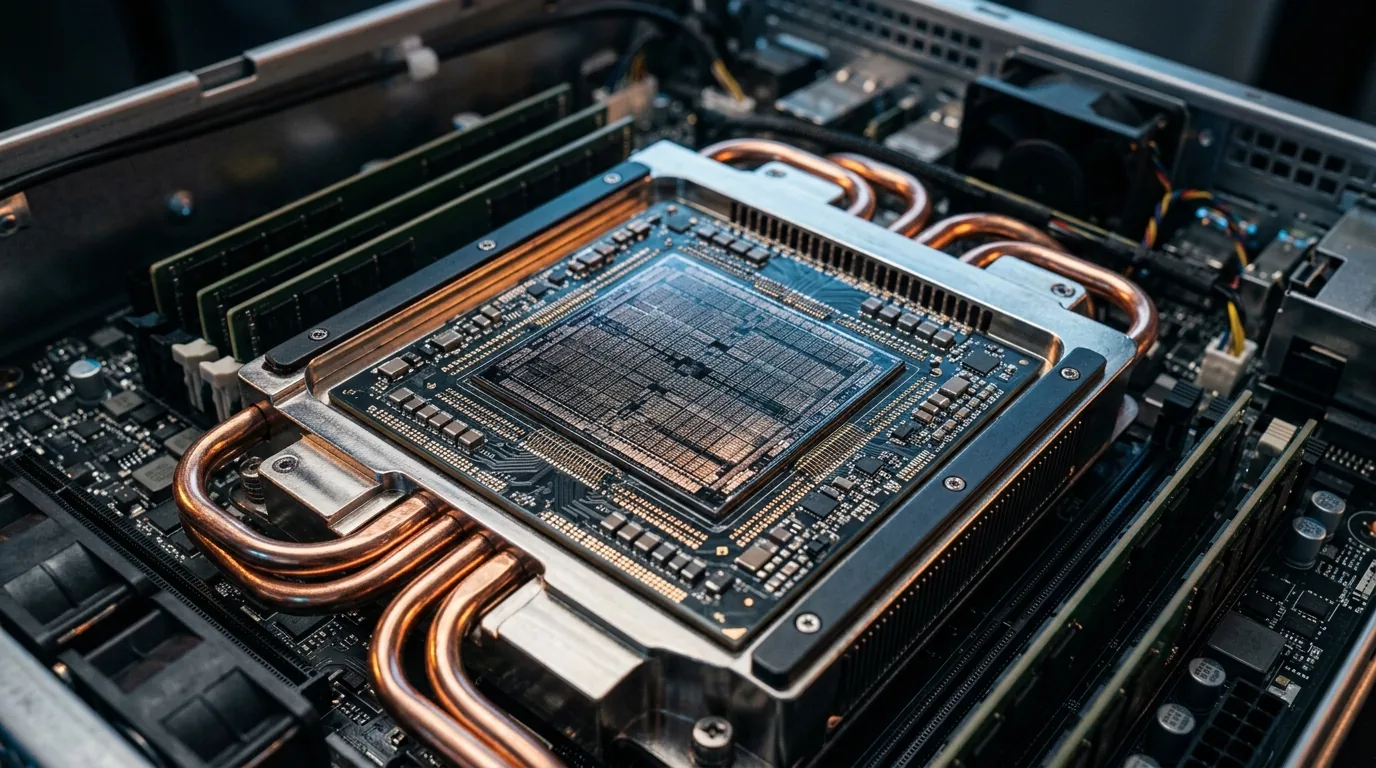
Thermal dissipation across the 1,800-GPU cluster relies on closed-loop direct-to-chip liquid cooling circuits. Low-viscosity dielectric fluids and treated water circulate directly over micro-channel copper cold plates seated against the GPU dies and central processors. The fluid absorbs high-density heat flux and exits the computing cabinets at temperatures between 55 and 65 degrees Celsius.
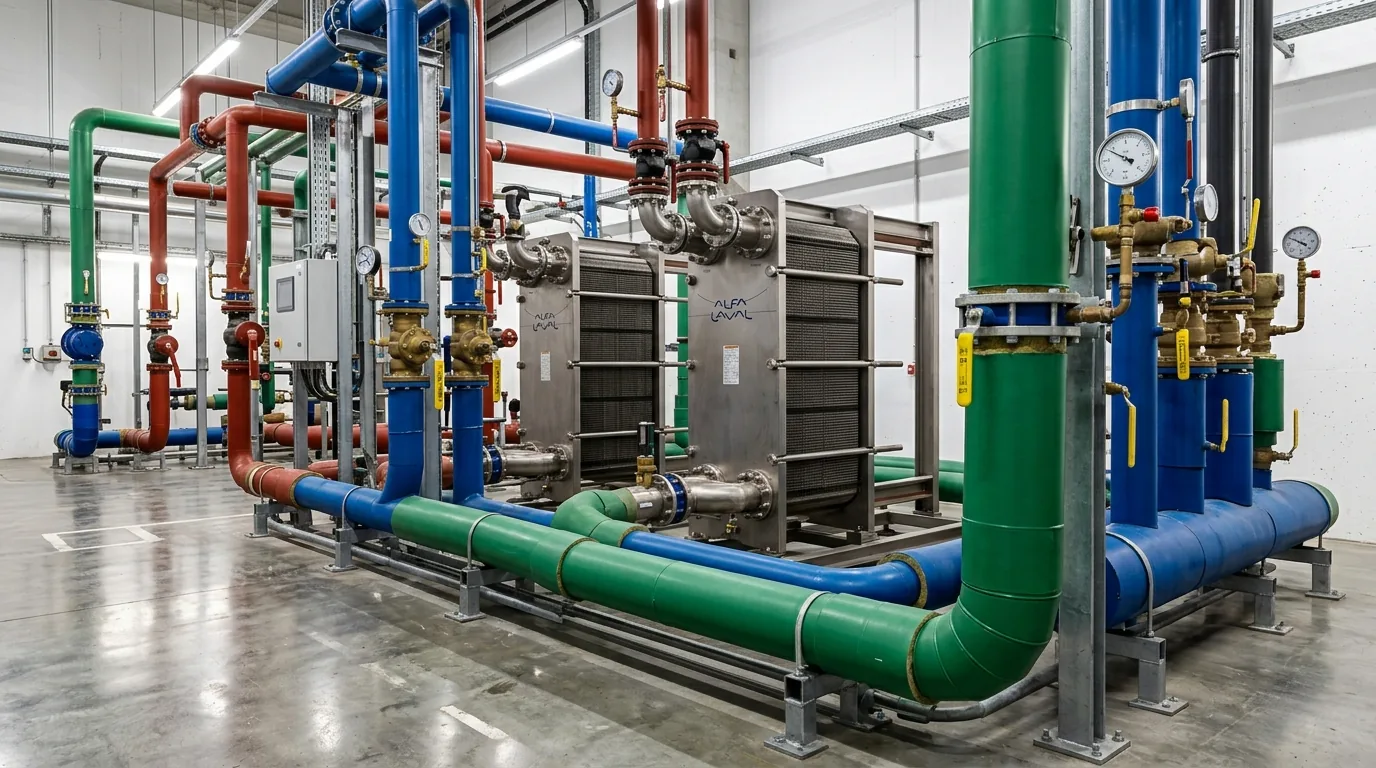
Instead of venting this thermal surplus through mechanical roof chillers, the plant routes the warm fluid through industrial plate heat exchangers connected directly to WarmteStad, Groningen's municipal district heating utility. WarmteStad circulates the captured thermal energy across northwest Groningen, supplying residential hot water and space heating for approximately 2,000 residential apartments and commercial buildings. This closed thermodynamic loop transforms computational waste heat into municipal energy equity, establishing a sustainable blueprint for urban European AI deployments.
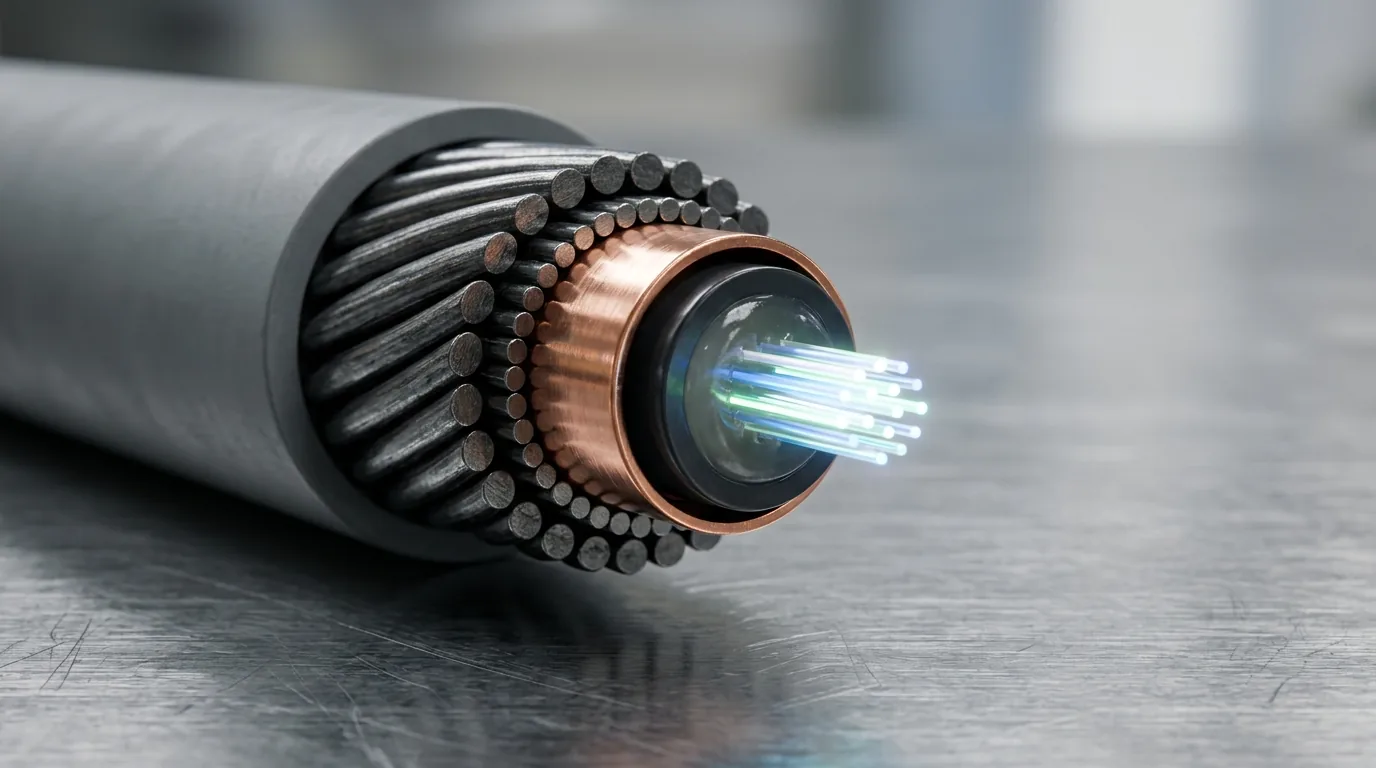
Furthermore, global data networks depend on reliable international connectivity. As explored in our review of the Meta Petal subsea optical infrastructure, European data sovereignty requires direct low-latency terrestrial fiber routes linking peripheral supercomputers back into international subsea cable landing stations along the North Sea coast.
Comparative Analysis Across European Sovereign AI Factories
The Netherlands AI Factory operates as part of a wider continental network supported by the EuroHPC Joint Undertaking. The following matrix illustrates how the Groningen installation compares with existing and announced European high-performance AI supercomputing centers.
| Facility Name | Host Location | Primary Operators | Accelerator Count | Cooling Architecture | Thermal Reuse Strategy | Target Deployment |
|---|---|---|---|---|---|---|
| Netherlands AI Factory | Groningen, Netherlands | SURF and Eurofiber | Approximately 1,800 GPUs | Direct liquid closed loop | WarmteStad district heating for 2,000 homes | Early 2028 operational |
| Jules Verne Exascale | Bruyeres-le-Chatel, France | GENCI and CEA | Exascale heterogeneous cluster | Warm-water direct cooling | On-site campus thermal recycling | Late 2027 operational |
| MareNostrum 5 AI | Barcelona, Spain | BSC-CNS | Over 4,400 Hopper GPUs | Evaporative and direct water | Partial building heating exchange | Active production |
| LUMI Supercomputer | Kajaani, Finland | CSC and EuroHPC | Over 10,000 AMD Instinct GPUs | 100 percent free liquid cooling | District heating for 20 percent of Kajaani | Active production |

The Human Layer and the Niemeyer AI Expertise Center
High-performance computing silicon remains ineffective without specialized domain engineers capable of translating hardware cycles into validated software models. Recognizing this bottleneck, the Netherlands AI Factory decoupled its software enablement structure from physical data center construction. While Eurofiber prepares the server halls on Zernike Campus for hardware installation in 2027, the human operations layer has been active since April 2026 inside the historic former Niemeyer tobacco factory in central Groningen.
The Niemeyer AI Expertise Center functions as a regional incubator and practical technical consultancy operated through a joint partnership uniting SURF, the Netherlands Organisation for Applied Scientific Research (TNO), the Dutch AI Coalition (NL AIC), and regional digital network Samenwerking Noord. The center employs systems architects, data engineers, and compliance specialists who assist public hospitals, small and medium enterprises, and regional logistics providers in preparing computational workflows prior to cluster commissioning.
Industrial organizations operating autonomous robotics and computer vision systems, such as those evaluated in our analysis of Cognex RealSense physical AI acquisition, require access to low-latency edge simulation and sovereign neural model retraining. The Niemeyer center provides synthetic data pipelines, distributed training frameworks, and legal guidance on European Union data residency compliance.

Edge Workstations and Distributed Research Workflows
Enterprise adoption of sovereign AI compute follows a hybrid workflow model. Academic institutions and commercial research labs do not execute all code directly on high-performance supercomputing nodes. Primary code authoring, dataset sanitization, and localized inference validation take place on localized field workstations before batch submissions are dispatched to the central 1,800-GPU cluster in Groningen.
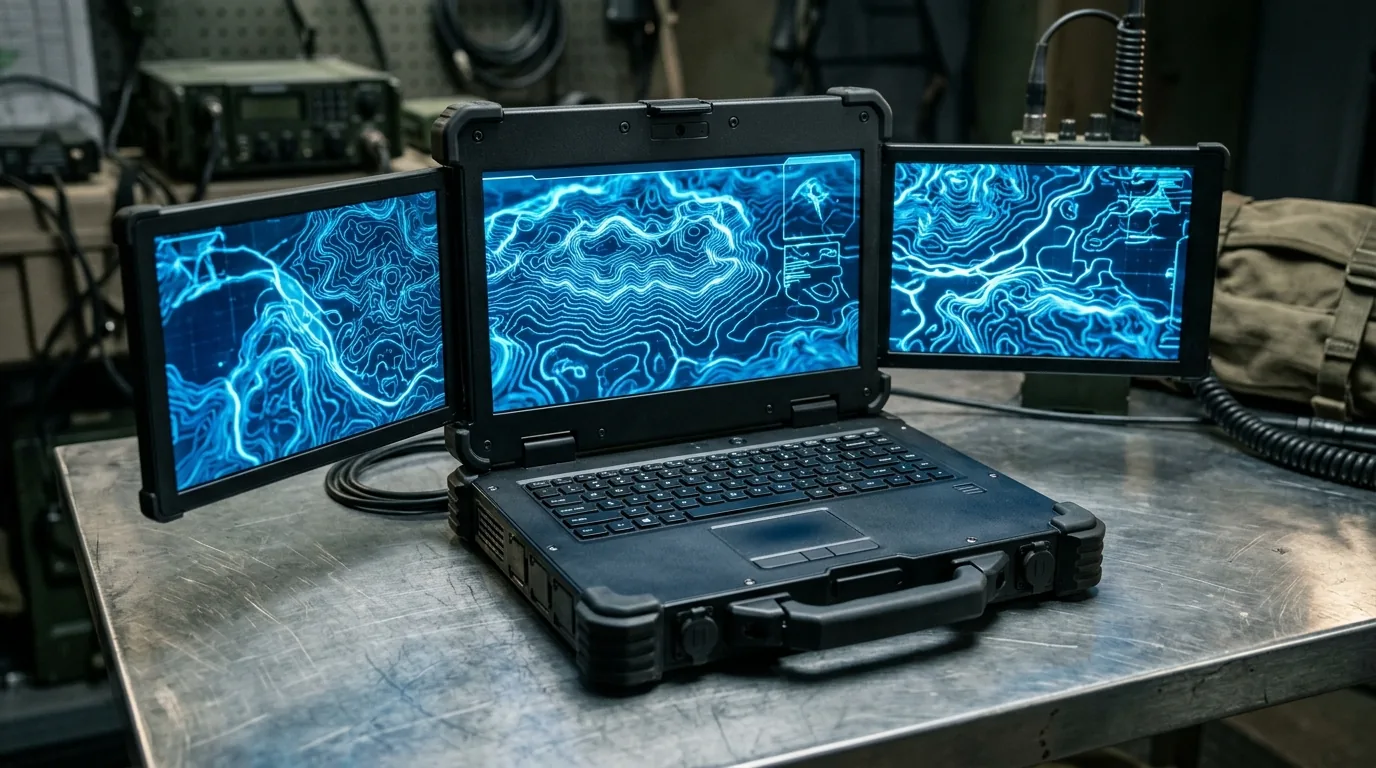
As documented in our hardware review of the Durabook Z14I-DX3 edge AI workstation, modern tactical computing devices incorporating dedicated neural processing units allow field scientists and emergency responders to preprocess high-resolution sensor streams locally. Once preliminary models are validated at the edge, large-scale hyperparameter searches and multi-node gradient synchronization jobs are transferred via secure SURF network connections to the Groningen supercomputer.
Deployment Timeline and Long-Term European Autonomy
The implementation roadmap for the Netherlands AI Factory follows a phased schedule structured around European procurement regulations and physical facility engineering. Site preparation and mechanical cooling modifications at Eurofiber's Zernike data center will continue through the end of 2026. Hardware delivery, cabinet installation, and high-speed network cabling are scheduled for mid-2027. Following extensive stress testing, liquid cooling thermal balancing, and confidential computing enclave certification, the supercomputing cluster will open for general production access in early 2028.
By pairing sovereign hardware ownership with strict circular energy reclamation, the Dutch project illustrates how European nations can build competitive artificial intelligence capabilities without compromising environmental mandates. As global demand for high-end AI acceleration continues to outstrip available silicon supply, the 201 million euro investment in Groningen ensures that Dutch and European researchers maintain direct control over their foundational computational future.
Frequently Asked Questions
What is the Netherlands AI Factory supercomputer?
The Netherlands AI Factory is a sovereign Dutch high-performance computing facility funded through a 201 million euro consortium comprising the European Union EuroHPC Joint Undertaking, the Dutch Ministry of Economic Affairs and Climate Policy, and the Nij Begun regional fund. The facility provides dedicated AI training and inference compute for European universities, healthcare providers, government agencies, and commercial enterprises.
Where is the Dutch AI supercomputer located?
The supercomputing hardware will be housed at Eurofiber Cloud Infra's established data center campus situated on Zernike Campus in Groningen, Netherlands. Software onboarding and technical consulting are delivered through the Niemeyer AI Expertise Center located in central Groningen.
How many GPUs are installed in the facility?
The supercomputing cluster is architected to house approximately 1,800 enterprise AI acceleration GPUs configured with direct liquid cooling and high-bandwidth interconnects to support large-scale foundation model development and confidential computing workloads.
How does the data center reuse waste heat?
The facility employs a direct-to-chip closed-loop liquid cooling system that requires zero drinking water and zero surface water. Residual heat from the processors is transferred via industrial heat exchangers directly into Groningen's WarmteStad municipal district heating network, warming approximately 2,000 homes across the city.
When will the supercomputer become operational?
Hardware installation and system integration are scheduled throughout 2027, with full commercial and academic production availability scheduled for early 2028. The accompanying AI Expertise Center has been operational since April 2026.
Loading comments…