




Two handhelds now own the PC gaming shelf, and after Valve hiked the Steam Deck OLED to $789 for the 512 GB model in May 2026, the choice between them stopped being a simple one.[2] The Steam Deck OLED remains the reference point for anyone with a Steam library, while the ASUS ROG Ally X, which launched in October 2024 at $699 for the 1 TB model, is the faster machine on paper.[3][4] The honest difference between the two comes down to what a buyer is willing to give up for speed, and it is a smaller gap than the spec sheet suggests.
The Deck OLED is the safer pick. It runs SteamOS 3, has the better screen, and its power management is the most refined in the category. The Ally X is the pick for raw frames and full Windows access, and it costs more for both.
The hardware, side by side
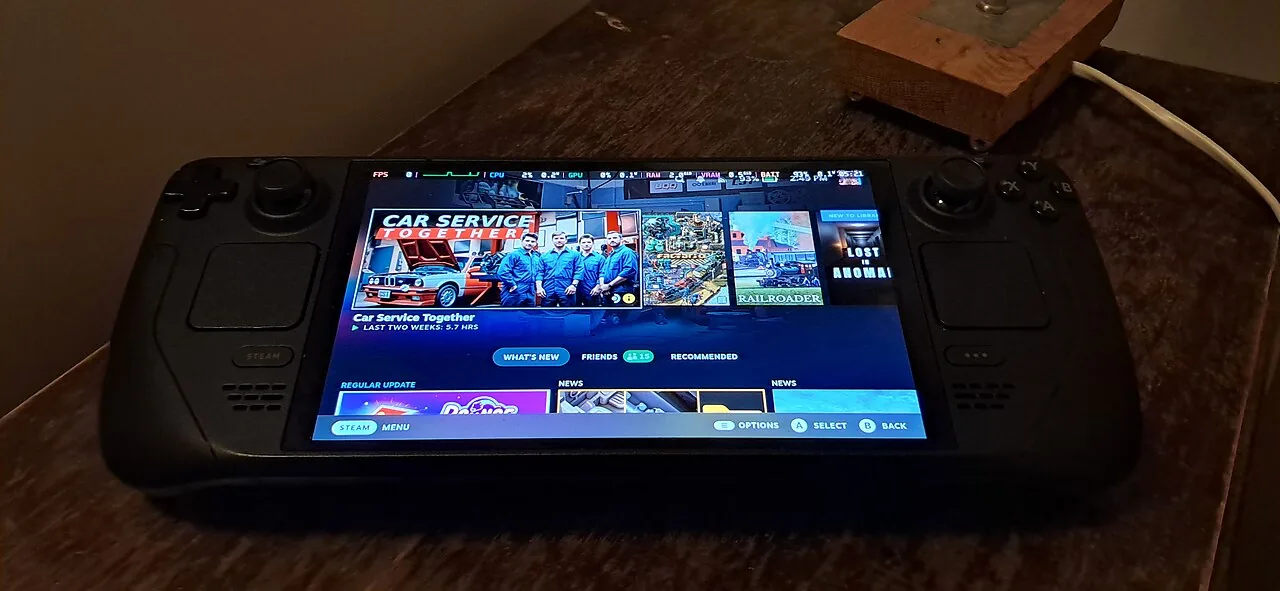
| Spec | ROG Ally X | Steam Deck OLED |
|---|---|---|
| CPU / GPU | AMD Ryzen Z1 Extreme, RDNA 3 | Valve custom APU, Zen 2 + RDNA 2 (8 CUs) |
| Theoretical throughput | ~8.6 TFLOPS | 1.6 TFLOPS |
| RAM | 24 GB LPDDR5 | 16 GB LPDDR5 |
| Battery | 80 Wh | 50 Wh |
| Display | 7-inch IPS, 1920x1080, 120 Hz | 7.4-inch OLED, 1280x800, 90 Hz, HDR |
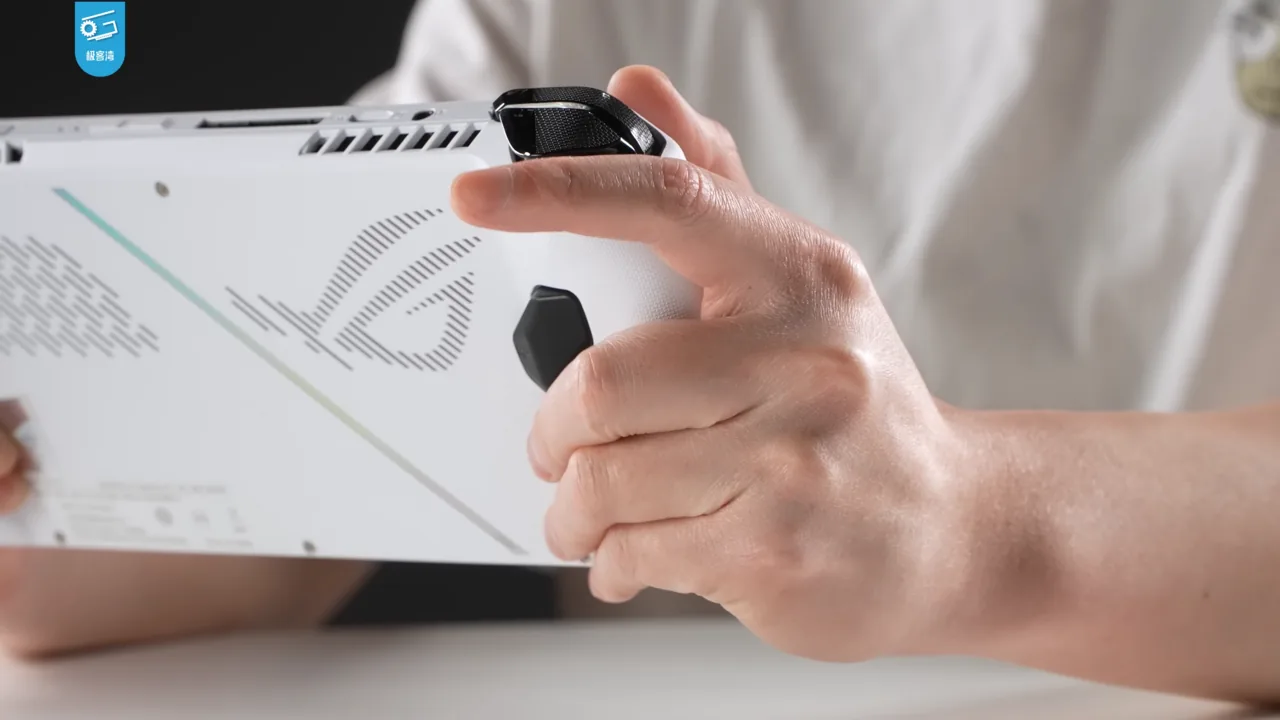
| Weight | 715 g | 640 g |
| OS | Windows 11 | SteamOS 3 (Linux) |
On the display, the Deck OLED pairs a 7.4 inch HDR OLED panel at 1280x800 and 90Hz with that APU, while the Ally X carries a 7 inch IPS panel at 1920x1080 and 120Hz.[2][4] The trade-off is real. OLED wins on contrast, with blacks that stay black and HDR that actually behaves, while the IPS panel wins on resolution and refresh rate but carries the soft glow that IPS panels show in dark scenes.
Performance in real games
In one round of real-world testing, the Deck OLED held 45 to 55 FPS in Baldur's Gate 3 on high settings and 50 to 60 FPS in Cyberpunk 2077 with FSR upscaling, while CPU-bound titles such as Counter-Strike 2 exceeded 100 FPS.[1] That covers the bulk of what most people play, which is why the Deck remains the default recommendation despite the older silicon.
The Ally X's newer GPU architecture buys it 30 to 50 per cent more gaming performance in GPU-bound titles, per the same testing.[1] In practice, Starfield holds 50 to 60 FPS on high settings and Cyberpunk 2077 reaches 60 to 70 FPS with upscaling enabled.[1] The gap shows up most in open worlds and modern releases that stretch the Deck's 1.6 TFLOPS budget, while older and CPU-bound titles run at similar frame rates on both machines.
Battery life under load
The Ally X's 80 Wh cell is double the Deck's 50 Wh, and one review put its runtime at 9 to 10 hours for light gaming and 6 to 8 hours for intensive play.[1] The Deck OLED manages 7 to 8 hours of moderate gaming and 5 to 6 hours of intensive play on a smaller battery.[1] That second number is the telling one, because the Deck's more efficient APU and tighter power management let it compete with a machine carrying twice the cells.
Sustained heavy loads flip the advantage back to the Deck. In the same scene at heavy settings, a bench-tested round found the Deck OLED lasting 3 hours 50 minutes against 2 hours 35 for the Ally X.[3] A bigger cell does not beat a more efficient chip when both are running the same demanding game on battery power.
The software question
SteamOS 3 is a console-style Linux build, and it is the reason the Deck feels finished. Sleep and resume is instant, the game mode is clean to drive, and Proton covers 99 per cent of top Steam titles out of the box, with the community compatibility database doing the heavy lifting for anything outside that list.[1][6] The Ally X runs full Windows 11 Home, which means Game Pass, Epic, Battle.net and emulators all work natively without a compatibility layer, at the cost of driver updates, system maintenance, and a desktop that is awkward to drive with thumbsticks on a 7 inch screen.[4][3] The Ally X also improved its cooling over the original Ally, which keeps thermals under control in sustained play.
Both machines take a user-replaceable M.2 SSD, a genuine advantage over rivals that bolt storage down. On price, the May 2026 hike pushed the Deck OLED from $549 to $789 for 512 GB and from $649 to $949 for 1 TB, so the two now sit closer together than the original launch prices suggested, with UK street prices putting the 1 TB Deck around £949.[2][3] The Ally X's $699 launch price no longer represents a premium over the Deck the way it once did, which changes the maths for anyone buying new.
Where the Switch 2 fits
The Nintendo Switch 2 is the third serious option on this shelf. Its T239 chip produces roughly 4 TFLOPS on 8 GB of memory, it carries a 7.9 inch 120Hz panel, and it is the only device of the three that sells a first-party library, with 1080p at a locked 60 FPS as its target on Nintendo's own titles.[2][7] It is not a PC handheld in any sense, and it does not run a Steam library, but at $449.99, rising to $499.99 on 1 September 2026, it sits between the two in price and targets a different buyer entirely.[2] Many people end up owning a Switch 2 for Nintendo games and a Deck or Ally X for their Steam library, and our Switch 2 performance comparison covers how that console measures up against the living room machines.
The verdict, honestly
Buy the Steam Deck OLED if the display, the software, and battery consistency matter more than peak frame rates, because those are its three strengths, and the price hike has not changed the arithmetic for anyone whose library lives on Steam. Buy the ROG Ally X if raw FPS and access to Game Pass and Windows software are the point, and the extra frames are worth the weight, the Windows upkeep, and the higher total cost of ownership. A full breakdown of every device on the shelf is in our 2026 handheld buying guide, which ranks the rest of the field against these two.
Frequently asked questions
Which has the better screen, the Deck OLED or the Ally X?
The Deck OLED wins on contrast. Its 7.4 inch HDR OLED panel produces true blacks and richer colour, while the Ally X's 7 inch IPS panel is sharper at 1920x1080 and smoother at 120Hz, but shows the soft glow IPS panels carry in dark scenes. At handheld viewing distance, the 800p OLED frequently looks better in practice.[3]
Is the ROG Ally X worth the extra cost over the Steam Deck OLED?
It depends on what the extra power buys you. The Ally X delivered 30 to 50 per cent more frames in GPU-bound titles in one round of testing, and it runs full Windows 11 with Game Pass included.[1][4] If you will use both of those, it is worth it. If your library lives on Steam and you value battery consistency and a finished experience, the Deck OLED remains the safer buy at close to the same money.[2]
How does the Nintendo Switch 2 fit into this decision?
It is a different animal. The Switch 2's T239 chip, a 7.9 inch 120Hz panel, and a first-party library make it the pick for Nintendo games at $449.99, rising to $499.99 on 1 September 2026.[2] It does not run a Steam library, so it complements rather than replaces a Deck or Ally X for PC gaming.
Can you upgrade the storage on either device?
Yes, on both. The Deck OLED takes a user-replaceable M.2 drive, and the Ally X uses a standard full-size M.2 2280 SSD like a laptop, which makes a storage upgrade a screwdriver job rather than a soldering project.[4][5]
What battery life can you actually expect from each?
One test logged 7 to 8 hours of moderate gaming and 5 to 6 hours of intensive play for the Deck OLED, against 9 to 10 hours of light gaming and 6 to 8 hours of intensive play for the Ally X.[1] Under sustained heavy load the Deck lasted longer per test run, thanks to its efficiency, so the Ally X's bigger cell mainly pays off in lighter sessions.[3]
References
- Gaming PC Guru — Best Gaming Handheld 2026, tested FPS and battery figures (2026)
- Tech Insider — Handheld Gaming Console List 2026, six devices ranked with August 2026 prices (16 August 2026)
- Best Handheld Console — Bench-tested comparison of the 2026 field, Steam Deck OLED best overall (2026)
- ASUS ROG — ROG Ally X (2024) official product page
- Steam — Steam Deck OLED, official product page
- ProtonDB — Community compatibility reports for Steam games on Linux and Steam Deck
- New Tech Reviewer — Nintendo Switch 2 versus PS5 versus Xbox Series X performance comparison



Loading comments…