

Live sports broadcasting has chased true three-dimensional freedom for decades, yet every production system encountered the same immovable physical wall. Capturing an athletic competition with six degrees of freedom requires dozens or hundreds of synchronized cinema-grade sensors ringing an arena. Processing that torrent of uncompressed image data into coherent polygonal meshes and textured point clouds demands massive compute racks running at thermal limits. Broadcasters had no choice but to park bespoke outside broadcasting trailers stuffed with power-hungry GPU clusters directly outside the arena entrance. That physical coupling turned live volumetric broadcasts into costly, space-constrained experiments that could never scale to regular league play.
That engineering bottleneck broke wide open when Canon demonstrated a remote volumetric sports viewing system powered by Nippon Telegraph and Telephone Corporation and its Innovative Optical and Wireless Network. Capturing a live basketball match during the twentieth Asian Games at Aichi International Arena, Canon decoupled the cameras from the computing cluster. Rather than stationing heavy spatial processing servers inside the sports complex, engineers routed uncompressed camera telemetry across hundreds of kilometers of optical glass to Canon Kawasaki Office. The reconstructed three-dimensional match streamed instantly to mixed reality viewers gathered in Tokyo, giving spectators real-time command over their viewing perspective as if walking onto the hardwood floor.
Spatial Video Versus True Six Degrees of Freedom Volumetric Media
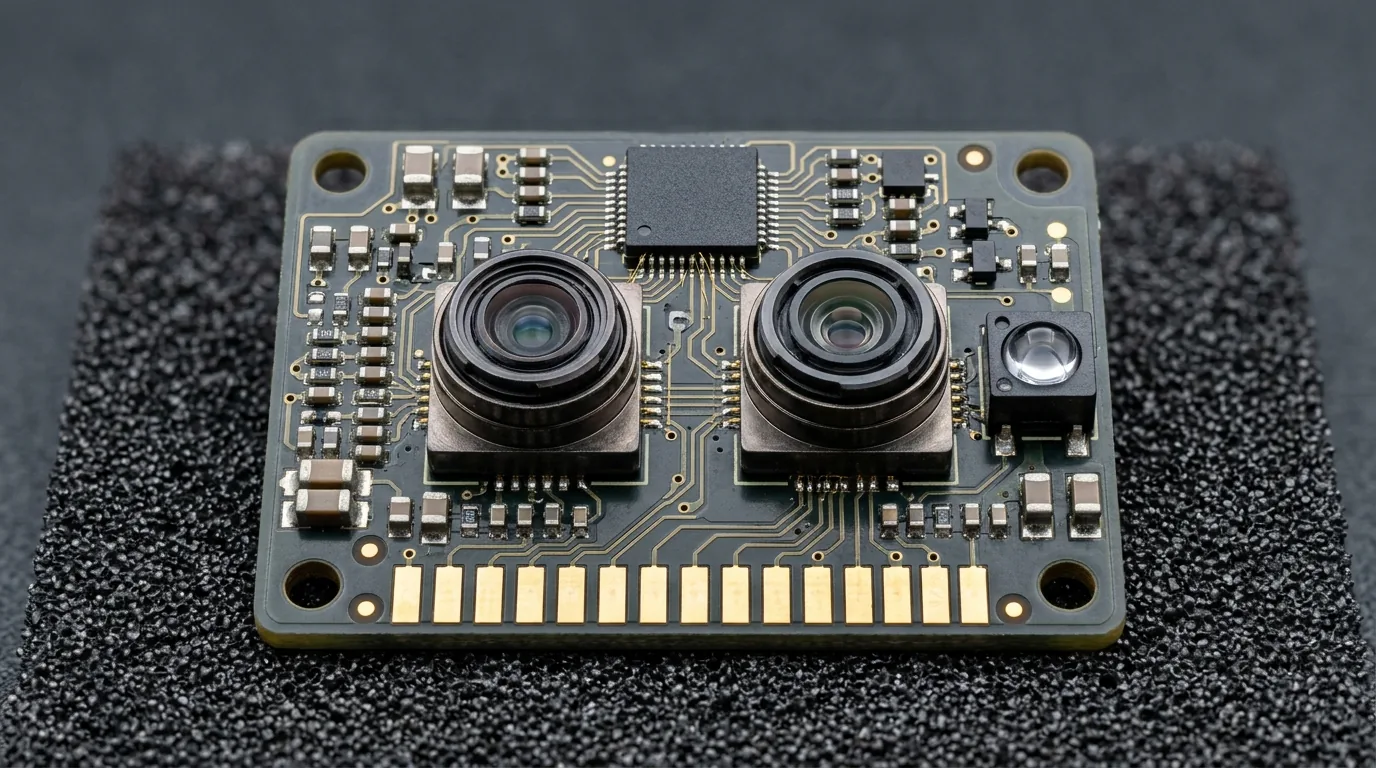
Consumer headset rollouts created substantial technical confusion around what constitutes spatial video. When consumer electronics makers describe stereoscopic three-dimensional video recorded on smartphones as spatial media, they describe a format that preserves depth from a fixed perspective. The viewer experiences binocular disparity, but their head remains anchored to a single virtual chair. Moving sideways, leaning forward, or walking around the athletes reveals no hidden angles because the camera recorded only two fixed vantage points.
Volumetric video operates on completely different mathematical foundations. Instead of recording two flat images, an array of cameras captures the entire spatial volume of an arena. The processing pipeline extracts dynamic geometric coordinates, generating full three-dimensional models of players, referees, and the basketball for every split second of gameplay. Viewers gain six degrees of freedom. They can pitch, yaw, and roll their heads, but they can also translate physically along the x, y, and z axes. Spectators can inspect a contentious referee call from above the backboard or drop down to court level behind the defending center.
The Aichi Arena Multi-Camera Capture Array
The physical capture setup deployed at Aichi International Arena demonstrates how modern volumetric imaging operates under live competitive conditions. Canon mounted approximately one hundred specialized 4K camera units around the perimeter of the basketball court, positioning them at varied elevations along the catwalks, mid-level seating balconies, and baseline barricades. Each camera unit operates in hardware genlock, ensuring that every optical sensor records each exposure frame within nanoseconds of its neighbors. A single frame out of sync destroys depth triangulation across overlapping camera sightlines.
Basketball presents acute computer vision challenges compared to controlled soundstages. Athletes move unpredictably at speeds exceeding twenty feet per second, casting fast-moving shadows across reflective hardwood floors. Basketballs bounce between limbs, creating rapid occlusions where players mask one another from adjacent camera views. In traditional volumetric studios, subjects perform against green screens under diffuse LED lighting. At Aichi International Arena, Canon captured genuine tournament play under standard stadium lights without green screen backdrops or player tracking tags. The multi-view pipeline relies entirely on optical geometry and high-speed silhouette extraction to isolate player bodies from court flooring and court-side advertising boards.
Similar optical advances in automation and robotics, such as those analyzed in our review of robotic three-dimensional vision and spatial depth sensors, highlight how synchronized multi-sensor arrays are replacing manual calibration routines. In Canon arena system, automated background subtraction isolates dynamic objects from static stadium architecture before point cloud generation begins, drastically shrinking the raw data footprint before downstream meshing.
Overcoming Player Occlusions and the Sixteen Millisecond Latency Threshold
When multiple basketball players crash together under the rim during a rebound, adjacent cameras frequently lose sight of the ball or player limbs. Legacy photogrammetry pipelines suffered from severe geometric tearing under these conditions, rendering athletes with hollow torsos or detached hands. Canon overcomes visual occlusion by pairing high-density perimeter cameras with overhead catwalk sensors. If five court-level cameras are obscured by defensive screens, elevated diagonal sensors maintain line-of-sight triangulation. Optical flow algorithms track skeletal motion vectors across consecutive frames, enabling the geometry engine to interpolate player silhouettes through brief blind spots without visual artifacts.
Maintaining visual fidelity is only half the battle. In mixed reality sports broadcasting, the system must satisfy the sixteen-millisecond motion-to-photon latency budget. When a spectator wearing a headset moves their head, the virtual scene must update within sixteen milliseconds to match human inner-ear vestibular balance. Any lag, frame stutter, or packet jitter induces immediate motion sickness. By isolating heavy spatial reconstruction in off-site GPU clusters and sending lightweight geometric meshes to headsets, local devices render frames at ninety frames per second with sub-ten-millisecond tracking responsiveness.
The Intel True View Retrospective and Why Legacy Systems Stalled
To appreciate Canon and NTT breakthrough, one must examine why earlier sports volumetric systems stalled in commercial adoption. Intel True View represented the industry benchmark during the late 2010s, outfitting premier football and soccer stadiums with thirty-eight to fifty 5K cameras. Despite stunning highlight reels, Intel True View faced severe architectural limitations that restricted its utility to delayed replay clips rather than live streaming.
Intel architecture required multi-million-dollar compute trailers stationed in stadium parking lots. Fiber cables snaked across concourses to feed heavy local server clusters. When an exciting touchdown or goal occurred, operators selected a five-second clip. The local servers required forty-five to ninety seconds of computational rendering to synthesize the three-dimensional voxel clip before television producers could air the virtual replay. The massive capital expenditure, immense on-site power draw, and inability to stream live gameplay led leagues and broadcasters to scale back deployments. Canon eliminated the on-site trailer entirely by offloading data through optical glass, converting volumetric capture from a delayed replay gimmick into a continuous live broadcast medium.
Why Standard IP Networks and Mobile 5G Fail Under Volumetric Demands
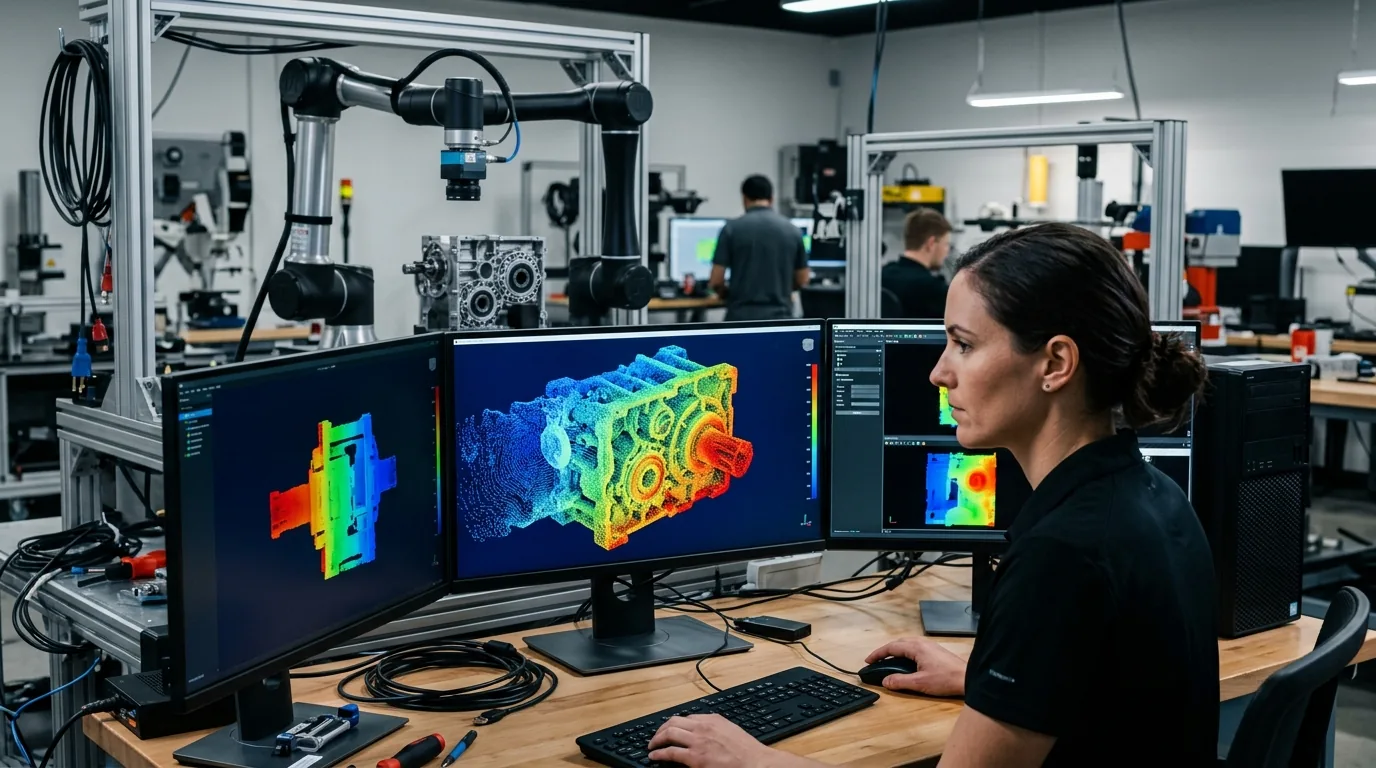
To understand why this demonstration required specialized optical infrastructure, one must examine why conventional internet protocol networks and cellular 5G cannot handle live volumetric video. A standard high-definition broadcast streams a single two-dimensional raster feed compressed to roughly twenty megabits per second. Even modern 4K HDR streams require less than fifty megabits per second using HEVC or AV1 encoders. A volumetric capture array consisting of one hundred 4K cameras generates hundreds of gigabits per second of raw, uncompressed sensor data.
If engineers attempt to compress one hundred individual camera streams using standard video codecs to send them across public internet connections, three fatal engineering failures emerge.
- Encoding latency introduces hundreds of milliseconds of delay per stream, destroying real-time interactive viewing.
- Compression artifacts soften edge boundaries, creating ragged geometric tears and missing player limbs during point cloud depth extraction.
- Packet jitter across conventional packet-switched routers causes frame delivery arrival times to fluctuate, preventing spatial reconstruction engines from assembling uniform time slices.
Mobile 5G networks encounter equal physical barriers. While carrier marketing often promotes 5G millimeter wave for stadium broadcasts, radio frequency bandwidth is fundamentally shared. When twenty thousand fans in arena seats use their phones, cellular uplink channels saturate rapidly. In addition, millimeter wave signals suffer from severe physical attenuation when obstructed by stadium concrete, metal support beams, and moving human crowds. Relying on wireless cellular links to transport hundreds of uncompressed 4K video feeds from arena rafters introduces dropped packets and latency spikes that derail real-time spatial synthesis.
The All-Photonics Network Architecture
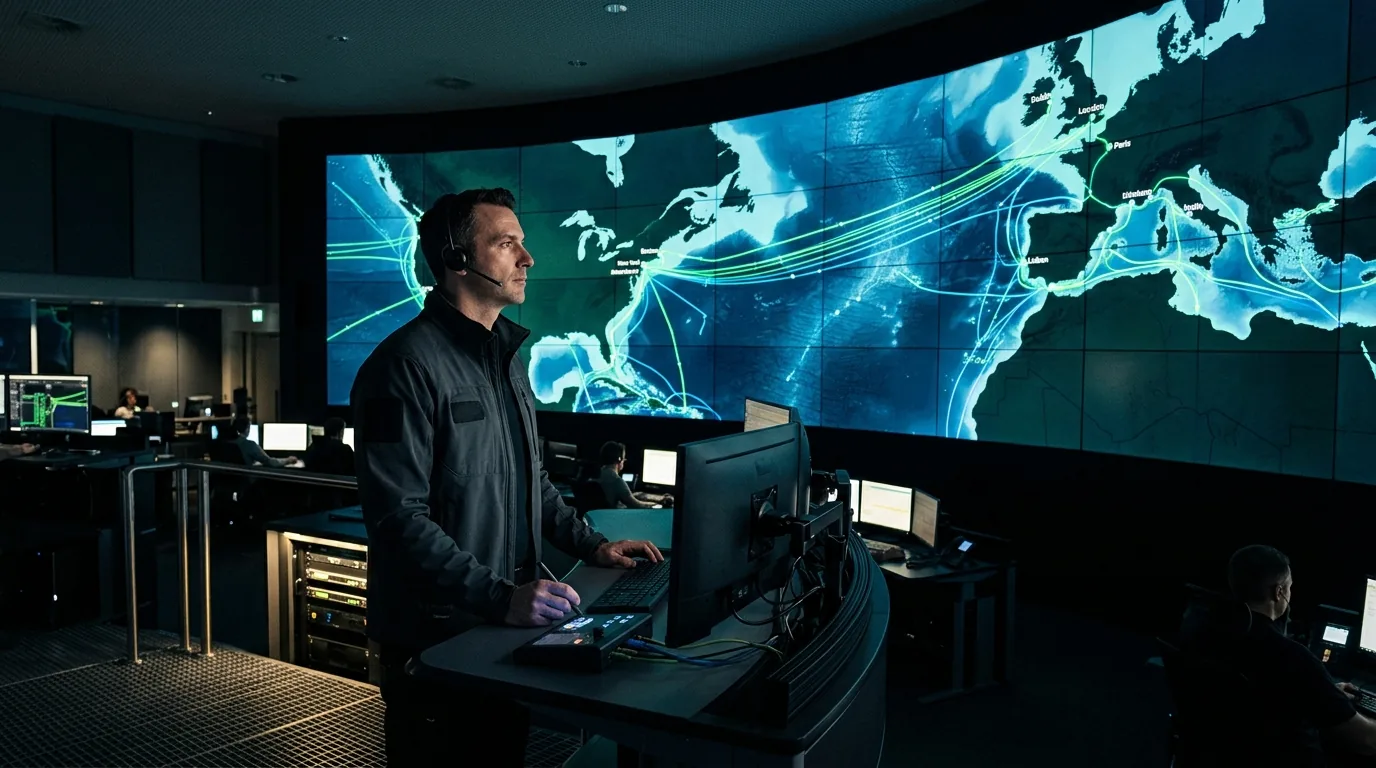
The breakthrough that made the September demonstration possible is NTT Innovative Optical and Wireless Network All-Photonics Network, abbreviated as IOWN APN. Rather than routing packets through conventional electronic switches that constantly convert optical signals into electrical impulses and back into light, IOWN APN maintains an unbroken optical lightpath from transmitter to receiver.
Eliminating optical-electrical-optical conversions removes electronic buffer queues entirely. Data travels through dedicated wavelength channels in silica fiber at the speed of light in glass, delivering latency that scales purely with physical distance. Across the approximately two hundred miles separating the Aichi capture facility from Canon Kawasaki processing center, one-way optical transport latency remained under two milliseconds with near-zero timing jitter.
IOWN APN provides one hundred twenty-five times the transmission capacity of conventional enterprise carrier lines while reducing power consumption by roughly ninety-nine percent per transmitted bit. The high bandwidth allows Canon to stream uncompressed multi-stream camera data directly from the arena rafters into long-haul optical fiber without relying on heavy lossy compression. This optical transmission leap mirrors the systemic shifts observed in high-speed hyperscale data center infrastructure, such as two-nanometer optical interconnects for AI compute fabrics and ultra-high-throughput links explored in multi-core fiber submarine communications.
Remote Compute Pipeline at Canon Kawasaki Facility
Once the all-optical pipeline deposits raw camera streams into Canon Kawasaki facility, the distributed computing cluster executes real-time spatial synthesis. This processing workflow converts two-dimensional raster arrays into three-dimensional volumetric geometry through four distinct stages.
First, synchronized silhouette extraction isolates moving athletes and the basketball from the calibrated court geometry. Multi-view stereo algorithms compare visual correspondences across adjacent camera baselines to construct dense depth maps for each perspective.
Second, the system projects depth points into a unified three-dimensional coordinate system, generating a point cloud containing millions of coordinate points per frame. GPU shaders execute spatial clustering algorithms to prune visual noise caused by lens flare or motion blur.
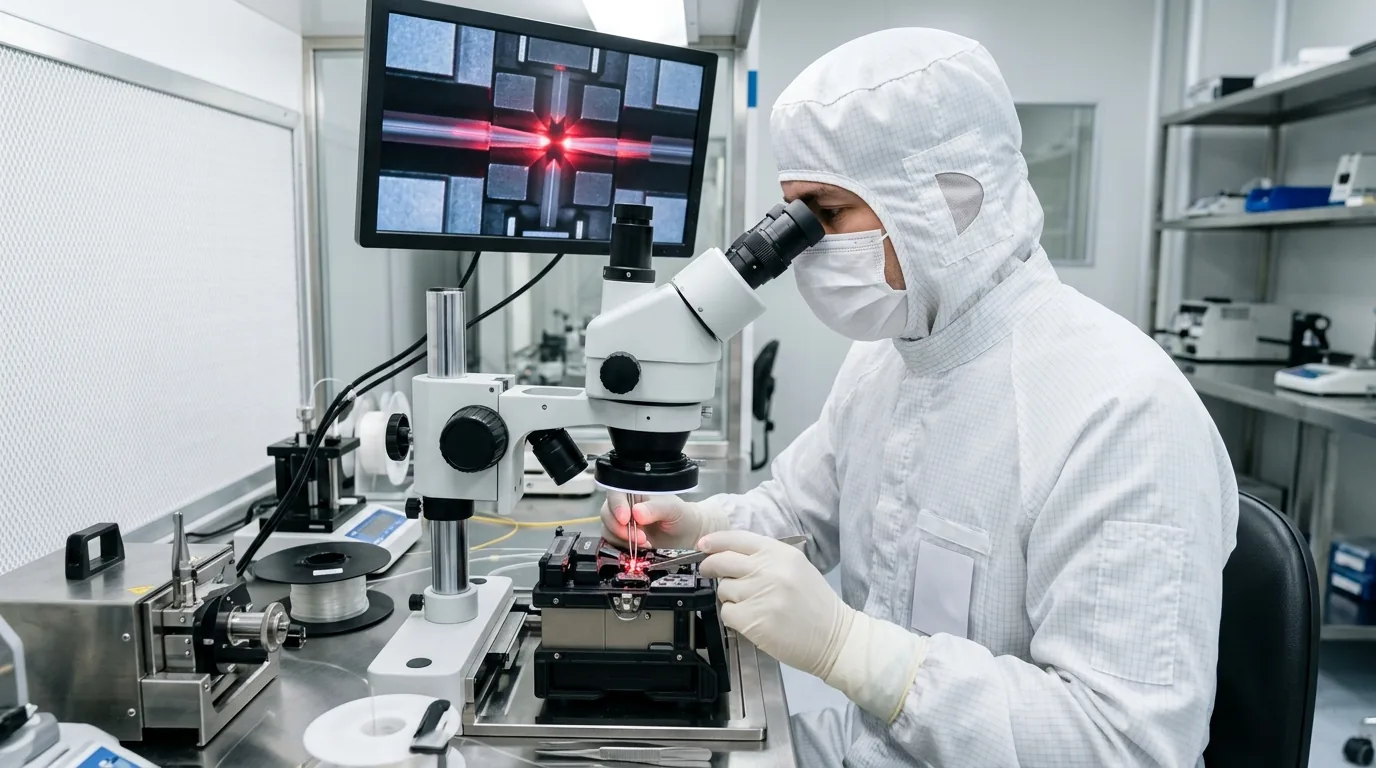
Third, a surface reconstruction module generates watertight polygonal meshes from the filtered point cloud. Dynamic UV mapping projects high-resolution color textures extracted from the original camera frames onto the synthesized mesh geometry. This stage demands immense parallel compute power, similar to high-density clusters highlighted in our coverage of specialized national supercomputer facilities and hyperscale silicon accelerators like high-throughput cluster hardware architectures.
Fourth, the generated volumetric asset undergoes dynamic polygonal decimation and temporal compression. The system packs the spatial asset into a light-weight stream suitable for immediate transmission to remote display venues, maintaining sixty frames per second with consistent surface fidelity.
Tabletop Mixed Reality Viewing in Tokyo
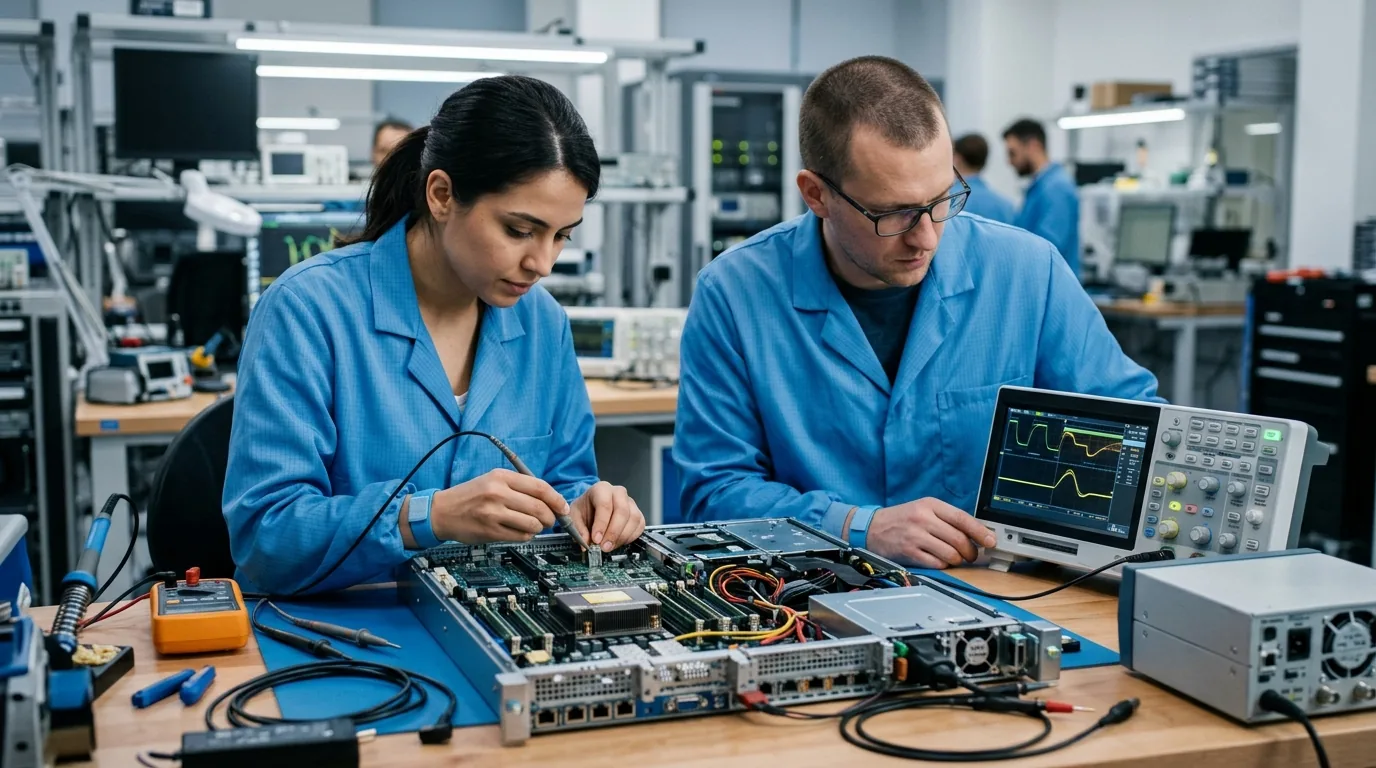
At the satellite viewing venue in Tokyo, approximately sixty industry partners and sports facility operators experienced the live game using Canon MREAL mixed reality devices. Unlike standard virtual reality headsets that isolate users inside opaque computer simulations, MREAL employs high-resolution video pass-through optics to composite photorealistic virtual geometry directly into real physical rooms.
Canon rendered the live basketball match onto a communal conference tabletop. Spectators wearing MREAL headsets saw an accurate miniature three-dimensional basketball court floating on the table surface. Because the volumetric stream contains true six-degrees-of-freedom spatial data rather than pre-rendered camera angles, spectators could move physically around the table to inspect plays from any perspective.
A spectator wanting to review a disputed rebound could lean forward, viewing the contest directly beneath the rim. Another viewer could stand near the baseline to evaluate three-point shooting posture. The spatial positioning remained anchored to the physical tabletop with sub-millimeter precision, allowing multiple participants to discuss identical on-court moments simultaneously from their respective physical vantage points. This tabletop paradigm represents an evolutionary milestone beyond wearable consumer gadgets examined in our breakdown of wearable edge AI hardware form factors, pointing toward social, multi-user spatial broadcasting.
Comparative Architectural Matrix
Evaluating broadcast infrastructure models illustrates why all-photonics transport represents a structural transition for immersive entertainment.
| Architecture Model | Compute Placement | Network Transport Medium | End-to-End Latency | Stadium Logistics Footprint | Scaling Viability |
|---|---|---|---|---|---|
| Legacy Broadcast OB Trucks | Arena parking lot mobile trailers | Local copper SDI and direct fiber runs | One to two seconds broadcast delay | Massive parking footprint with dedicated power generation | Extremely low due to multi-million dollar per venue cost |
| Standard Cloud IP Streaming | Centralized hyperscale public cloud | Standard public internet backbones | Twenty to sixty seconds buffering latency | Minimal venue hardware but heavy local video compression | High distribution scale but poor spatial fidelity and high jitter |
| Fifth Generation Mobile Edge | Carrier regional base station edge | C-band or millimeter wave cellular spectrum | Fifteen to thirty milliseconds local delay | Moderate local radio equipment and local baseband units | Medium viability constrained by local RF spectrum saturation |
| NTT IOWN All-Photonics Network | Permanent remote engineering headquarters | Pure wavelength lightpaths without packet switches | Sub-two millisecond deterministic lightpath delay | Minimal camera mounts and fiber optical transceivers only | High viability through centralized multi-venue compute sharing |

Stadium Economics and Multi-Tenant Compute Amortization
The economic impact of decoupling volumetric video servers from sports stadiums extends beyond raw technology metrics. Arena managers face intense pressure to maximize venue revenue per square foot. Every square meter occupied by broadcast racks, electrical transformers, and cooling ductwork represents space unavailable for fan concessions, premium lounges, or administrative offices.
When computing clusters reside permanently off-site in centralized data centers, infrastructure economics transform from dedicated capital expenditures into shared operational resources. A single regional compute facility operated by a broadcast consortium can ingest afternoon football games from one arena, transition seamlessly to an evening basketball tournament in another city, and render concert performances later that night. Centralizing the compute racks drastically lowers the break-even threshold for sports leagues considering volumetric production.
On-site stadium crews require only camera rigging, optical transceivers, and dark fiber patch panels. Field engineers can maintain the optical termination hardware using ruggedized, reliable diagnostic equipment, comparable to specialized mobile gear evaluated in our review of rugged mobile computing platforms for harsh industrial environments. Turnaround times between sporting matches shrink from days to hours, allowing multi-sport facilities to host back-to-back competitive events without re-cabling extensive server infrastructure.
Bandwidth Economics, MPEG Standards, and Four-Dimensional Gaussian Splatting
Transporting raw stadium camera feeds requires dedicated photonics, but delivering the finished broadcast to home viewers relies on efficient spatial compression standards. Two distinct compression pathways are emerging to bridge this gap.
The Moving Picture Experts Group established international standards for spatial media, including Video-based Point Cloud Compression and Geometry-based Point Cloud Compression. Video-based Point Cloud Compression decomposes three-dimensional point clouds into two-dimensional patches representing geometry and texture. These patches are arranged into conventional video frames and compressed using standard hardware video codecs like HEVC or VVC. This approach allows consumer headsets and televisions with standard video decoding chips to unpack volumetric data without custom silicon, reducing home bandwidth requirements to twenty-five to fifty megabits per second.
Concurrently, computer vision researchers are exploring dynamic four-dimensional Gaussian splatting as a successor to polygonal meshes. Gaussian splatting represents scenes as collections of semi-transparent three-dimensional ellipsoids that render photorealistic reflections, court gloss, and player sweat with exceptional visual realism. While training Gaussian splats in real time during live sports remains computationally intensive, combining all-photonics transport with emerging neural accelerators points toward a future where live athletic events stream as photorealistic radiance fields rather than simplified polygonal geometry.
Integration Pathways for Consumer Mixed Reality Headsets
While Canon utilized its proprietary enterprise MREAL headsets for the Tokyo demonstration, the underlying spatial data format is designed for broad ecosystem interoperability. As consumer spatial computers like Apple Vision Pro, Meta Quest, and lightweight augmented reality glasses proliferate, sports leagues seek standardized volumetric pipelines that feed consumer living rooms.
Canon volumetric data generation pipeline outputs standardized geometric streams that integrate into modern real-time graphics engines including Unreal Engine and Unity. When a home viewer opens a sports league application on a spatial computing headset, the device receives lightweight compressed point cloud frames and skeletal tracking vectors over home fiber or Wi-Fi 7 connections. The headset local GPU renders the match from the spectator chosen perspective, allowing fans to sit courtside, view defensive formations from the rafters, or follow individual player trajectories throughout the game.
This separation of heavy volumetric reconstruction in the cloud and lightweight spatial rendering on user client devices establishes the blueprint for future live sports broadcasting. Fans will no longer remain passive recipients of fixed director camera cuts. Instead, each viewer will command their own bespoke virtual camera crew.
Frequently Asked Questions
What is volumetric video and how does it differ from traditional 360-degree video
Traditional 360-degree video locks the viewer to a fixed capture point, allowing rotational head movement while keeping the observer stationary. Volumetric video captures full three-dimensional depth, surface geometry, and motion, enabling six degrees of freedom. Viewers can lean forward, walk around players, and change perspective freely throughout the virtual environment.
How does volumetric video differ from Apple Spatial Video
Apple Spatial Video uses stereoscopic recording to deliver fixed-perspective three-dimensional images with depth. It remains a two-dimensional capture formatted for binocular vision, meaning viewers cannot walk around subjects or view unseen angles. True volumetric video reconstructs complete three-dimensional polygonal geometry, allowing spectators to inspect the scene from any coordinate position.
How many cameras were required for the Aichi International Arena basketball demonstration
Canon installed approximately one hundred high-resolution 4K camera units around the arena court. These cameras were positioned across multiple heights and angles, operating with synchronized hardware genlock to capture concurrent visual perspectives of the basketball game without gaps.
Why did previous systems like Intel True View fail to achieve widespread adoption
Intel True View required dedicated multi-million-dollar computing trailers parked directly outside stadiums. Processing five-second clips took forty-five to ninety seconds of computational delay, limiting output to post-play television replays. The high venue costs and inability to stream continuous live gameplay hindered long-term commercial sustainability.
Why can mobile 5G networks not replace all-photonics fiber for stadium volumetric video
Mobile 5G networks share radio frequency capacity with thousands of stadium spectators, creating uplink saturation and packet jitter. Concrete venue structures also block high-frequency millimeter wave signals. In contrast, all-photonics fiber provides dedicated optical lightpaths that transport uncompressed camera feeds with deterministic sub-millisecond reliability.
How does the NTT IOWN All-Photonics Network eliminate transmission delays
IOWN APN transmits data entirely as light waves through dedicated optical fiber pathways, avoiding the optical-electrical-optical conversions required by standard internet routers. This direct lightpath architecture reduces packet jitter to near zero and delivers one hundred twenty-five times the transmission capacity of conventional telecommunications lines.
How much internet bandwidth will home viewers need to watch live volumetric sports
While uncompressed capture generates hundreds of gigabits per second at the arena, the downstream stream for home users is compressed into lightweight polygonal meshes and texture patches. Home spectators will need approximately twenty-five to fifty megabits per second of bandwidth over fiber or Wi-Fi 7 connections.
Can home viewers watch volumetric sports matches on Apple Vision Pro or Meta Quest
The volumetric stream generated by Canon processing pipeline can be formatted for consumer spatial computing devices. Once the remote servers reconstruct the three-dimensional game into optimized geometric streams, consumers can view matches with full six-degrees-of-freedom viewpoint control using compatible mixed reality headsets.
What happens if a player is momentarily blocked from several camera views during a match
The multi-view geometry pipeline compares sightlines from across the one hundred camera perimeter array. When adjacent court-side cameras experience occlusion from passing players, elevated catwalk cameras and angled baseline sensors preserve continuous volumetric tracking, preventing geometric holes in the generated mesh.
Will four-dimensional Gaussian splatting replace polygonal meshes in sports broadcasts
Research indicates that four-dimensional Gaussian splatting provides superior photorealism for player skin, sweat, and court lighting reflections. However, generating Gaussian splats in real time requires substantial parallel computing. As neural processing accelerators advance, broadcasts will likely transition from polygonal meshes toward neural radiance fields and Gaussian splatting.
Operational Trajectory for Immersive Broadcasting
The demonstration executed by Canon and NTT establishes that real-time spatial broadcasting across long physical distances is no longer theoretical. By replacing heavy local server racks with deterministic all-photonics optical conduits, sports organizations can now centralize spatial compute resources while deploying lightweight capture arrays across multiple athletic facilities.
As telecom operators expand all-photonics fiber backbones across metropolitan regions and consumer spatial computing headsets mature in display resolution and weight, live sports will continue transitioning from flat rectangular panels toward interactive three-dimensional reality. Stadiums that adapt their optical cabling infrastructure today will lead the next generation of global fan engagement.
Loading comments…